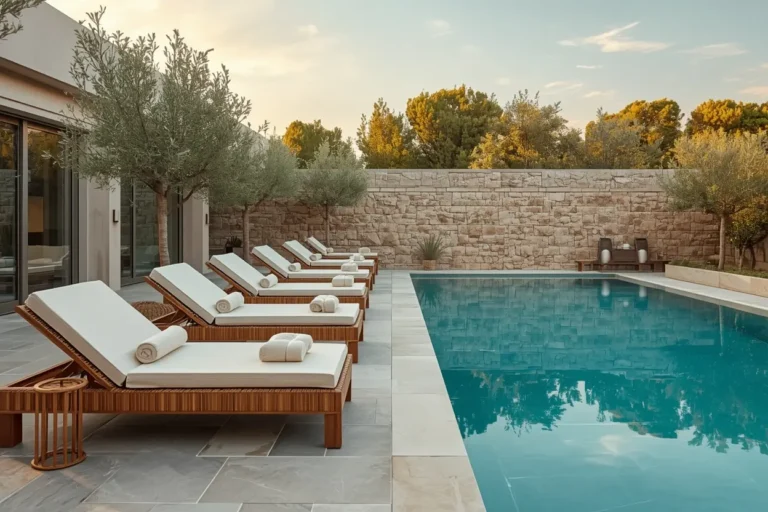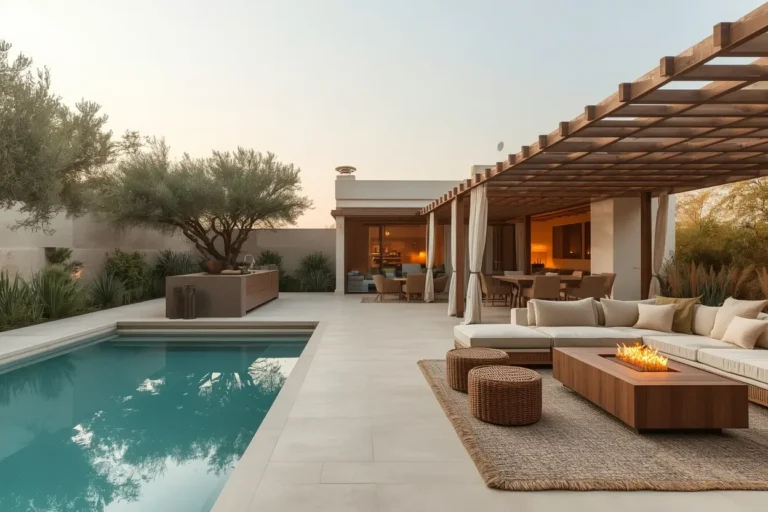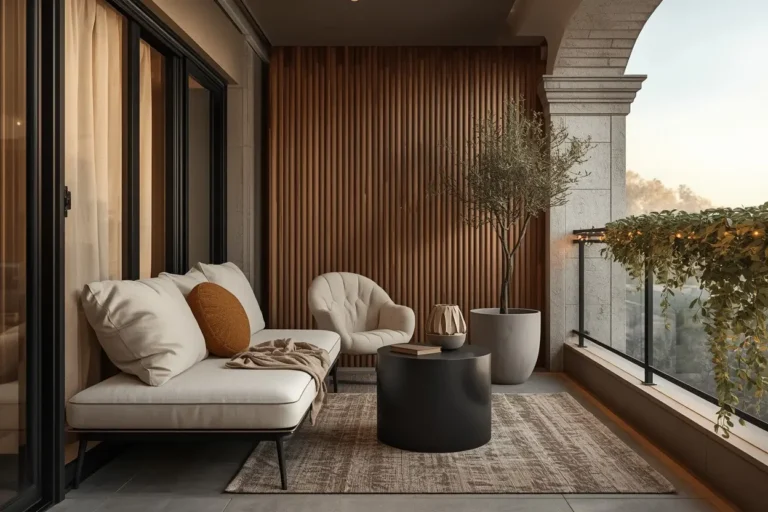
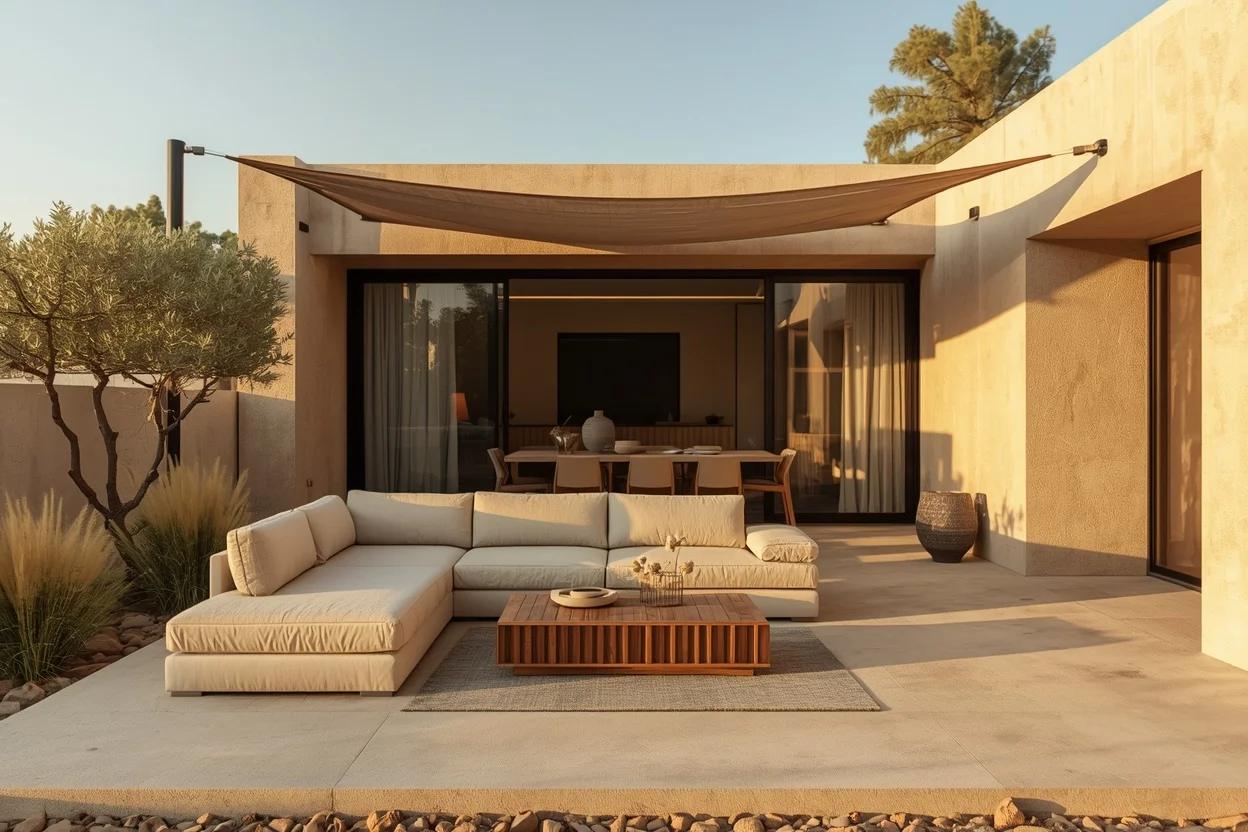

Concrete is no longer the plain gray slab it used to be. Today it can look warm, soft, and very high-end. That is why concrete patio ideas are all over right now.
Concrete is strong and easy to clean. It also works with many styles, from Japandi to modern Mediterranean. You can pour a new patio or refresh an old one.
In this article, you will find ten ideas that look great and work in real life. Each one has simple tips on color, texture, lighting, and layout. Some suit big backyards. Others fit a small balcony or a rented terrace.
Pick one idea or mix a few. Either way, you will know how to build a patio that feels calm, stylish, and easy to live with.
1. Concrete Patio Ideas That Start With a Warm, Honed Finish
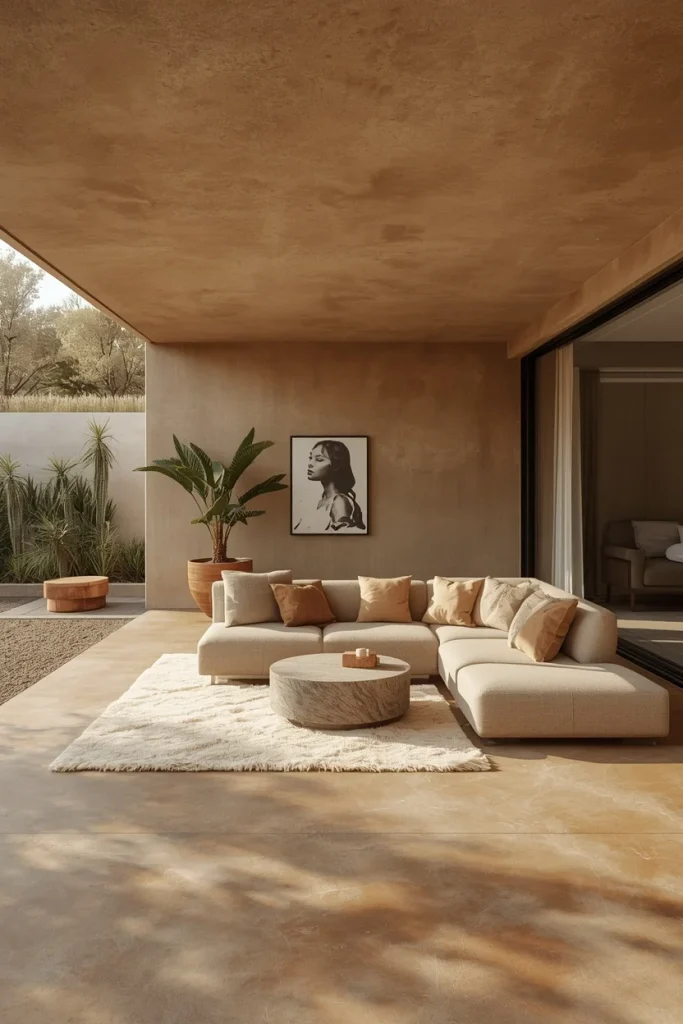
Color and finish change everything. Ask for concrete with sand or soft greige pigment mixed in. Then ask for a honed finish, which means the top is lightly ground to a smooth, matte look. It feels closer to limestone than to a sidewalk.
Furnish it like a living room. Try a low sofa in oatmeal fabric made for outdoor use. Add a round side table in a stone finish and a thick rug in warm white. These soft layers stop the slab from feeling cold.
Skip cool gray furniture on cool gray concrete. Everything looks flat. Stick with warm tones like cream, tan, and oak. Seal the surface so spills wipe away easily.
2. Large Pavers With Thyme in the Joints
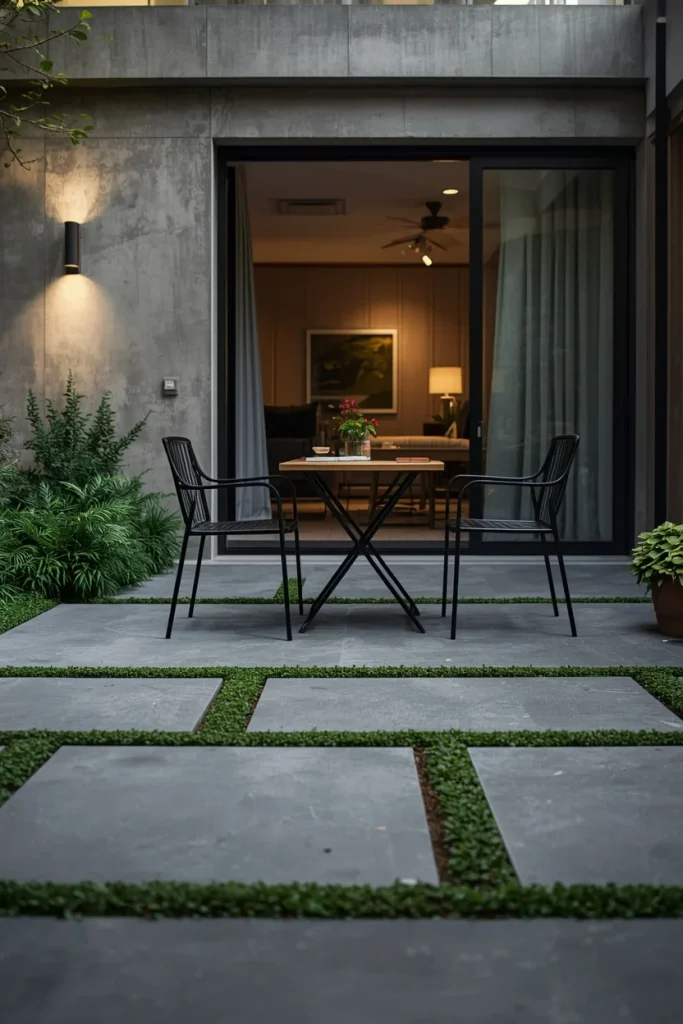
A single slab can feel hard and heavy. Large pavers break it up. Lay them with wide gaps, then fill those gaps with creeping thyme, mondo grass, or fine gravel.
The patio now feels like part of the garden. It also drains better, because rain soaks into the joints instead of pooling on top.
Choose pavers at least 24 by 24 inches. Big squares look calm. Small ones look busy. Soft charcoal or pale ash tones look great next to green.
Keep the furniture light. Slim black metal chairs and a small oak bistro table are enough. Let the stone and greenery be the star.
3. A Built-In Concrete Bench With Linen Cushions
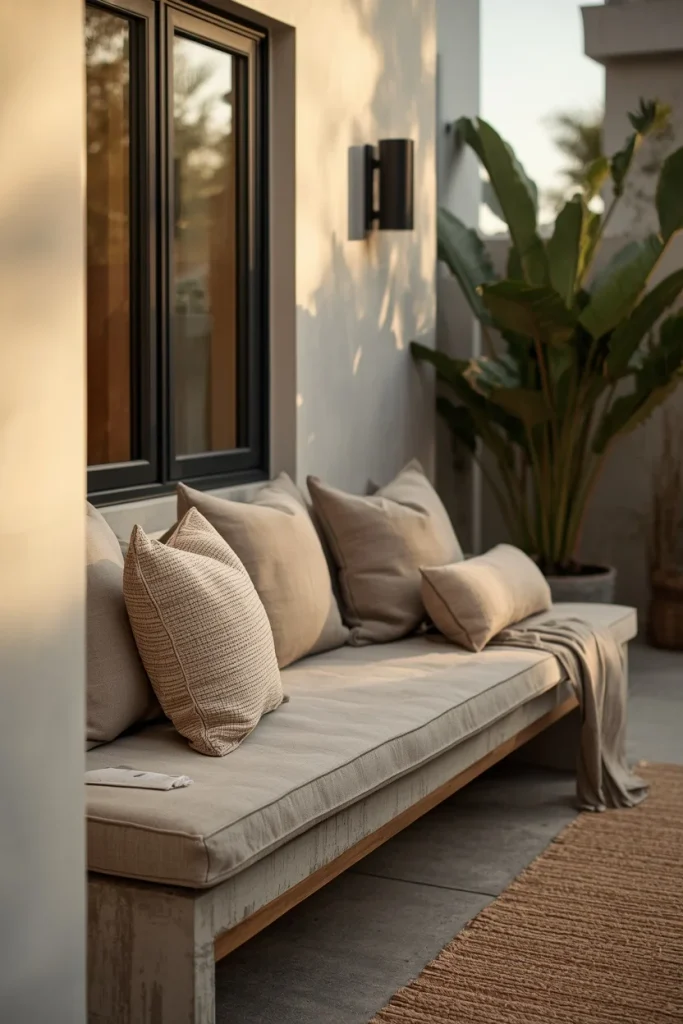
Built-in seating makes a patio look like an architect planned it. A poured bench along one edge gives you weatherproof seating for good. It also frees up floor space for a table or fire feature.
A good size is about 18 inches high and 20 inches deep. That is comfortable for most people.
Concrete alone is hard, so soften it. Add a thick linen-blend cushion in natural or stone. Toss on two textured bolsters. A slim oak ledge beside the bench holds drinks and candles.
If your budget allows, build storage inside the base. Cushions stay dry, and the patio stays tidy. Not ready to pour? A ready-made concrete bench in a matching tone gives a similar look.
4. Charcoal Concrete Around a Linear Fire Table
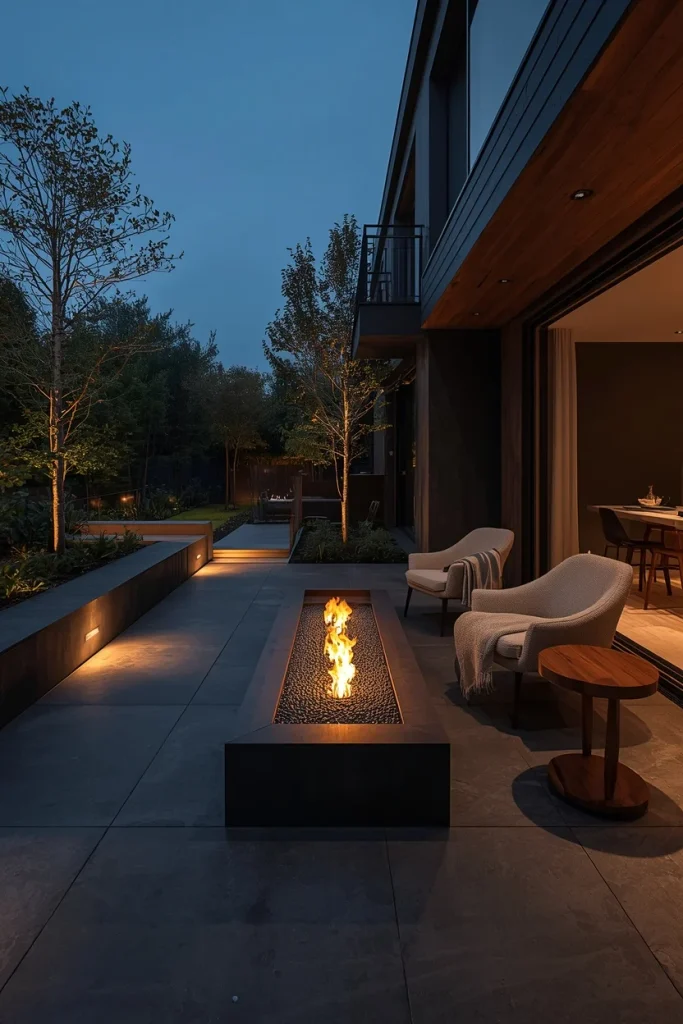
Evenings are when a patio shines. A long, slim fire table turns any corner into a gathering spot. Set it into a deep charcoal surface, and the flame glows against the dark, matte ground.
Dark concrete can feel heavy, so add contrast. Choose cream lounge chairs with a nubby, bouclé-style weave. Drape a pale wool throw over one arm. Place a low walnut-tone side table nearby.
Layer your lighting. Small path lights and warm LED strips under the seating add depth without fighting the fire.
Leave at least three feet of open space around the flame. Guests need room to move. Check your local fire rules before you build.
5. A Board-Formed Concrete Wall With Soft Planting
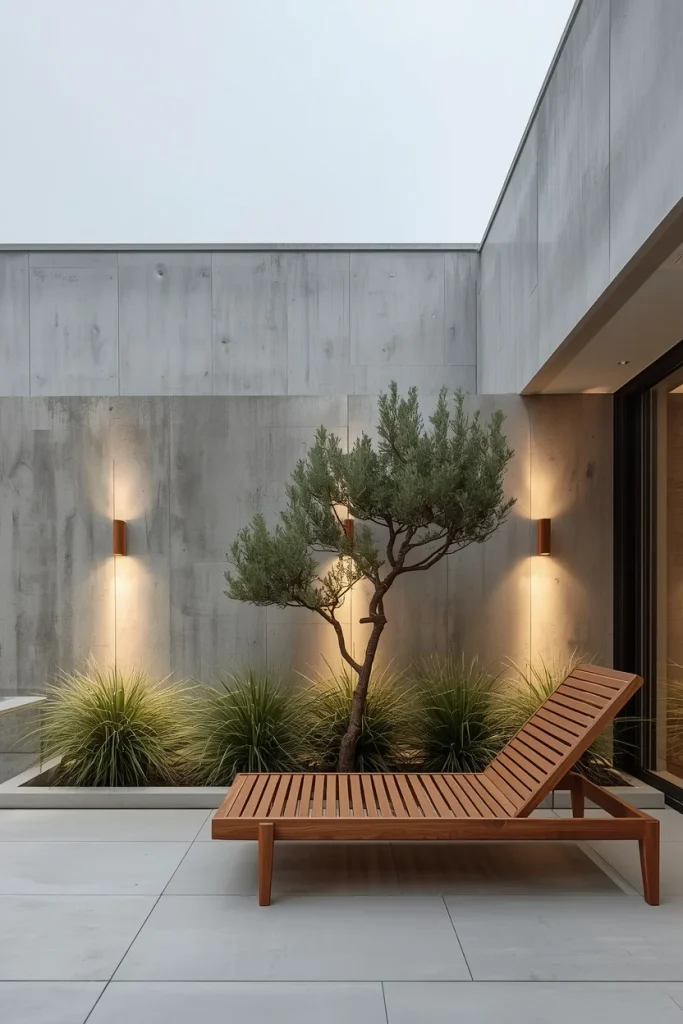
Board-formed concrete is poured against wood planks. The wood leaves a fine grain pattern on the surface. As a feature wall or privacy screen, it adds depth that a flat wall cannot.
Plant in front of it, not on it. Ornamental grasses, a multi-stem olive, or feathery pennisetum move in the breeze. That contrast between hard and soft looks lovely.
Add light at the base of the wall. A few narrow up-lights graze the texture and make it glow at night.
Cannot build a new wall? Use textured plaster or fluted panels in a concrete tone. They give a similar effect for less money and effort.
6. A Japandi Courtyard With Raked Gravel
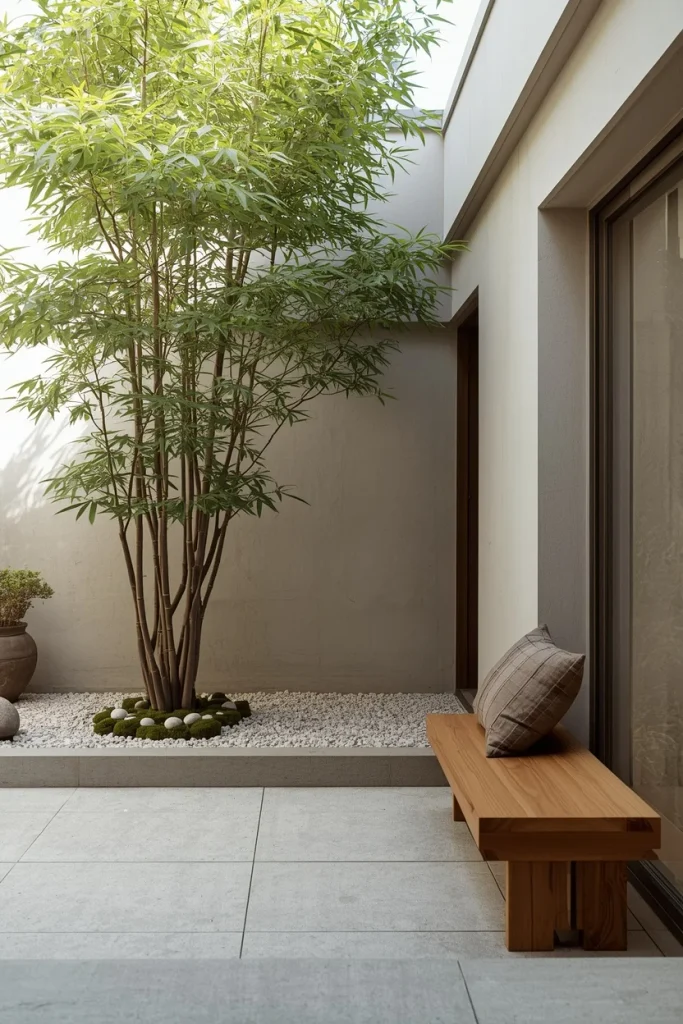
Japandi mixes Japanese calm with Scandinavian warmth. Concrete fits it well. Start with a smooth, pale gray platform. Border it with a strip of fine gravel and rake it into soft lines.
Add only a few plants. A Japanese maple, bamboo in a pot, and a few mossy stones are plenty. Keep the furniture low and simple. One solid oak bench, a cushion in undyed linen, and a single ceramic planter will do.
The trick is what you leave out. Empty space is what makes this style feel peaceful. Resist the urge to add more.
This look works best in small or enclosed spaces, where a busy layout would feel crowded.
7. A Dining Terrace Where Concrete Meets Teak
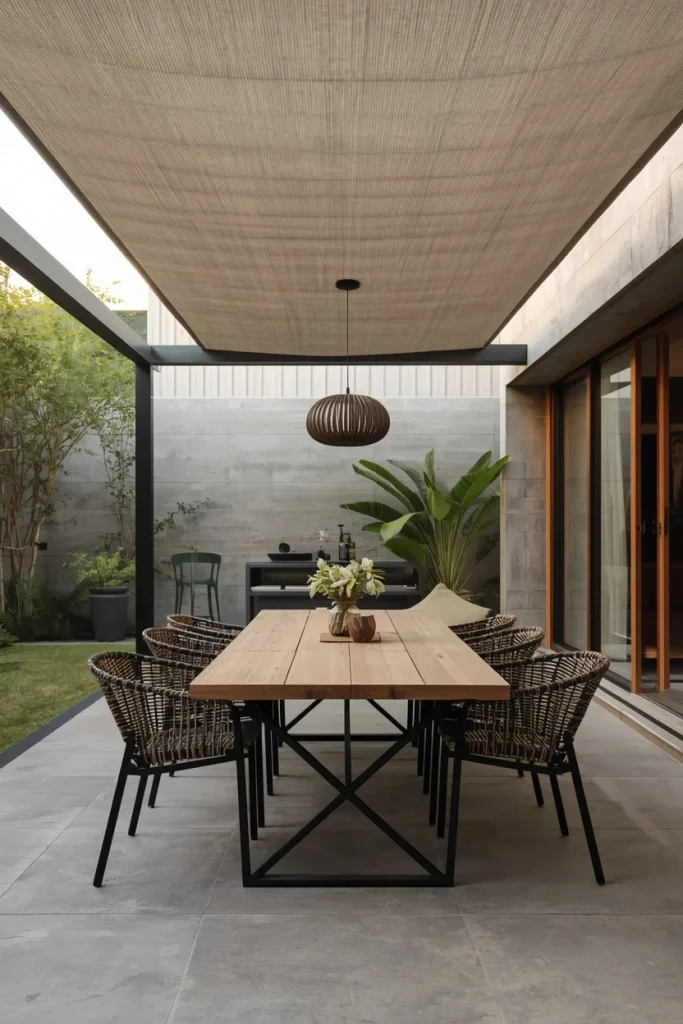
Concrete gives outdoor dining a clean, solid base. Teak adds the warmth it needs. Pair a honed concrete floor with a rectangular teak table. Add chairs in woven rope or matte black metal.
Think about shade. A slim pergola with a linen-toned sail or slatted timber roof marks the dining area. It also cuts harsh midday sun.
Choose one striking light. A ribbed-glass or rattan pendant over the table looks far better than basic string lights.
Leave about three feet behind each chair so people can move easily. Pick a table a little smaller than you think you need. The terrace will feel more open.
8. Terracotta-Tinted Concrete With a Plaster Wall
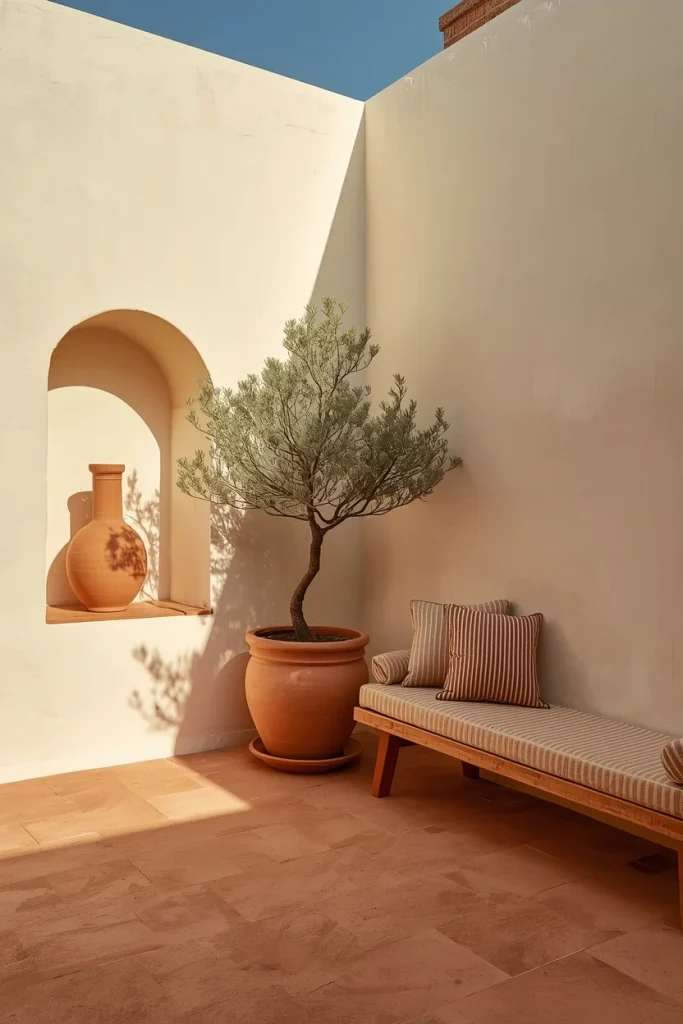
Modern Mediterranean style feels sunny and relaxed. You can get it with concrete tinted in warm clay, soft terracotta, or pale sand. A lightly mottled finish looks like aged stone.
Pair the floor with a limewashed or plaster wall in warm white. A shallow arched niche is a nice touch. It can hold a candle or a ceramic vase.
Place an olive tree or lemon tree in a large terracotta pot. Add a low wooden bench with striped linen cushions in cream and clay.
Watch out for too much rustic detail. Keep lines clean and accessories few. That keeps the look fresh and polished.
9. A Concrete Water Trough for Quiet Movement
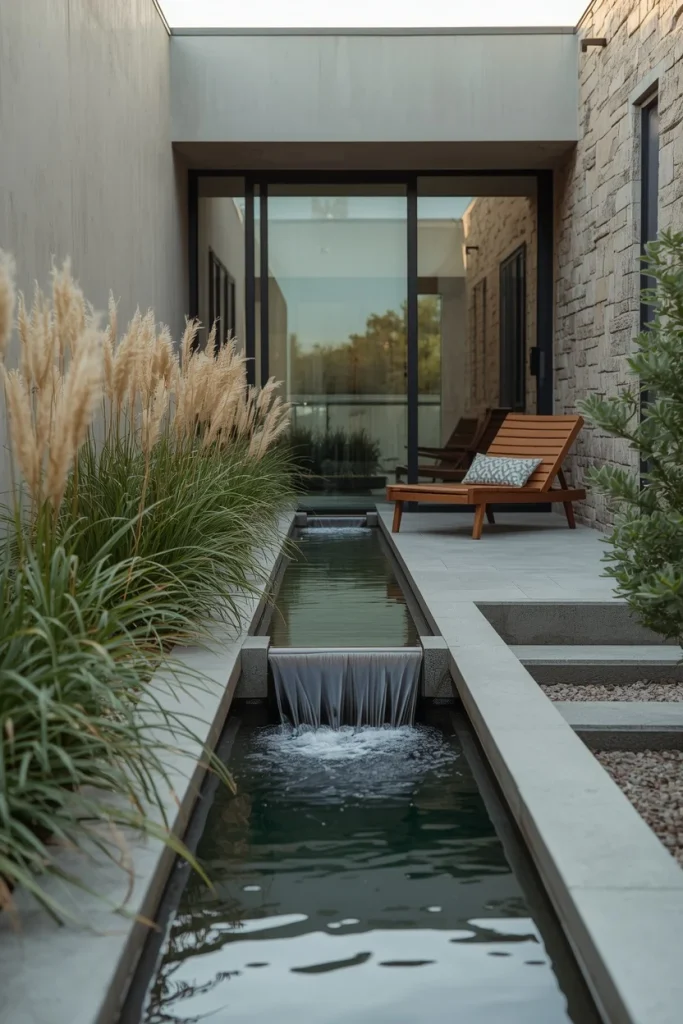
Moving water adds calm to a patio. A narrow concrete trough gives you that without the work of a pond. Place it along a wall or beside your seating. It mirrors the sky and the plants around it.
Keep it slim, about 12 to 16 inches wide. Use a concrete tone that matches the floor or is slightly darker. A small spout adds a gentle trickle that can help cover street noise.
Plant lamb’s ear, ferns, or feather grass along the edge. Add one teak lounger nearby for a tiny retreat.
Use a recirculating pump and make sure you can drain the trough for cleaning. Keep it shallow if children play nearby.
10. A Renter-Friendly Refresh With Concrete-Look Tiles
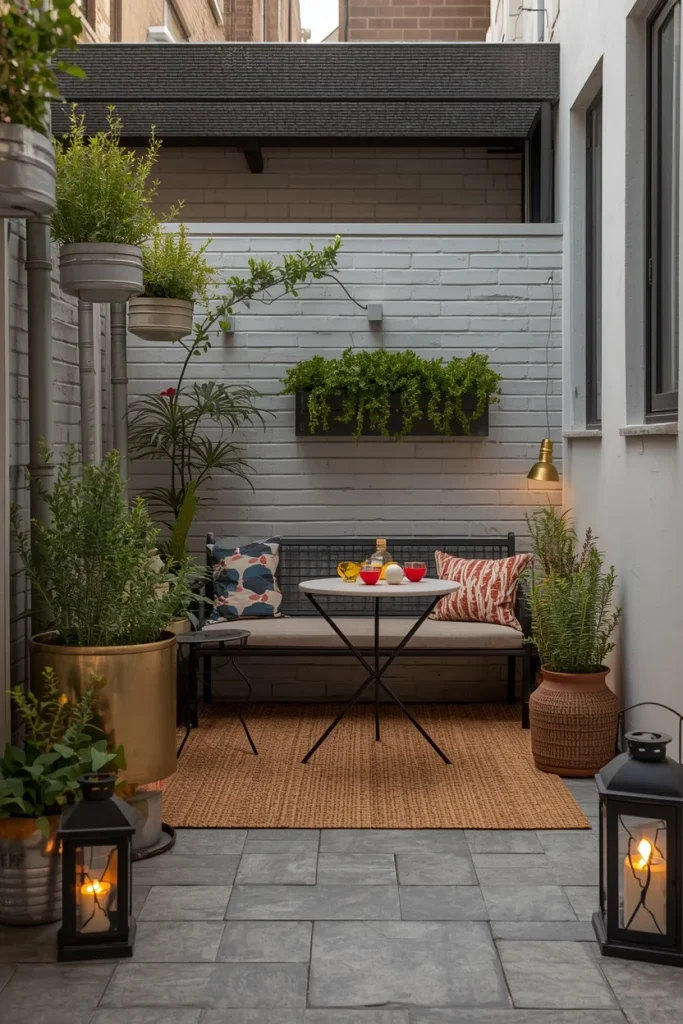
Not every patio can be poured from scratch. If you rent, or your space is small, try interlocking concrete-look tiles. They click together right over your old surface. No digging or building needed.
Choose a warm gray or sand shade. Keep the layout simple. A small bistro set, a slim bench, and two or three planters at different heights will fill the space nicely.
Add an outdoor rug to mark the seating area. It also warms the floor under your feet. For light, use battery lanterns in matte black or brushed brass. No wiring is needed. When you move, the tiles lift out and go with you.
Conclusion
Great concrete patios follow a simple plan. Start with a warm finish. Add natural materials to soften it. Finish with lighting that sets the mood after dark.
You do not need to use every idea here. Even one change, like a honed surface or a linen bench cushion, can transform a space.
Start with your biggest need. Maybe that is seating, privacy, or a cozy feel at night. Build from there, one layer at a time. Keep colors calm and accessories few.
Save the ideas you like and come back when you are ready to plan. A well-designed concrete patio only looks better with time.