
Dark living rooms are no longer moody or heavy. Designers now use deep color to make rooms feel calm, rich, and close. If you have been searching for dark living room ideas, you are in the right place.
Dark shades hide wear, soften harsh light, and make art pop. They suit small rooms and big ones. The trick is balance. Pair deep walls with warm wood, soft fabric, and layered light.
Each idea below shows a real room you can build. You will find color choices, materials, lighting tips, and common mistakes to skip. Some ideas suit homeowners. Others work well for renters and apartments.
Pick a favorite and start there. Save the rest for later. Your next room can feel bold and still be easy to live in.
1. Dark Living Room Ideas Begin with Charcoal Limewash Walls
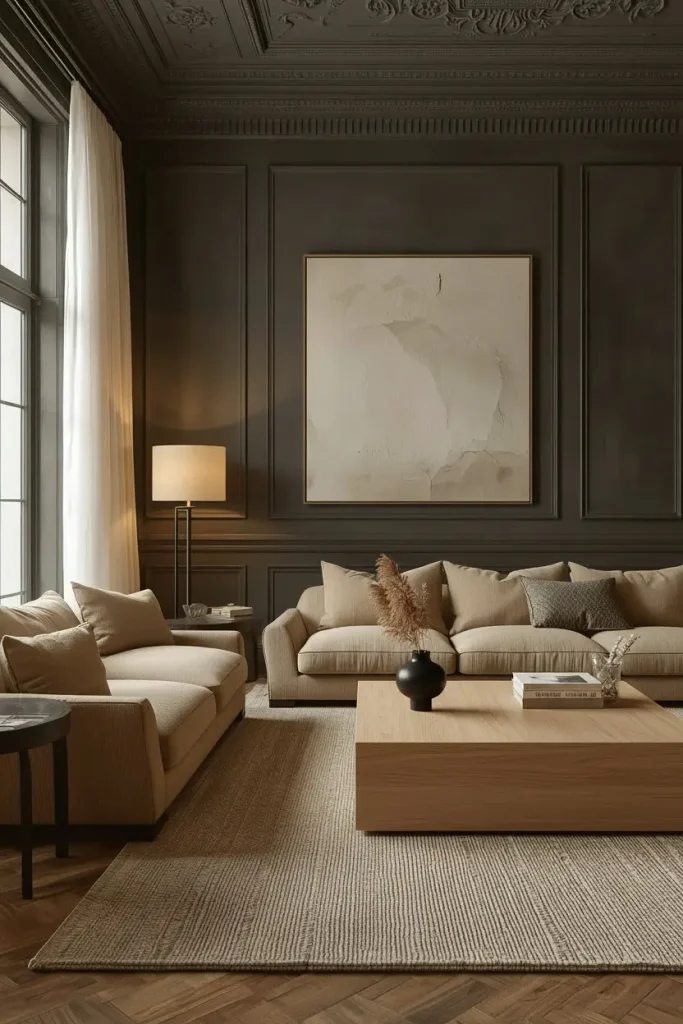
Charcoal limewash is a strong place to start. Limewash is a mineral paint with a soft, cloudy finish. It gives walls a depth flat paint cannot match. Light moves across the surface and shifts the shade all day.
Choose a warm charcoal with a hint of brown. Cool gray can feel cold at night. Pair the walls with a sand linen sofa and a natural oak coffee table. The contrast keeps the room fresh.
Add a wide wool rug in a light tone. Hang one oversized artwork in a pale frame. Skip heavy curtains in the same dark shade. Choose warm white drapes so the room still feels open.
Paint the ceiling too for a cocooning effect. Use a wide brush and cross-hatch strokes for a soft look.
2. Walnut Fluted Panelling Behind the Sofa
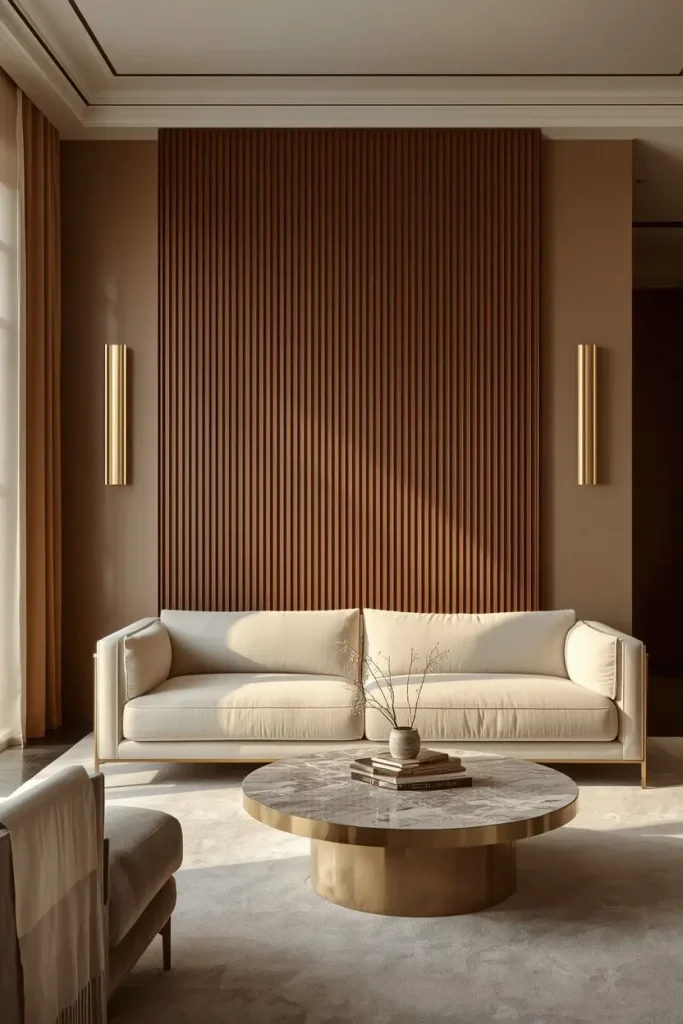
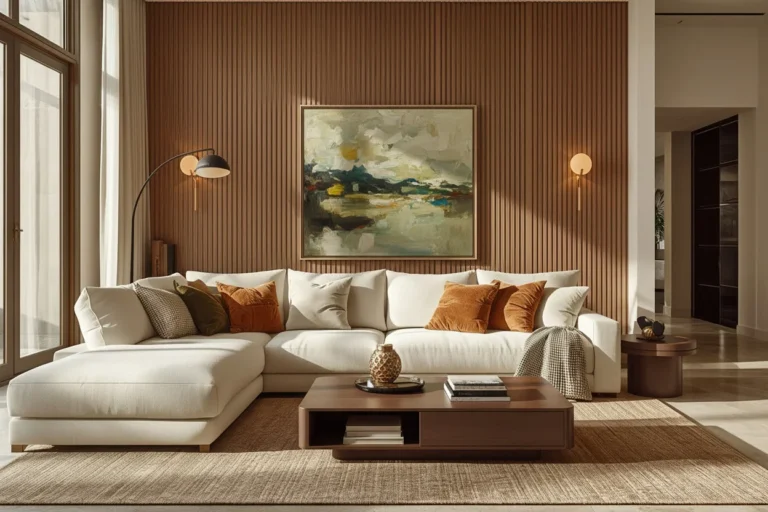
A fluted wood wall adds rhythm without clutter. Fluting means narrow vertical grooves in the wood. Walnut gives it a rich, chocolate tone. Place it behind the sofa as a calm focal point.
Keep the other walls soft taupe or warm white. Too much dark wood can feel heavy. One panelled wall is enough. A slim brass wall light on each side adds a gentle glow.
Choose a bouclé or linen sofa in cream. The pale fabric stands out against the wood. A low travertine coffee table adds a cool, stony touch.
On a budget, use MDF fluted panels and walnut stain. They are light and easy to cut. Seal the edges well. Dust the grooves with a soft brush each month.
3. Deep Olive Green with Natural Oak
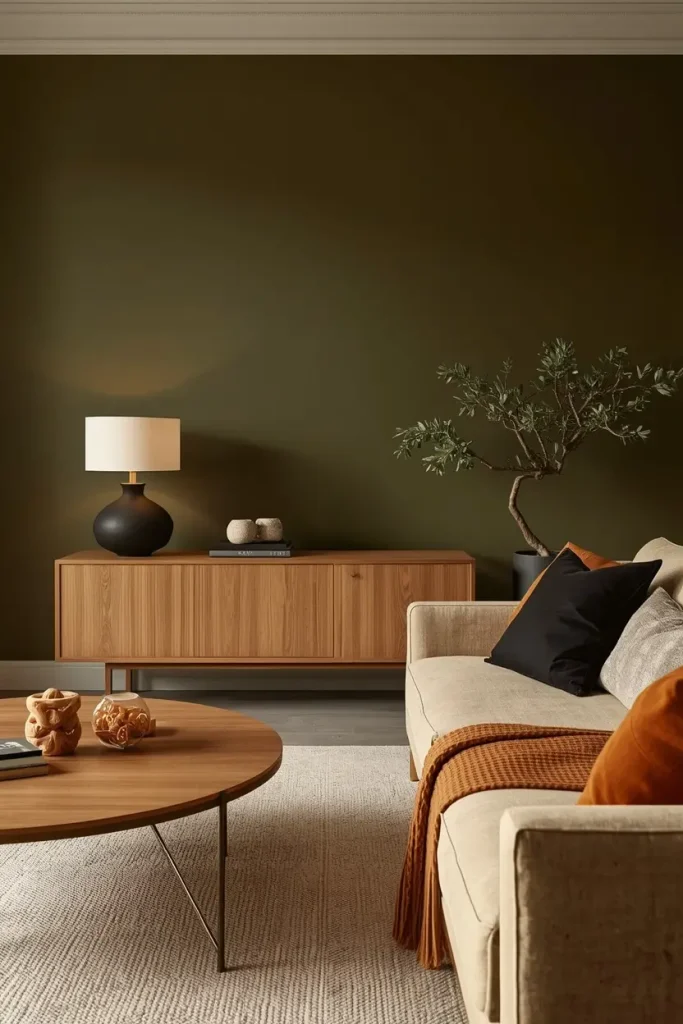
Olive green feels earthy and calm. It sits between green and brown. Deep olive on the walls looks rich in lamplight and fresh in daylight.
Natural oak is the best partner. Use it for a console, a shelf, or the coffee table. The warm grain softens the green. Add a rust or sand throw for contrast.
Pick an eggshell finish for easy cleaning. Matte paint looks richer but marks faster. Test two shades in the room before you commit. Check them in the morning and at night.
Bring in plants with big leaves. An olive tree fits well. Use matte black pots to keep the look tidy. Avoid bright greens, because they fight the wall color.
Warm brass handles tie the look together. A ribbed glass lamp adds soft light by the sofa.
4. Mushroom and Espresso Tonal Layers
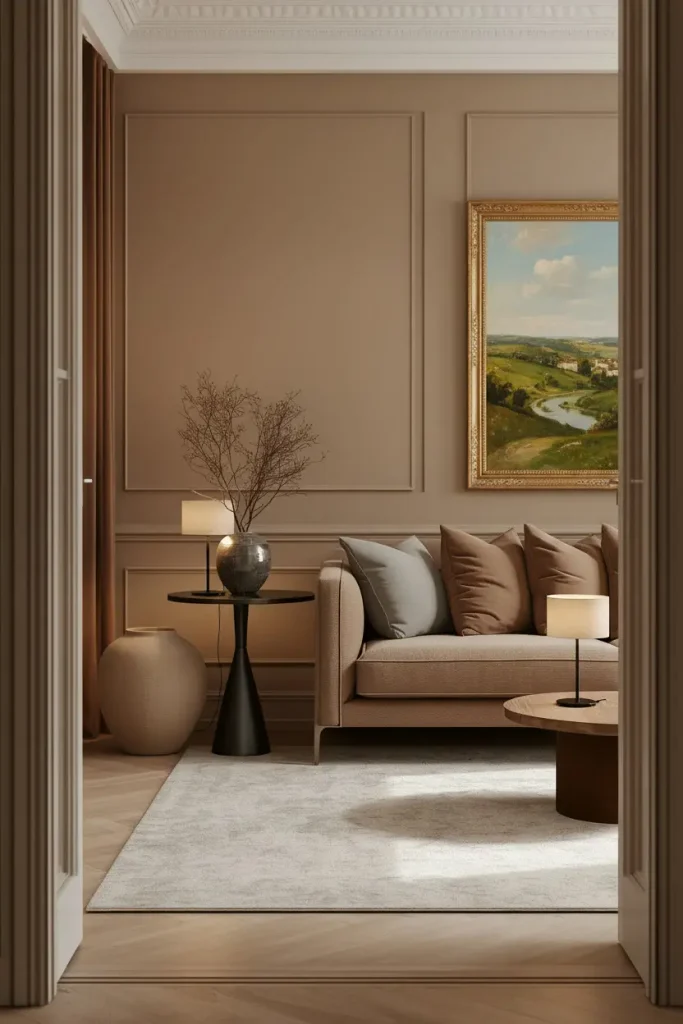
Tonal layering means using shades of one color family. Here it is mushroom, taupe, and espresso. The room feels quiet and expensive. Nothing shouts.
Start with mushroom walls. Add a taupe sofa and an espresso side table. Use a cream rug to lift the floor. The shades change slowly, which feels calm.
Texture does the real work. Mix wool, linen, velvet, and rough ceramic. Each surface catches light in its own way. Without texture, a tonal room looks flat.
Keep accessories few. Three large objects look better than ten small ones. Try one big vase, one stack of books, and one bowl. Add a floor lamp with a warm bulb to finish.
Finish with a large piece of art in muted tones. Frame it in dark oak. The whole room then feels like a quiet gallery.
5. A Black Microcement Fireplace Wall
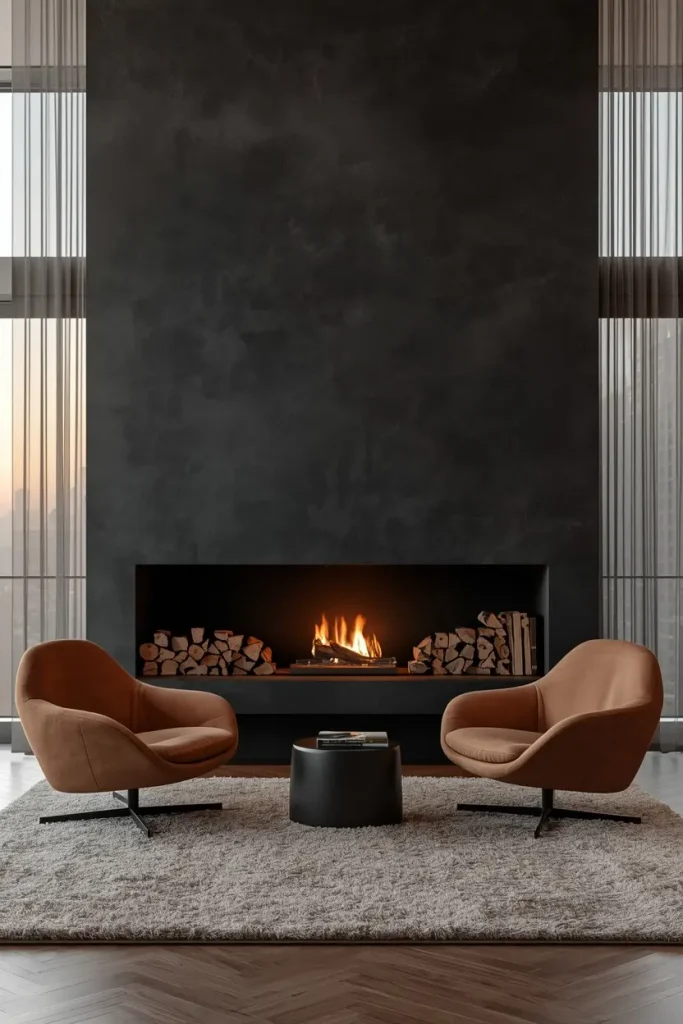
Microcement is a thin, seamless coating. It looks like smooth stone. In matte black, it makes a bold fireplace wall.
Run the finish from floor to ceiling. Skip the mantel so the wall stays clean. A recessed shelf can hold one piece of art. Place two low armchairs facing the fire.
Warm up the black with soft items. A shaggy wool rug and a camel throw help. Logs stacked in a niche add texture. Pick warm white bulbs, never cool ones.
Renters can skip the coating. Use black mineral paint and a freestanding electric fire. Mount the TV elsewhere. Mixing a screen with a fire often looks cluttered.
Light the wall well. Add a hidden strip above to graze the surface. The texture then glows like soft stone at night.
6. A Curved Ivory Sofa Against Dark Walls
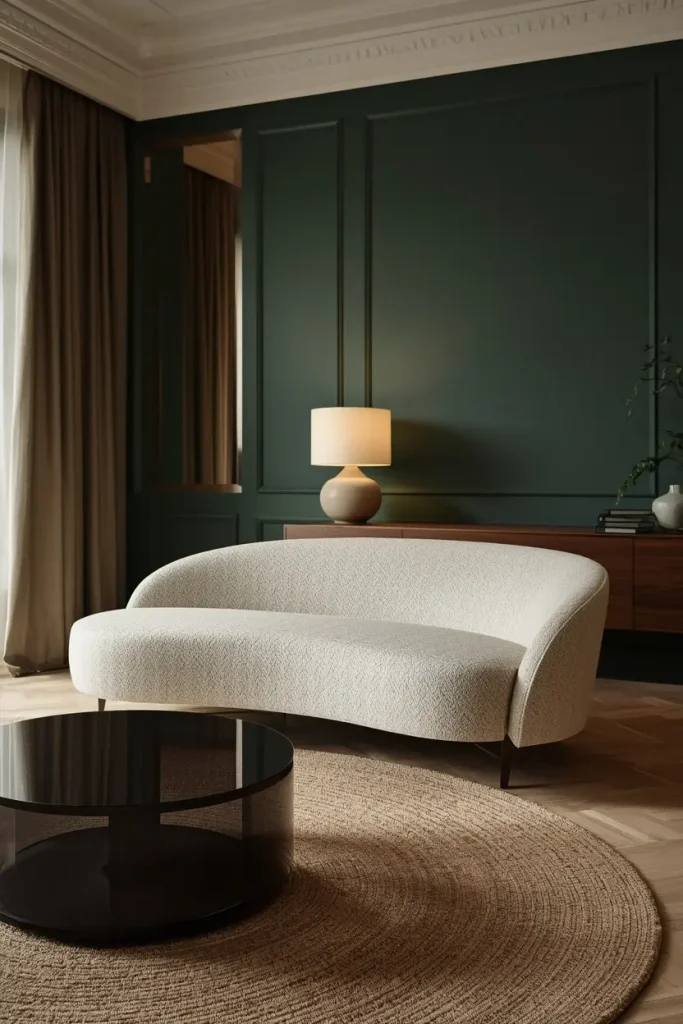
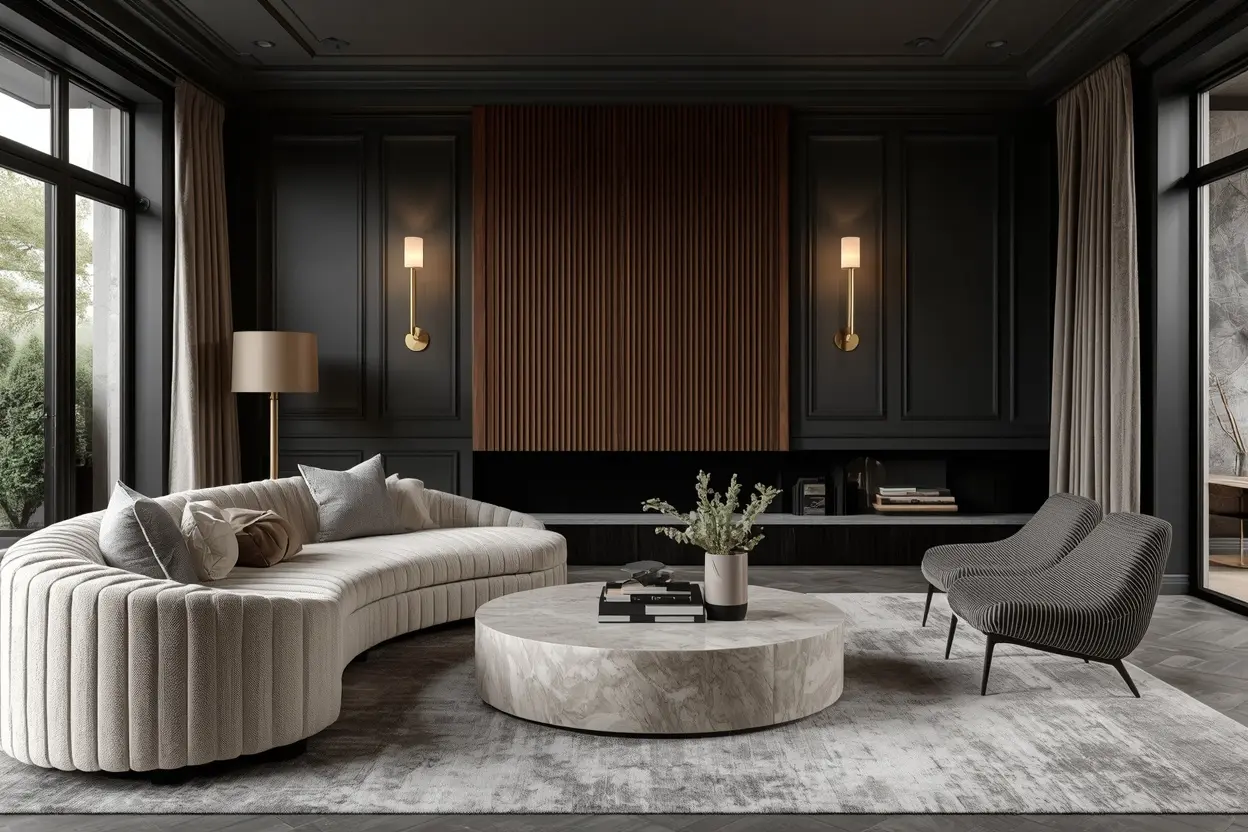
Curves soften deep color. A round, ivory sofa looks like sculpture in a dark room. Bouclé fabric adds a cozy, cloud-like feel. The pale shape stands out against charcoal or deep green walls.
Place the sofa away from the wall when you can. Floating it creates a lounge feel. Add a slim console behind it with a lamp. A round rug anchors the seating.
Pick performance fabric for families. It resists stains and pet hair. Cream bouclé can collect dust, so vacuum it weekly.
Repeat the curve with a round coffee table. Choose smoked glass or pale stone. Keep edges soft elsewhere too.
Mind the scale. A sofa sized too large will crowd a small room. Measure the floor first and tape the outline. Leave a clear walkway of three feet.
7. Terracotta and Chocolate Brown Warmth
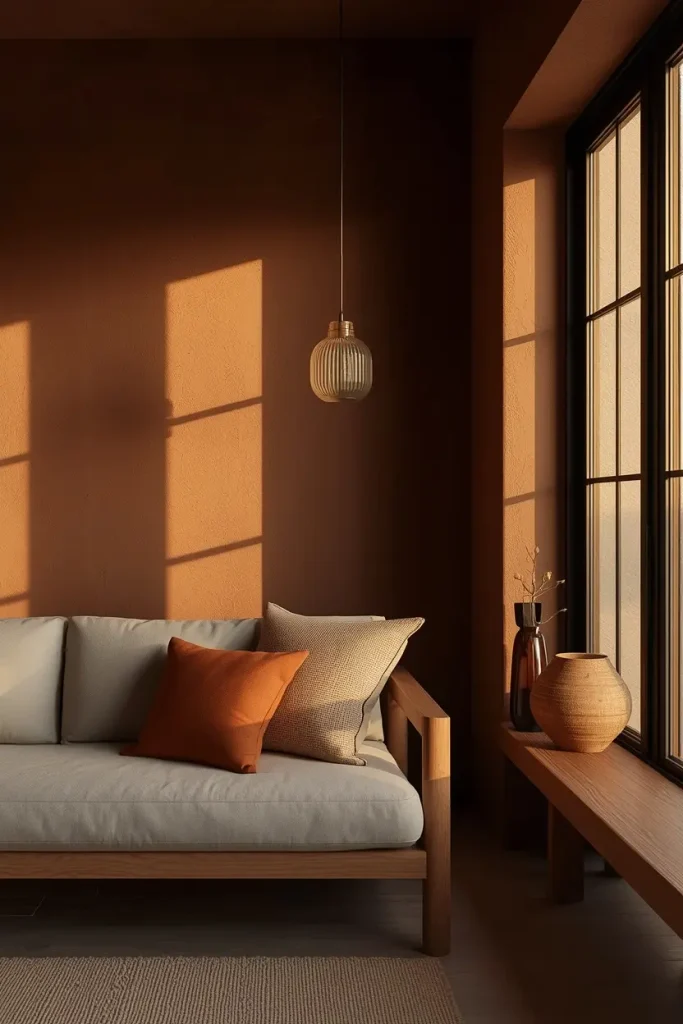
Chocolate brown is back. Paired with soft terracotta, it feels like a warm evening. The mood is Japandi, a blend of Japanese calm and Scandinavian ease.
Paint the walls a deep cocoa. Add a terracotta cushion or clay vase. Choose a low sofa with a light wood frame and linen cushions. Keep the lines simple and clean.
A ribbed glass pendant gives gentle light. Hang it slightly off center for a relaxed feel. Add a low wooden bench by the window. A ceramic bowl on top adds charm.
Avoid too many patterns. One woven throw is enough. Leave open floor space so the room can breathe. Dark rooms need pauses.
Finish with a deep green plant in a clay pot. Natural greenery keeps brown walls fresh. Leave one shelf bare for calm.
8. Smoked Glass and Brushed Brass Lighting
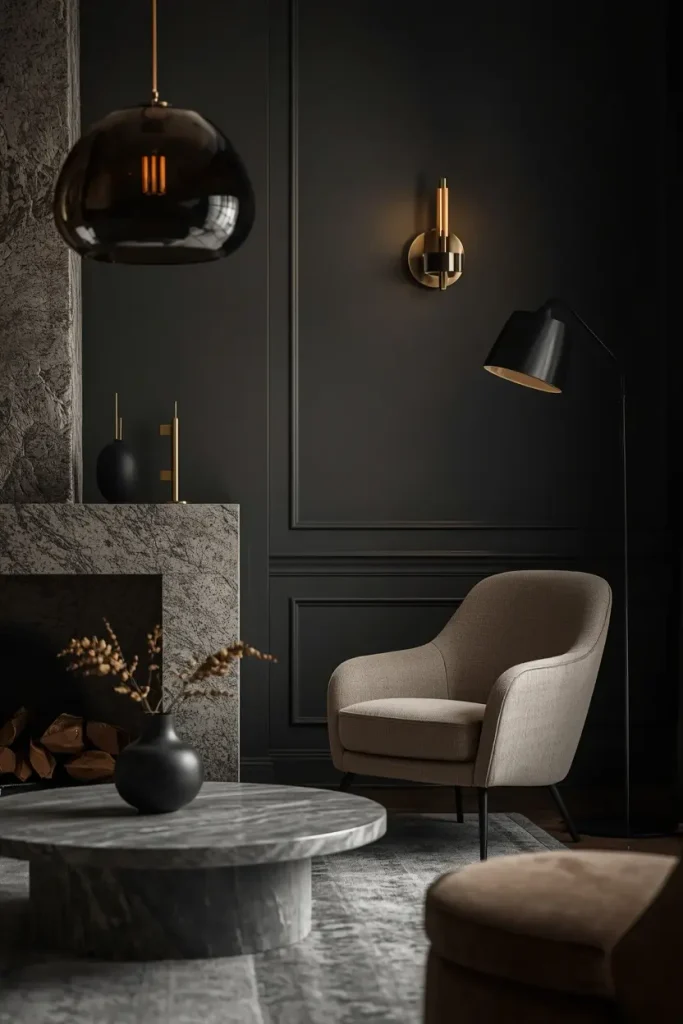
Lighting makes or breaks a dark room. Plan three layers: ambient, task, and accent. Give each one its own switch or dimmer. Dimmers matter most.
Hang a smoked glass pendant over the coffee table. Smoked glass gives off a soft amber glow. Add brushed brass sconces near the sofa. Brass picks up the light and glows warmly.
Use a slim floor lamp beside the reading chair. Place a small lamp on the console. Keep all bulbs at 2700K, a warm tone. Mixed bulb colors look messy.
Avoid a single ceiling light. It casts hard shadows and flattens dark walls. Aim for pools of light, not one big glare.
Check your lights at dusk and note any dark corners. Add a small lamp wherever shadows pool. Smart plugs make daily control much simpler.
9. Built-in Dark Shelving with Hidden Storage
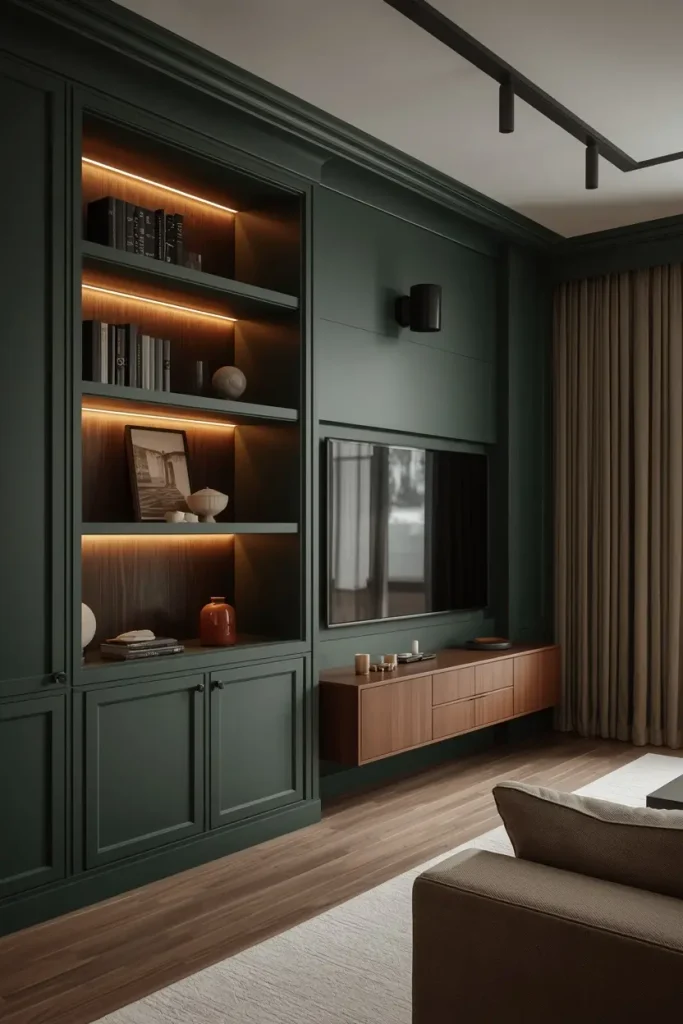
Built-in shelves turn a dark wall into a feature. Paint the shelves and wall the same deep shade. Books and objects then seem to float. The look is rich and tidy.
Choose closed cabinets below and open shelves above. Hidden storage tucks away remotes, toys, and cables. The open shelves show your best pieces. A slim light strip behind each shelf adds glow.
Style with restraint. Leave a third of each shelf empty. Mix books, ceramics, and one framed print. Group items in odd numbers.
A floating media unit works if floor space is tight. Mount it low on the wall in walnut or matte black. Hide cables in a wall channel for a clean finish.
Finish the doors with slim brass pulls. Push-latch doors look cleaner still.
10. A Dark Apartment Corner for Renters
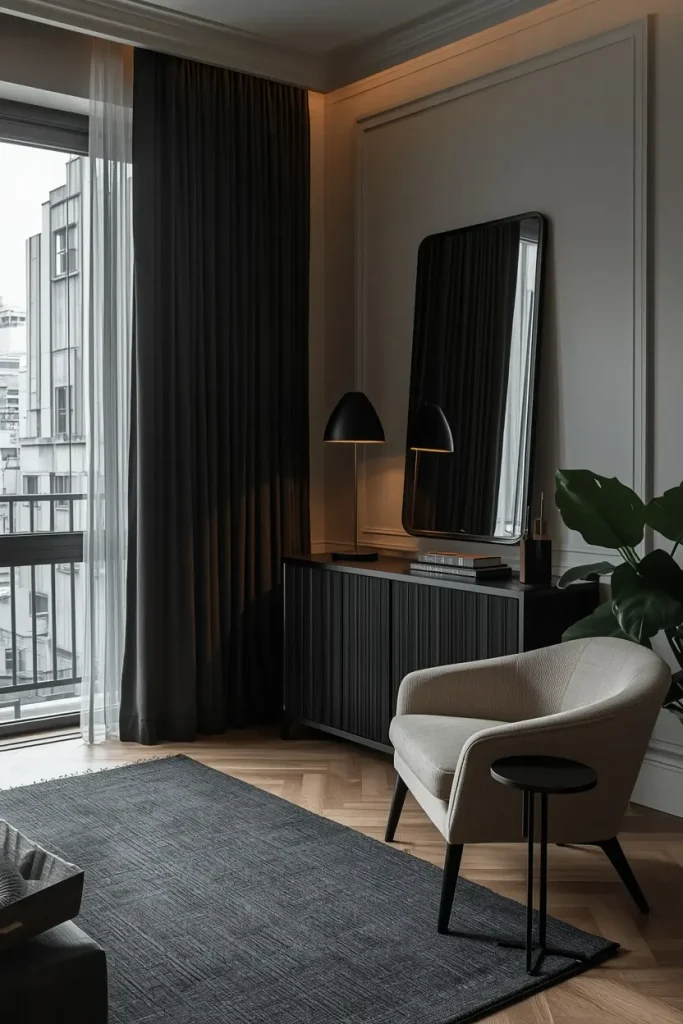
Renters can enjoy dark color too. You do not need to paint. Start with one corner and build it with removable items. Small steps still look bold.
Hang deep green or charcoal curtains from ceiling to floor. Add a dark wool rug. Lean a tall mirror against the wall to bounce light. Choose a slim console in black metal and oak.
Use peel-and-stick wallpaper in a soft plaster print if your lease allows. Test a small patch first. Remove it slowly with a hair dryer.
Keep furniture light in color so the room does not shrink. A cream armchair works well. Add a floor lamp and a plant. You now have a cozy reading nook.
Add a woven basket for throws. Choose a dark one to blend in. Every item moves with you when you leave.
Conclusion
Dark living room ideas work best when you balance depth with warmth. Pick one shade, then layer wood, fabric, and soft light. Small touches change the mood fast.
Start simple. Paint one wall or add one lamp. See how the room feels at night. Then build from there.
Trust your eye. Live with the color for a week before judging it. Light changes everything.
Bold rooms still need breathing space. Leave open floor, bare wall, and soft edges. A calm room feels richer than a crowded one.
Save your favorite ideas and come back when you are ready. Your living room can feel bold, calm, and elegant all at once.