
The right lighting can change a whole kitchen. Even great cabinets and stone can look flat without it. Smart kitchen pendant lighting ideas do more than brighten a counter. They set the mood, mark work zones, and give the room a focal point.
Today’s kitchens feel soft and calm. Think linen, ribbed glass, plaster, and warm brass. Shiny industrial fixtures are fading out.
Below are twelve looks, from big drum shades to slim linear bars. Each one comes with sizing tips, style pairings, and budget fixes. Renters get easy options too. You will learn how high to hang each light, how far apart to space them, and which bulbs look best. Pick your favorite and save it for later.
Kitchen Pendant Lighting Ideas That Start with Oversized Linen Drums
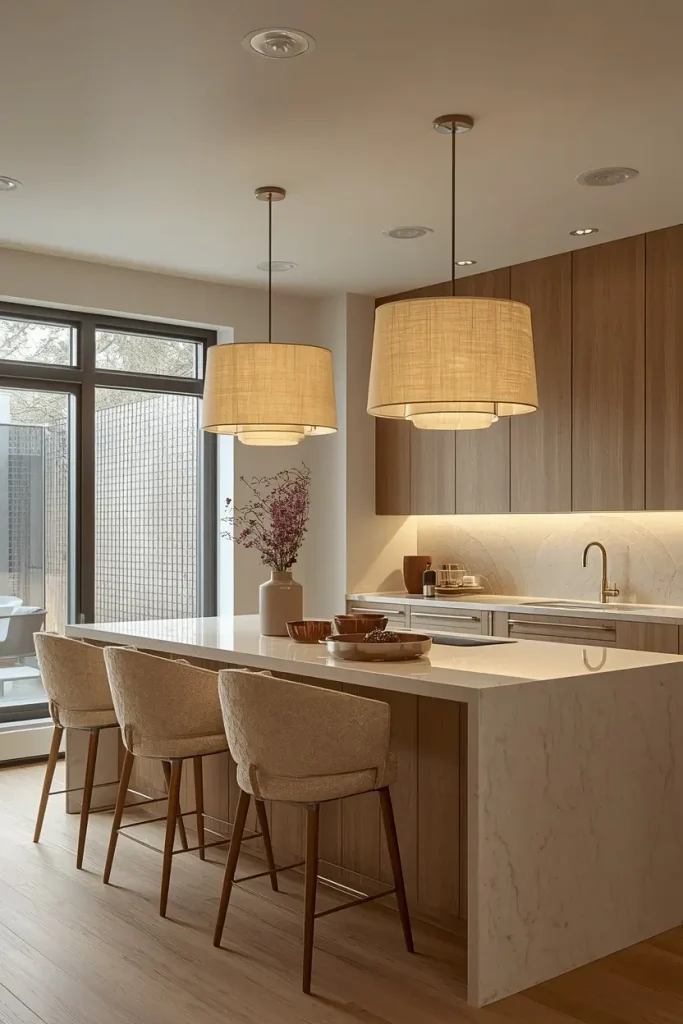
Picture a warm white kitchen with oak cabinets and a quartz island. Two big linen drum pendants hang above it. They glow like paper lanterns at dusk.
Linen spreads light evenly, so the whole room feels softer. It also absorbs sound, which helps hard-surfaced kitchens feel less echoey.
Choose shades at least 18 inches wide. Smaller ones look lost over an island. Hang the bottom edge 30 to 36 inches above the counter so nobody has to duck.
On a tight budget? Buy plain drum shades and fit them onto simple cord sets. The look stays elegant for far less money.
Ribbed Glass Globes in a Staggered Trio
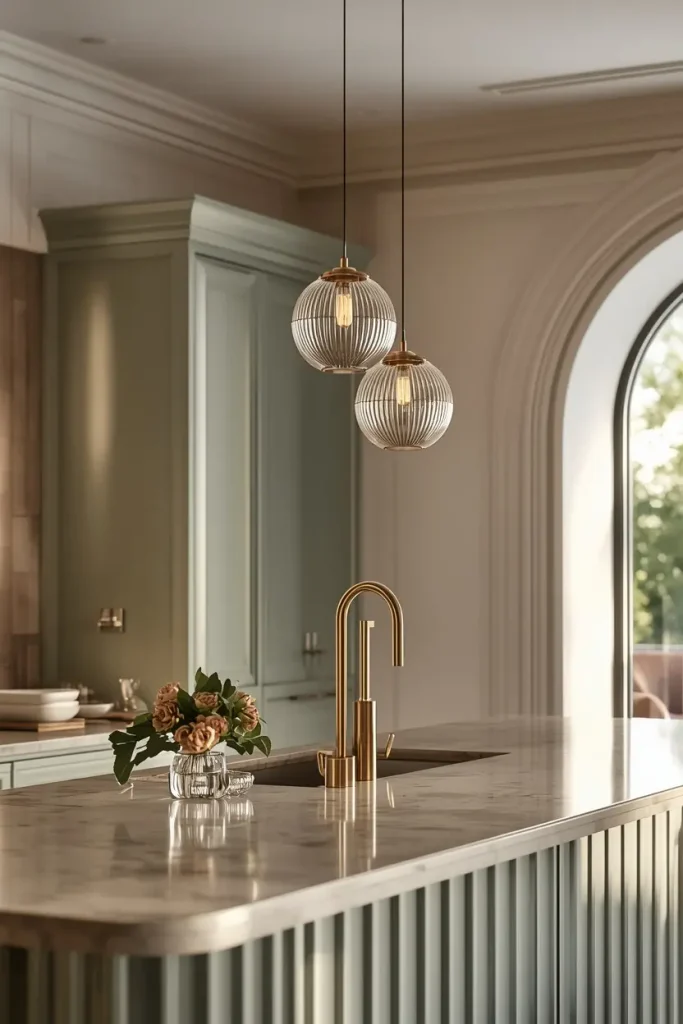
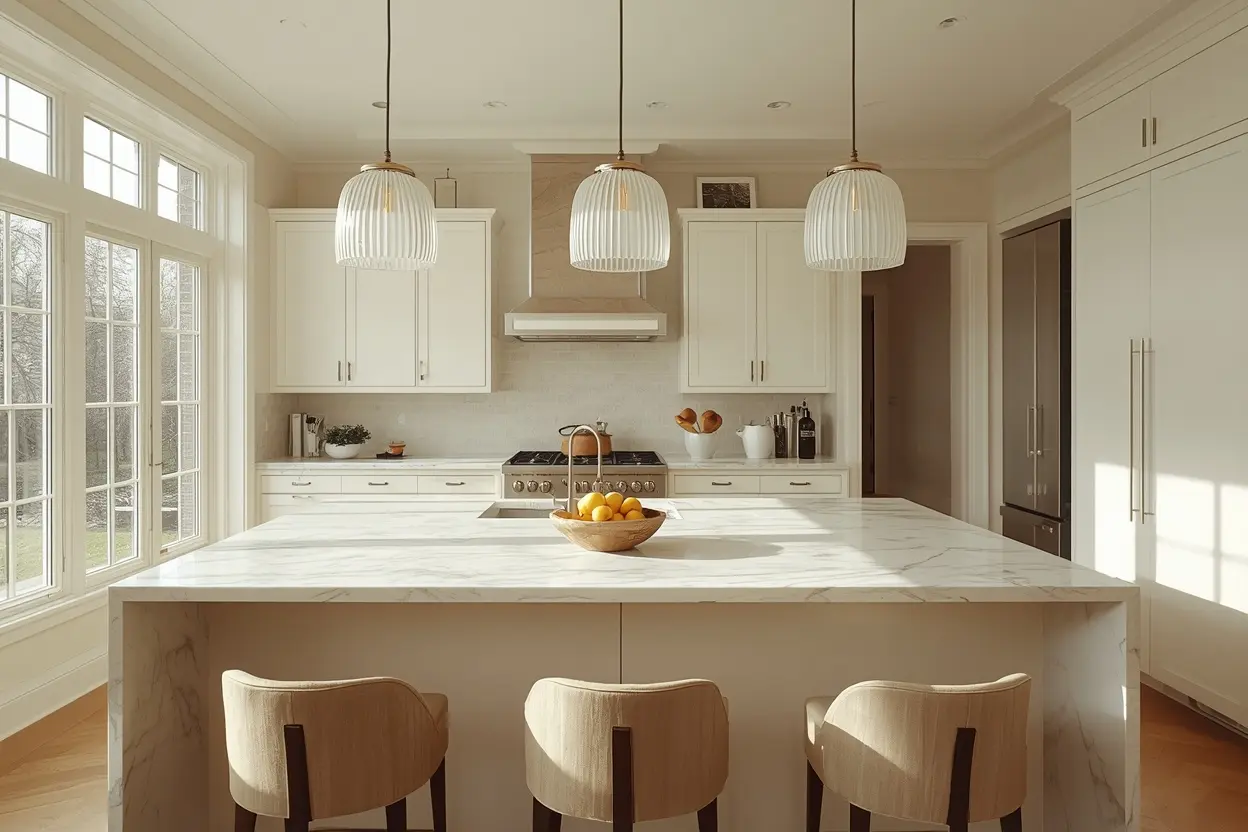
Ribbed glass catches light in fine vertical lines. The glow looks soft, rippled, and modern. Three globes hung at different heights over a pale stone island feel collected, not matched.
Pair them with brushed brass fittings and sage or greige cabinets. Warm metal keeps the glass from looking cold. Add a fluted island panel or ribbed range hood to tie everything together.
Stagger the drops by 4 to 6 inches. You get rhythm without chaos. Use warm bulbs around 2700K. Cool light makes ribbed glass look harsh.
Renters can try a plug-in version with a multi-canopy plate. No electrician needed.
Matte Black Domes for a Refined Farmhouse Look
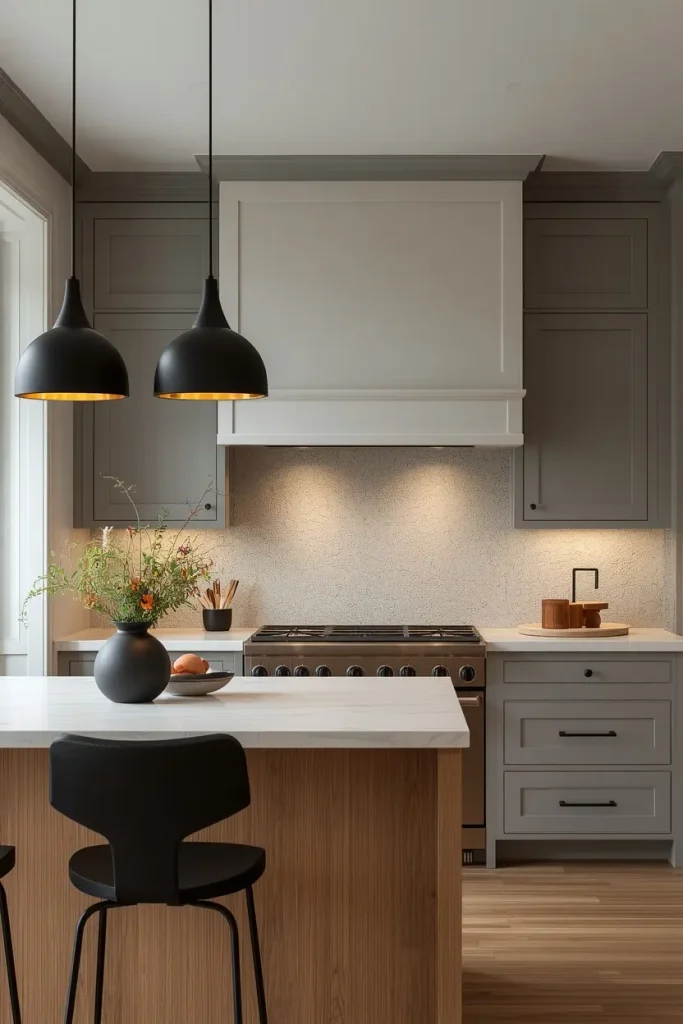
Modern farmhouse works best when it is edited. Picture slim matte black domes over a white oak island. Add simple shaker cabinets and a plaster-style backsplash. Black brings crisp contrast without rustic clutter.
Choose domes with a clean shape and a white or brass inside. The lighter lining pushes warm light down onto the counter. Dark interiors leave the work surface dim.
Space the pendants about 30 inches apart, center to center. Pools of light should overlap gently.
Skip distressed finishes and busy patterns. They pull the room back toward dated farmhouse. Repeat the black once or twice more, such as in a faucet or cabinet pulls. Families will love the easy wipe-clean metal.
Japandi Paper Lanterns with Quiet Texture
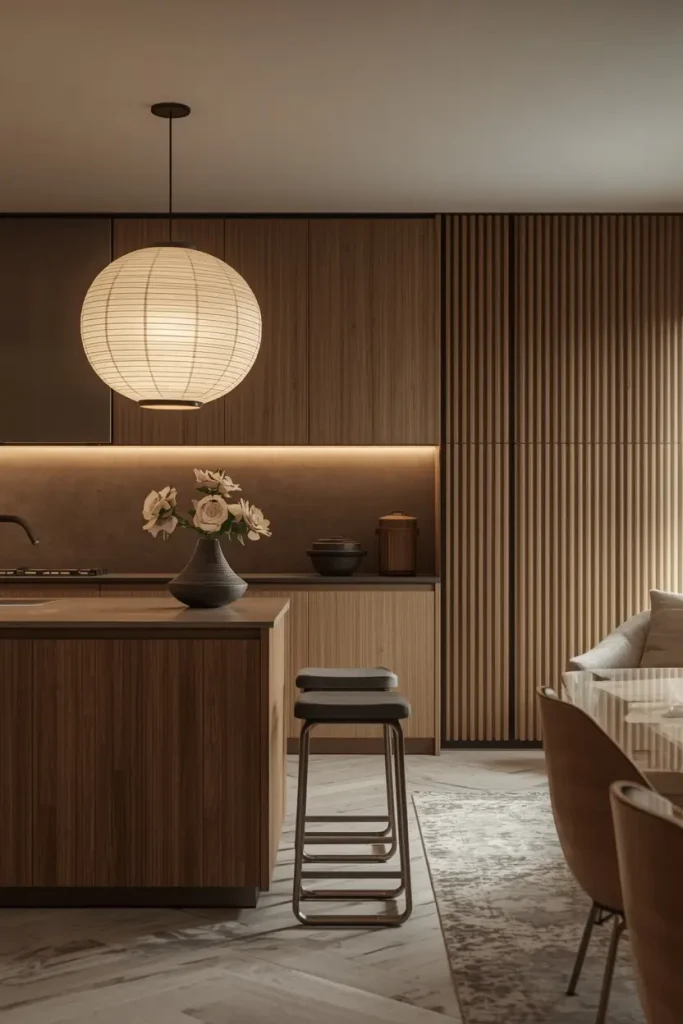
Japandi mixes Japanese calm with Scandinavian warmth. A washi paper lantern fits the style perfectly. Hung over a walnut peninsula or slim table, it gives off a soft, candle-like glow. Even a small kitchen feels peaceful.
Keep the palette gentle. Use sand, mushroom, and pale oak, with one dark accent like a charcoal stool. Choose a clean sphere or a lightly tapered shape. Shape matters more than decoration here.
Paper reacts to steam and grease. Hang lanterns over a breakfast bar, not the cooktop.
Resist hanging a long row. One or two lanterns with space around them feel calmer than a crowded cluster.
A Single Sculptural Pendant for Small Kitchens
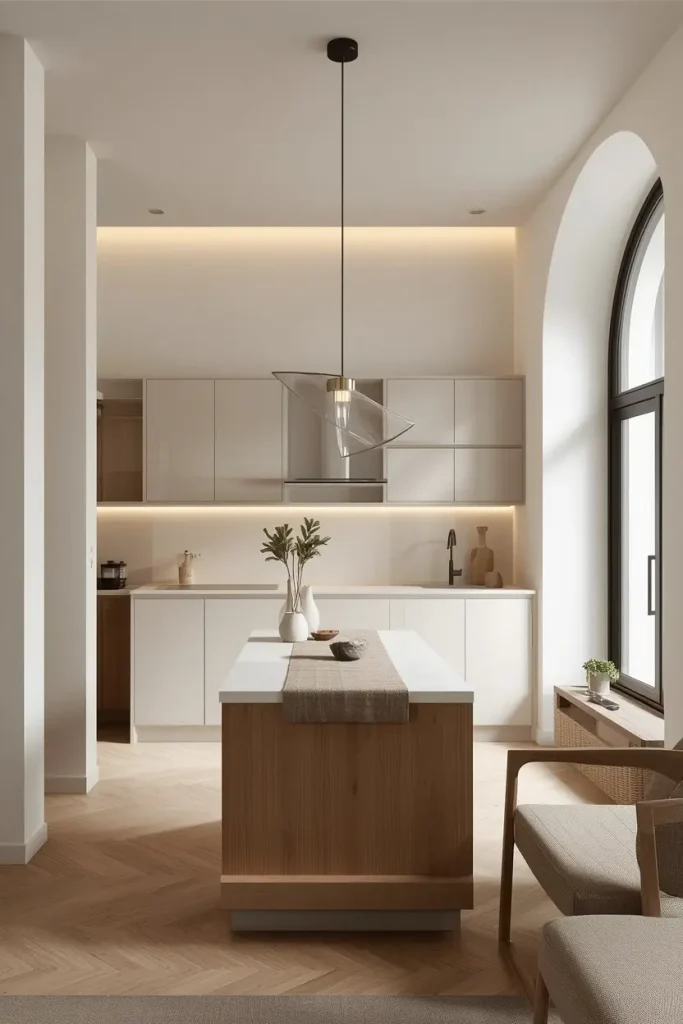
In a small apartment kitchen, one bold fixture can do a lot. A sweeping arc, a stacked glass form, or a hand-blown bubble pulls the eye upward. The ceiling feels higher.
Keep the backdrop simple. Warm white walls, a slim wood shelf, and a neutral runner are plenty. The pendant becomes the artwork, so skip extra decor.
Hang it over a small peninsula, a dining ledge, or the center of the room. Go a little larger than you think. A timid fixture gets lost.
Renters can use a plug-in cord, a ceiling hook, and a sleek cord cover. No drilling into wiring required.
A Slim Linear Fixture over a Long Island
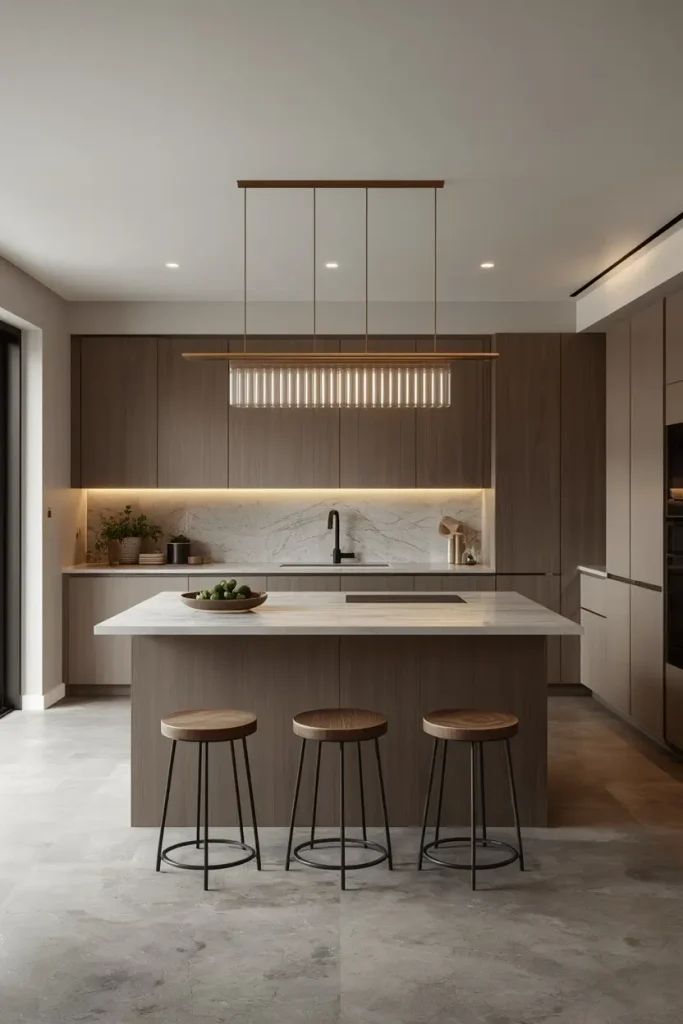
A long island can look crowded with many separate pendants. One linear fixture looks cleaner. Picture a slim bar in brushed brass or matte black. Frosted glass tubes sit evenly along its length, running parallel to a waterfall-edge counter.
The style is very contemporary. It suits flat-panel cabinets, microcement floors, and simple stools. The long line echoes the island and adds a tidy architectural rhythm.
Choose a fixture about two-thirds the island’s length. It looks balanced and leaves the ends free.
Check ceiling support before buying. Ask an electrician to confirm the junction box position. Add a dimmer so the light works for homework at noon and dinner at night.
Smoked Glass Clusters over Charcoal Cabinets
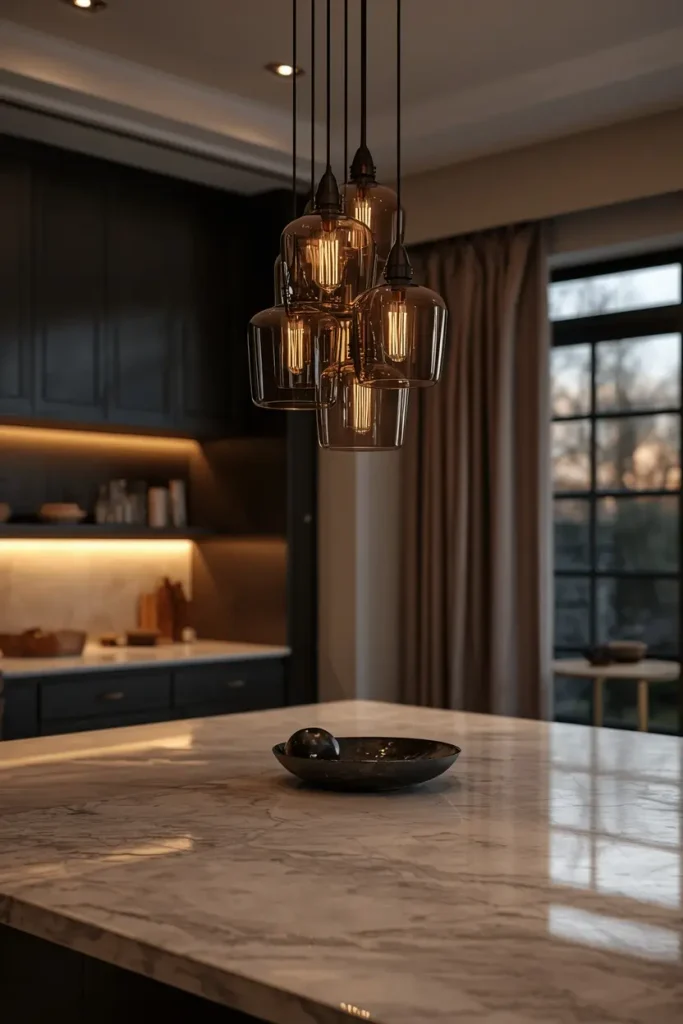
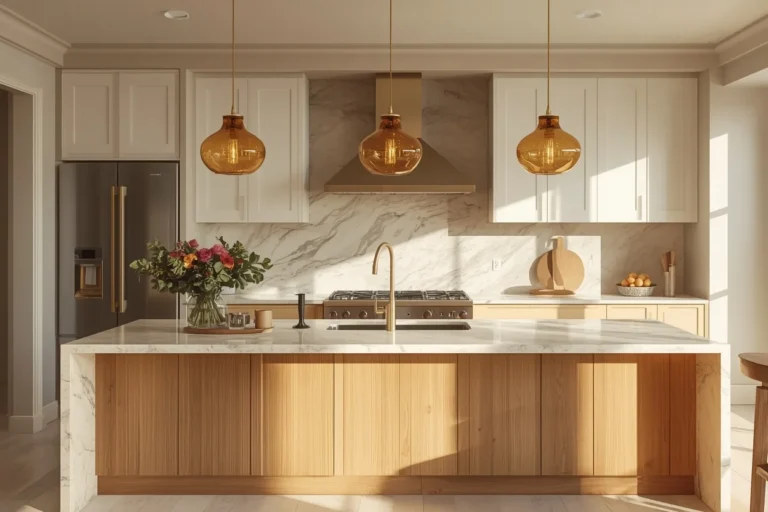
Dark cabinets can look rich and calm with the right light. Smoked glass pendants glow amber against charcoal or deep walnut. Group three or five in a loose cluster for a quiet-luxury mood.
Warmth is the key. Balance dark cabinets with a pale stone counter, light oak flooring, and brass details. The room stays airy instead of heavy.
Vary the heights within the cluster. A mix looks sculptural, while identical drops look stiff.
Be careful in a kitchen with few windows. Dark glass can swallow light fast. Add under-cabinet strips as a second layer. You can then dim the pendants low and still see your chopping board.
Textured Plaster Pendants for a Modern Mediterranean Kitchen
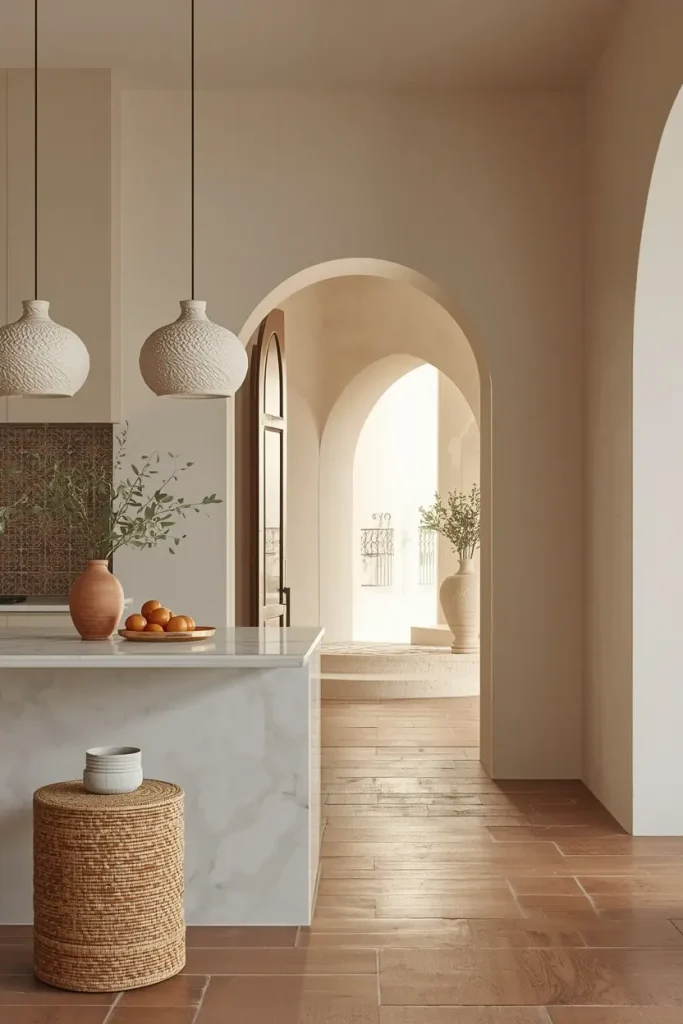
Limewash walls, soft arches, and terracotta tiles set the scene. Plaster or matte ceramic pendants fit right in. Their rough, hand-finished surfaces look artisan-made. They add a sun-baked softness polished fixtures can’t match.
Pick bowl or dome shapes in cream, clay, or sand. Against a limestone backsplash and honed marble counter, they feel timeless, not themed. Add olive branches in a ceramic vase and a woven stool to finish the look.
Plaster is heavy and opaque. Light glows at the rim instead of washing the room. Plan recessed lights or wall sconces for the work zones. Let texture be the star and keep everything else simple.
Tapered Pendants Linking the Kitchen and Dining Nook
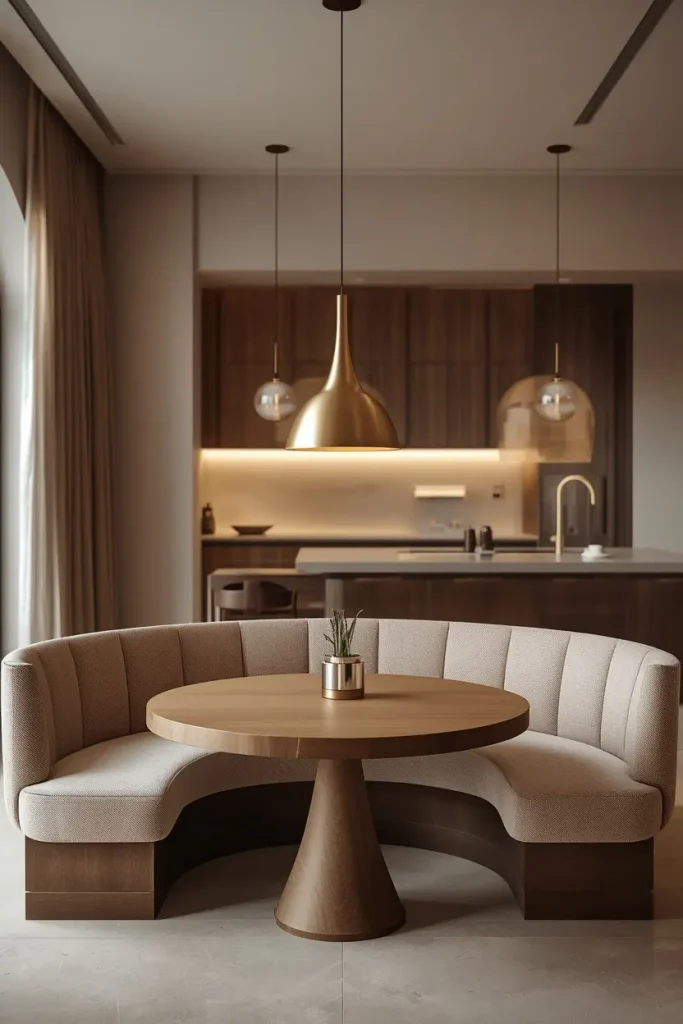
Open-plan homes need kitchen and dining zones to connect. They should not blur into one space. Tapered cone or bell pendants over a breakfast table do the job well.
Use one shared finish, such as brushed brass, with different shapes. Try three globes over the island and one wider shade over the table. The two groups seem to talk across the room. A bouclé banquette and a round oak table add softness for slow mornings.
Hang table pendants lower than island lights. About 30 to 34 inches above the tabletop feels cozy. Check that the shade clears seated eye level.
Put the table lights on their own dimmer. An everyday nook becomes an evening dining room.
Mini Pendants Framing the Sink Window
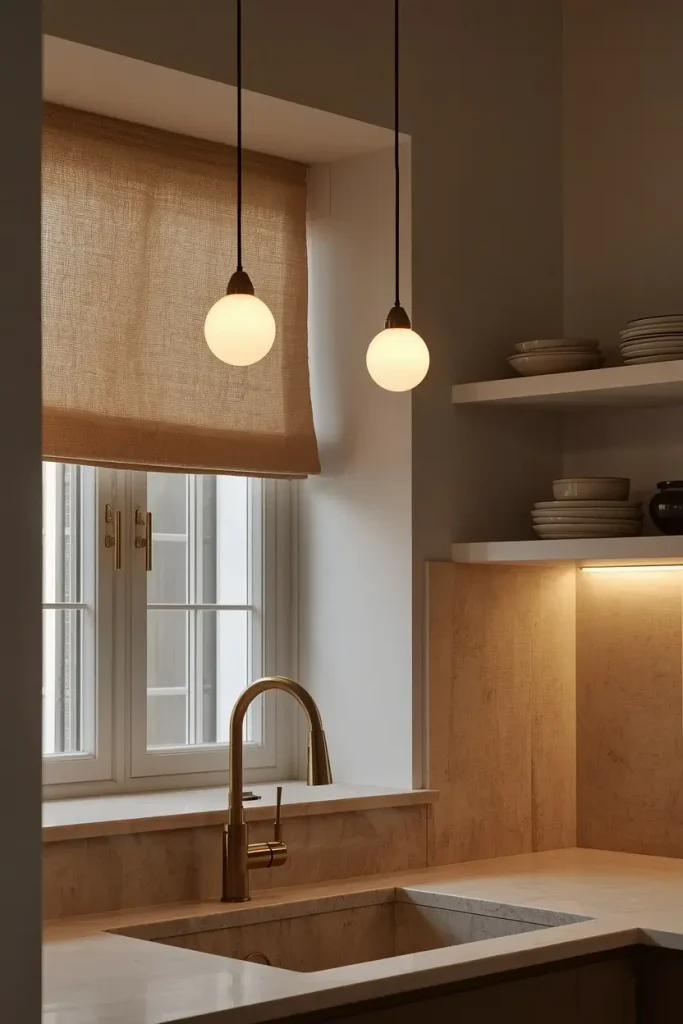
The sink is a busy spot but rarely a pretty one. A pair of mini pendants on each side of the window fixes that. A single one above the faucet works too. You get useful task light and a jewel-like detail.
Keep shapes small and simple. Opal glass, brushed brass, and ceramic all look lovely. Add a stone sill, a linen café curtain, and a slim shelf of everyday dishes. The corner looks quietly editorial.
Keep the scale delicate so the lights don’t block the view or crowd the faucet. Pick humidity-friendly finishes. Choose damp-rated fittings where splashes are likely.
After dark, the warm glow stops the window from turning into a black mirror.
Fluted Walnut Pendants with Scandinavian Warmth
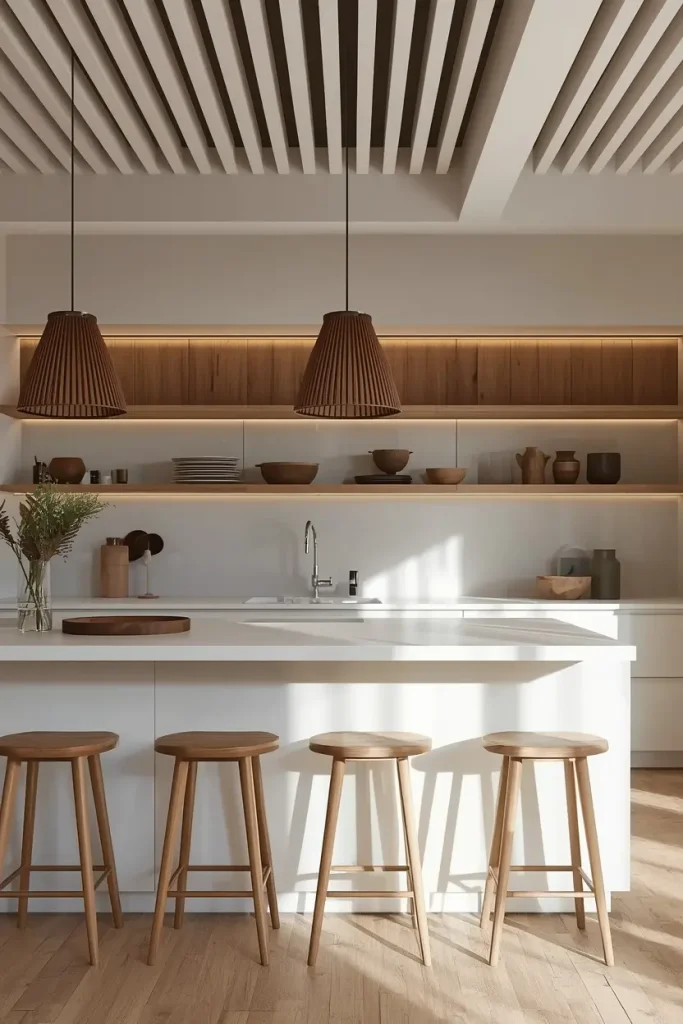
Fluted wood has moved from feature walls to lighting. Walnut or oak pendants with vertical grooves give a rich, architectural glow. Soft striped shadows spread across the ceiling and add depth.
Scandinavian kitchens suit them well. Picture pale oak floors, matte white cabinets, and simple ceramic dishes. The wood grain warms a palette that could feel cold.
Match the pendant finish to one other wood piece, like the stools or open shelves. The look feels planned. Avoid mixing three wood tones in one sightline.
Wood can run warm near bulbs. Use LED bulbs and read the maker’s wattage guide before installing.
Alabaster Bowl Pendants with a Soft Stone Glow
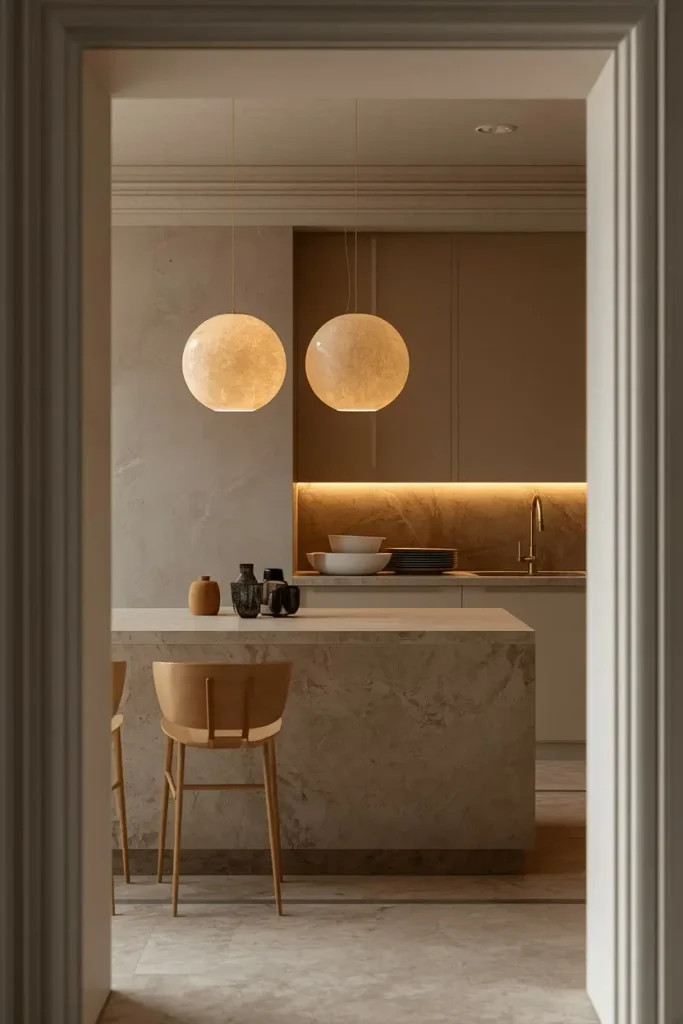
Alabaster pendants look like lit stone. Natural veins glow honey-gold when the light is on. When it’s off, the shade reads as quiet sculpture. It is a graceful match for travertine or limestone surfaces.
Choose bowl shapes. Pair them with warm white cabinets, aged brass taps, and a few handmade ceramics. The material does the decorating, so the room needs little else.
Each stone is different, so no two pendants look identical. Enjoy the variety instead of chasing perfect matches.
Hang them away from the range, since stone dislikes strong heat. Add a soft dimmer to fine-tune the candlelit glow all day.
Conclusion
The best kitchen pendant lighting ideas make a room feel thoughtful. Glowing linen, ribbed glass, or one bold sculptural piece can become the star of your kitchen. Good lighting works hard and looks beautiful while doing it.
Keep three things in mind as you plan. Measure height and spacing with care so the lights feel comfortable. Match the material to your counters and cabinets for a cohesive look. Add a dimmer so the mood shifts from bright mornings to soft evenings.
Start with the idea that fits your layout and budget. Save your favorites, and let the lighting guide the rest of the room.