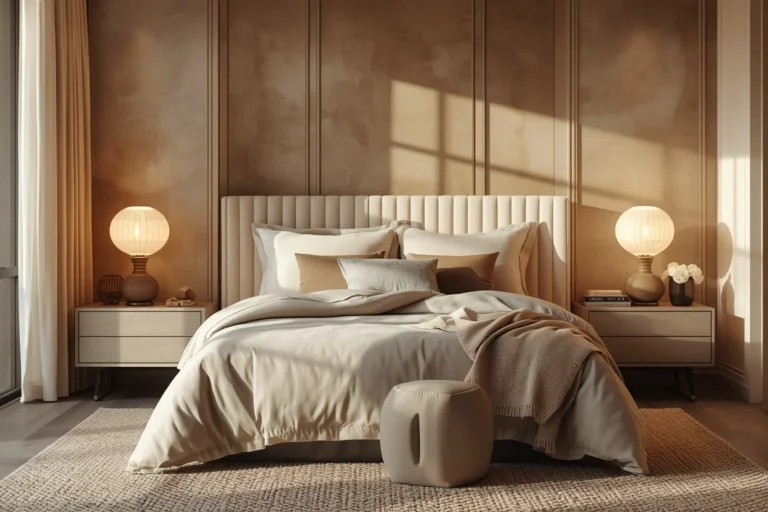
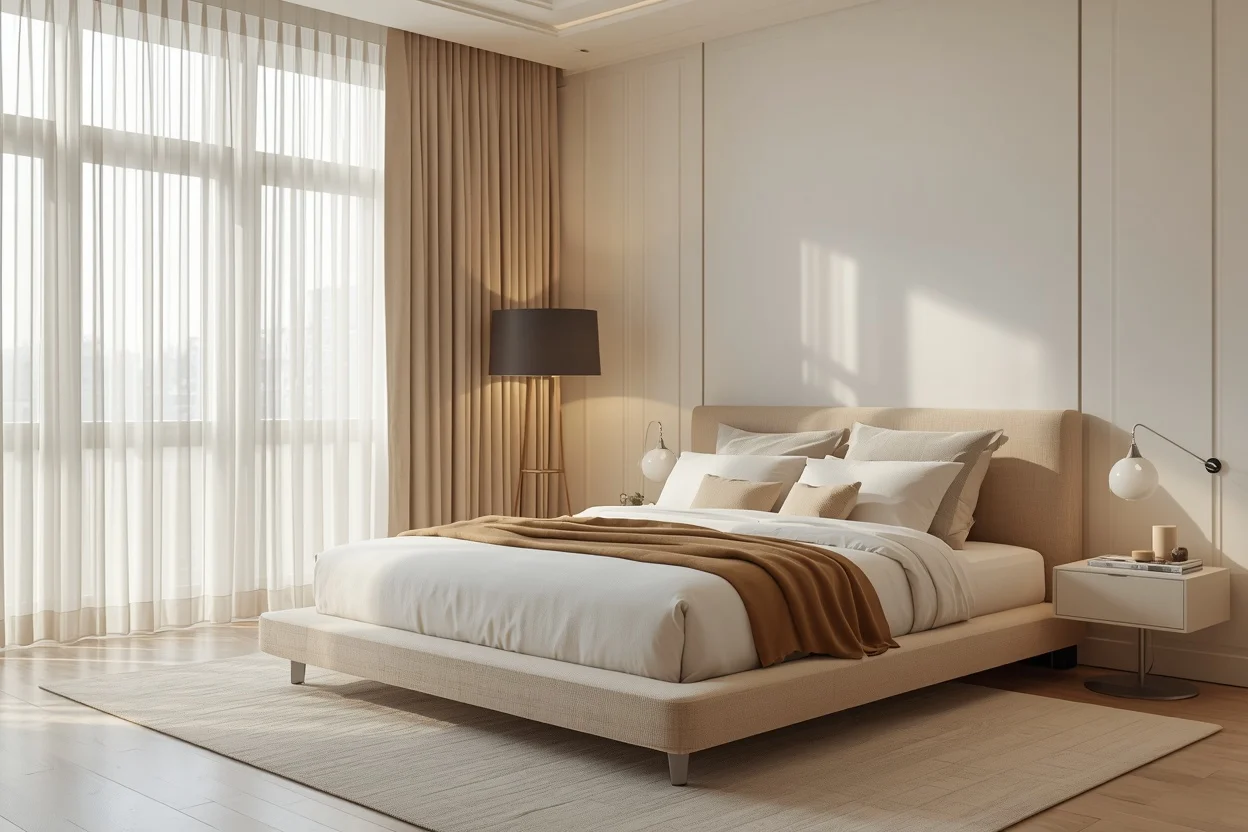

A calm bedroom starts with fewer, better choices. You don’t need a full renovation to get there. You need intention.
Minimalist design isn’t about owning less for no reason. It’s about picking pieces that earn their place. Warm textures keep the room cozy. A few strong details do more than a dozen small ones ever could.
Below are 11 minimalist bedroom ideas you can start using this weekend. Each one is practical, stylish, and easy to bring into a real home.
1. Choose a Low-Profile Platform Bed
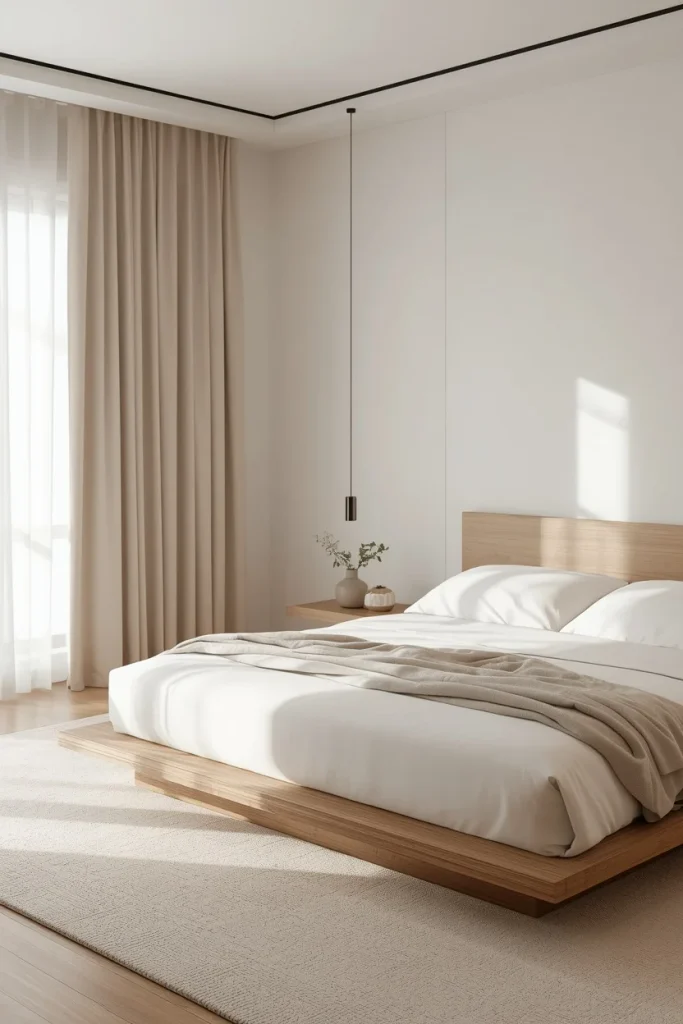
A low platform bed makes a bedroom feel more open right away. Without a tall headboard, your eye travels further across the room. Even a small bedroom feels bigger with a low frame.
Pick a frame in natural oak or walnut for warmth. Add a slim upholstered headboard in linen or bouclé if you want extra softness. Keep bedding in warm white or soft beige. Skip busy patterns, since they fight the clean lines of the bed.
Platform beds often skip the box spring too. Less furniture means less dust and an easier room to keep tidy.
2. Layer Three Soft Neutral Tones
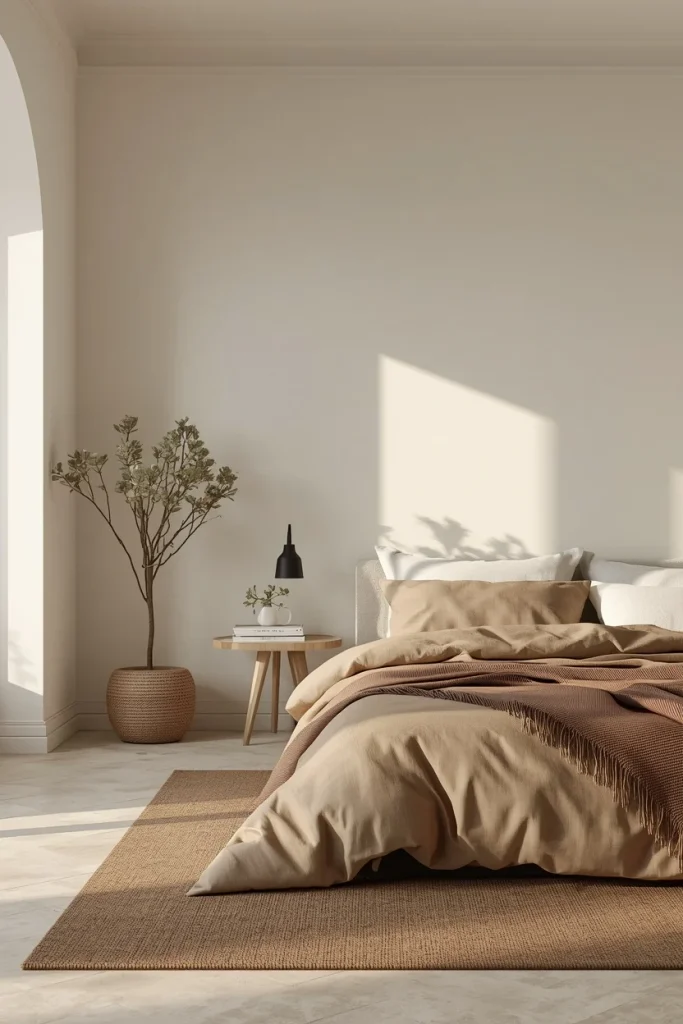
One flat neutral color can feel cold in a bedroom. Try three related tones instead: warm white walls, a taupe linen duvet, and a mushroom wool rug.
Layered neutrals give your eye something gentle to rest on. The room still feels calm, but it never feels bare or clinical. Designers use tonal shifts for depth, not extra color.
Test your paint and fabric swatches in real daylight first. Undertones can look very different in the morning than at night.
3. Hang One Large Piece of Art
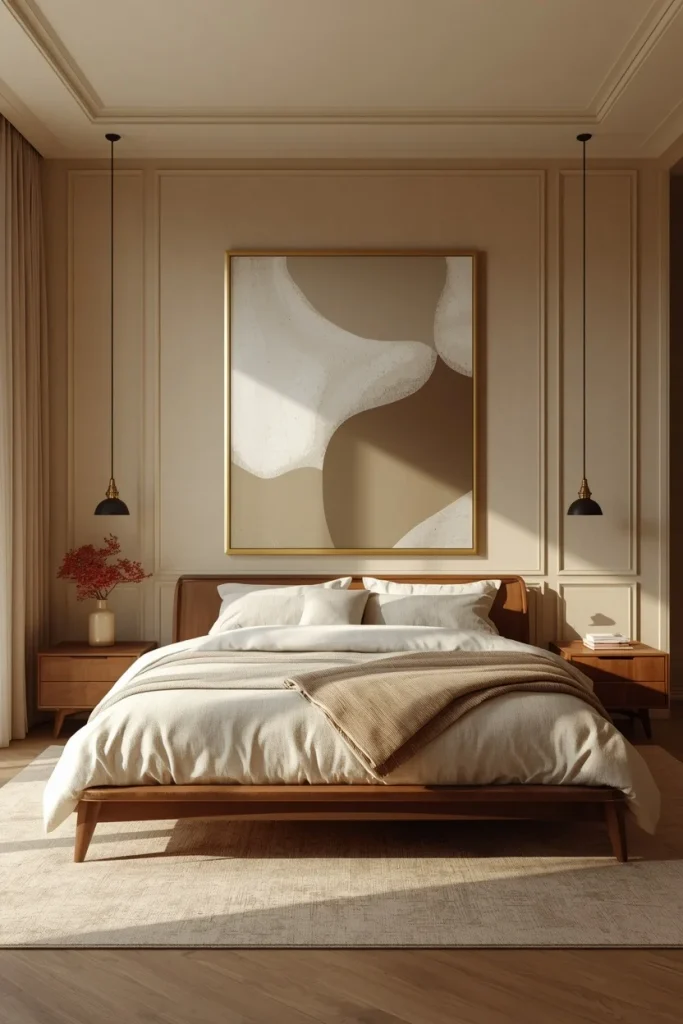
Minimalist doesn’t mean empty walls. One large art piece above the bed does far more than several small frames. Pick soft shapes or an earthy palette that matches your room.
Size matters most here. A small piece gets lost above a bed. Aim for art that spans about two-thirds of your headboard’s width. A large piece gives the room a clear focal point.
A framed print in a simple wood or matte black frame works just as well as original art, and costs far less.
4. Swap Overhead Light for Warm, Layered Light
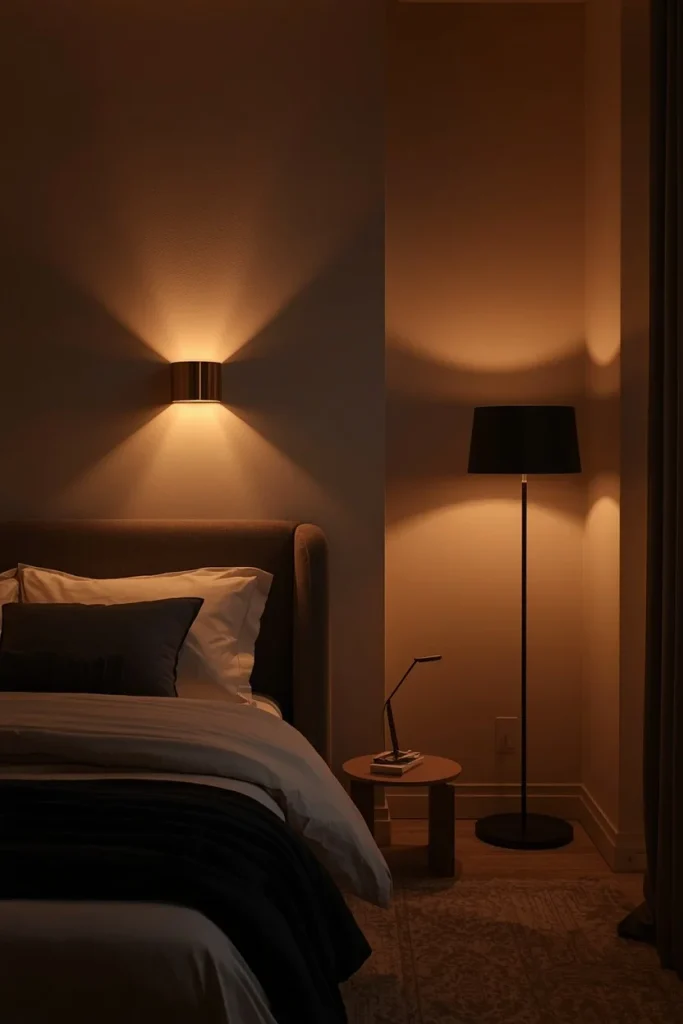
Harsh overhead light can ruin a calm bedroom in seconds. Build your lighting in layers instead. Add a sculptural floor lamp, two slim wall sconces near the bed, and a small table lamp.
Layered light lets you shift the mood through the day. Sconces free up nightstand space and frame the bed nicely on both sides.
Pick fixtures in brushed brass or matte black for a quiet detail. Stick to warm bulbs. Cool white light flattens a room and works against a cozy feel.
5. Pick Nightstands That Float
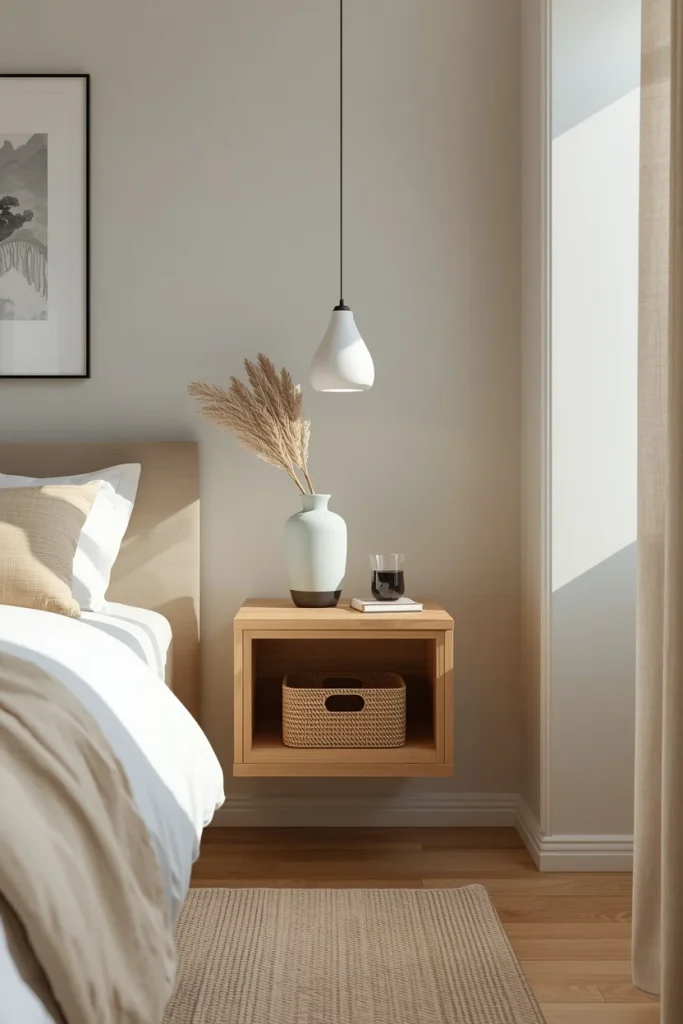
Bulky nightstands with thick legs can clutter even a well-styled room. Wall-mounted floating nightstands fix this fast. You get storage without losing visible floor space.
Floating shelves work best in small bedrooms. Open floor space makes any room feel larger. Try a natural oak shelf with a small woven basket underneath for extra storage.
No wall mount option? Pick a slim console table with one drawer instead of a boxy multi-drawer piece. Keep the shape light so it never competes with the bed.
6. Layer Textures on the Bed
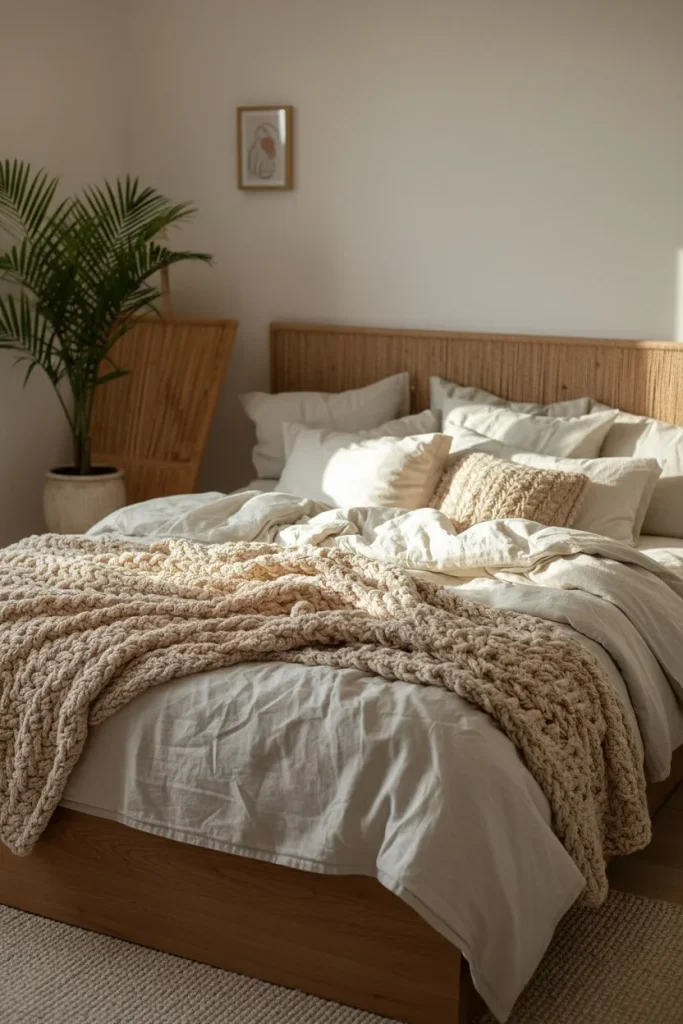
A minimalist bed should still feel warm and inviting. Use texture instead of pattern to add interest. Try a crisp linen duvet, a chunky knit throw, and two or three pillow textures like bouclé and washed cotton.
Texture does the work pattern usually does. Your eye catches the contrast between smooth linen and a nubby knit, and it reads as rich, not plain.
Stay within one neutral color family. A simple rule works well: one hero texture, one supporting texture, and one small accent. More than that starts to feel cluttered.
7. Add One Sculptural Accent Chair
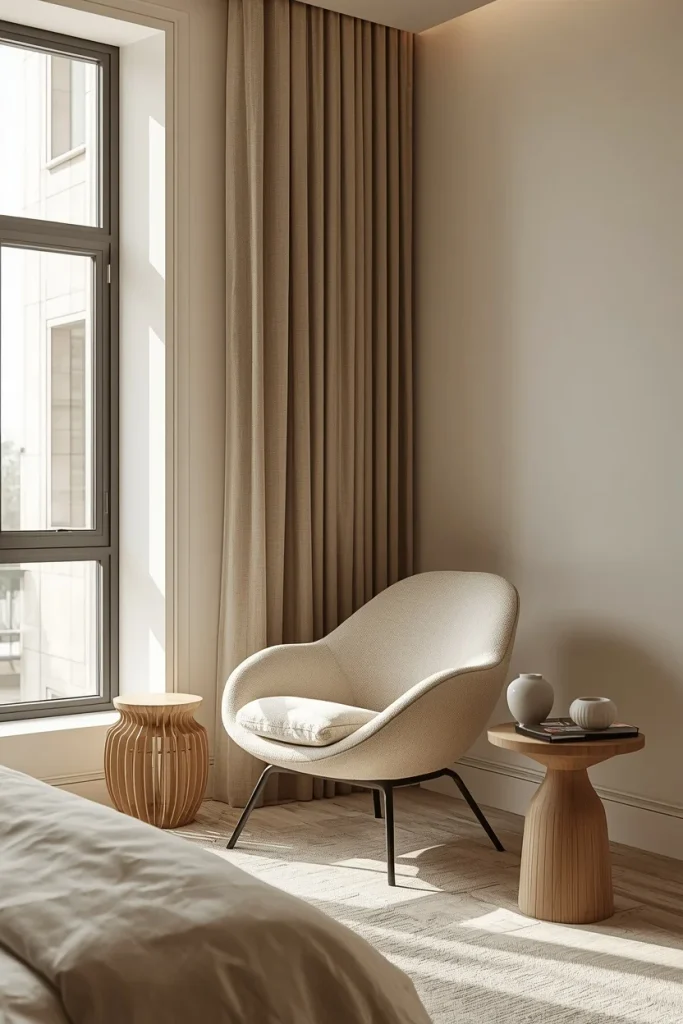
Many bedroom chairs become a spot for stray clothes. Break the habit with one strong, comfortable chair instead. Pick a curved shape in a soft fabric like bouclé or wool.
Place it near a window for an easy reading nook. You won’t need a side table or rug to make it feel complete.
One standout piece adds character to the room without adding clutter. It keeps the space light while still giving it personality.
8. Add a Fluted Wood Accent Wall
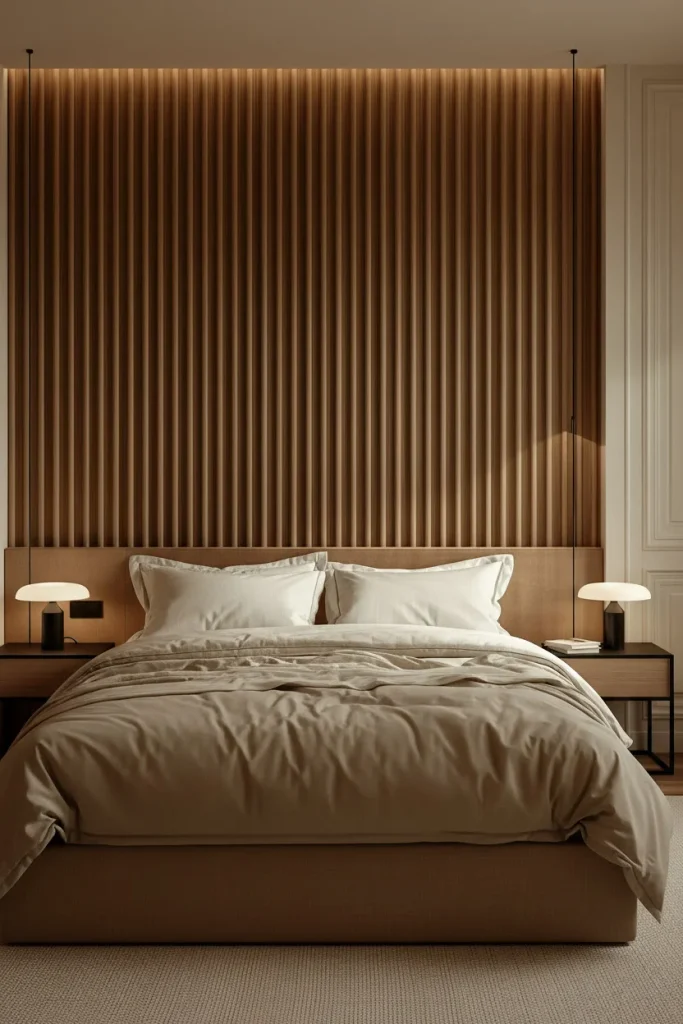
Plain drywall can leave a bedroom feeling unfinished. Fluted wood panels behind the bed add texture and depth without a single extra accessory.
Shadow and line create the interest here, not color or pattern. Paint the panels the same tone as your wall for a subtle, tone-on-tone look.
This upgrade is worth it. It gives even a simply furnished room a finished, custom feel.
9. Choose One Large, Grounding Rug
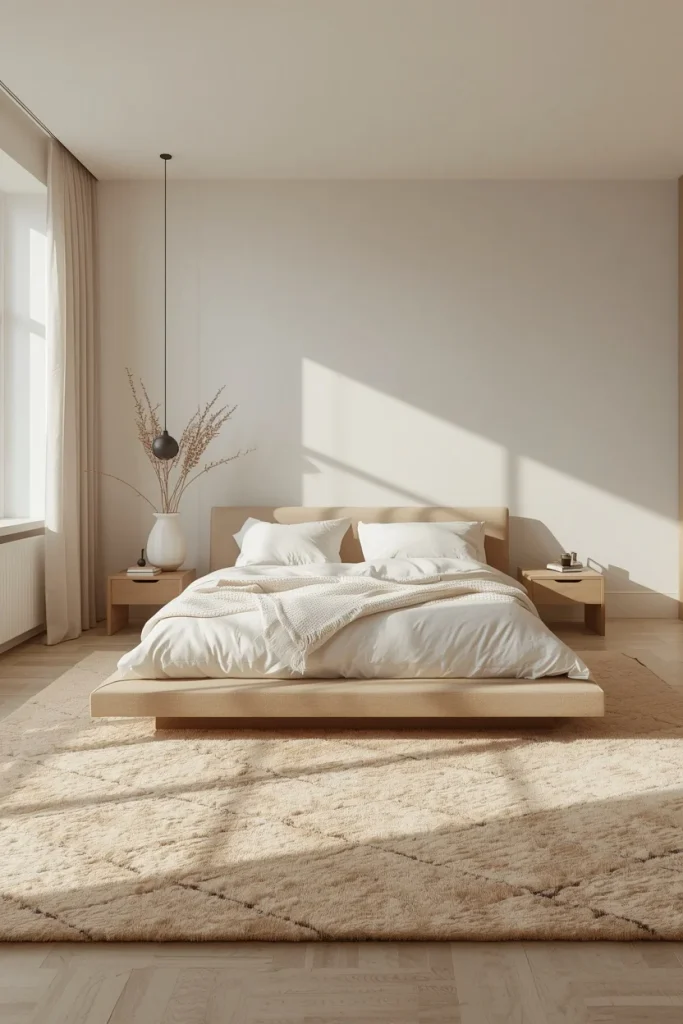
A too-small rug is a common styling mistake. Pick one large rug instead, one that extends at least two feet past each side of the bed. Wool or a low-pile weave works well.
A properly sized rug anchors your furniture and makes the whole layout feel planned. Choose a solid color slightly lighter or darker than your floor for subtle definition.
Skip a second small rug elsewhere in the room. One well-placed rug beats two competing ones every time.
10. Hide Storage in Clean Cabinetry
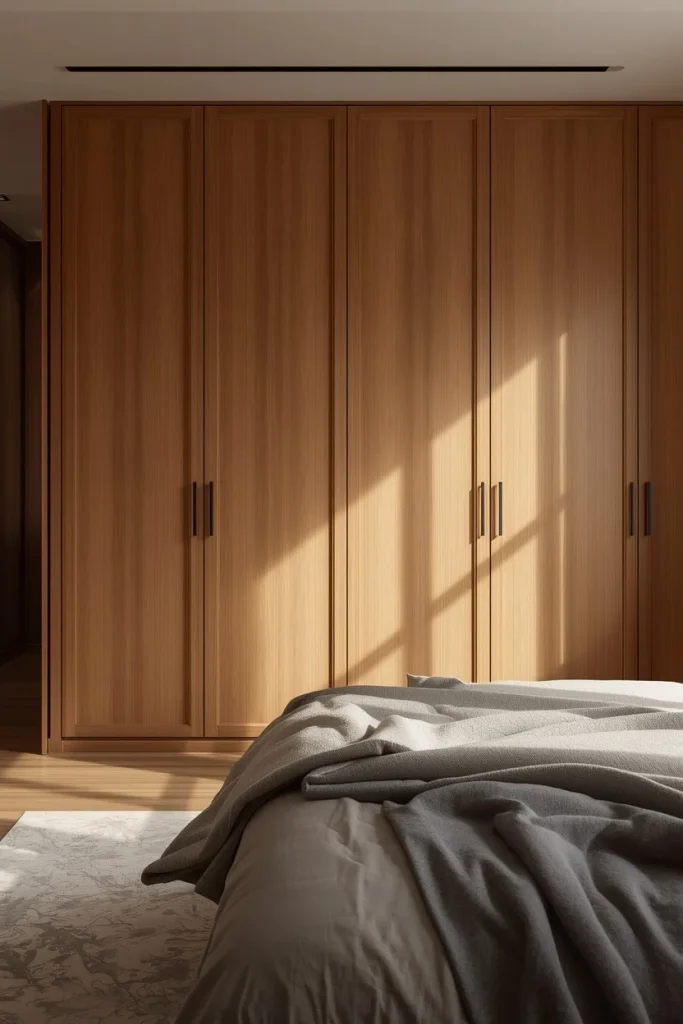
Visible clutter can undo a calm bedroom fast. Choose built-in or freestanding wardrobes with flat, handle-free fronts. Push-to-open hardware or slim recessed pulls keep the surface smooth.
This works well in small bedrooms, where an open closet can quickly turn busy. Warm wood or soft matte finishes make the storage feel like part of the room’s architecture.
Easy storage also means an easier daily routine. Your room stays tidy on an ordinary Tuesday, not just for photos.
11. Style With One Meaningful Object
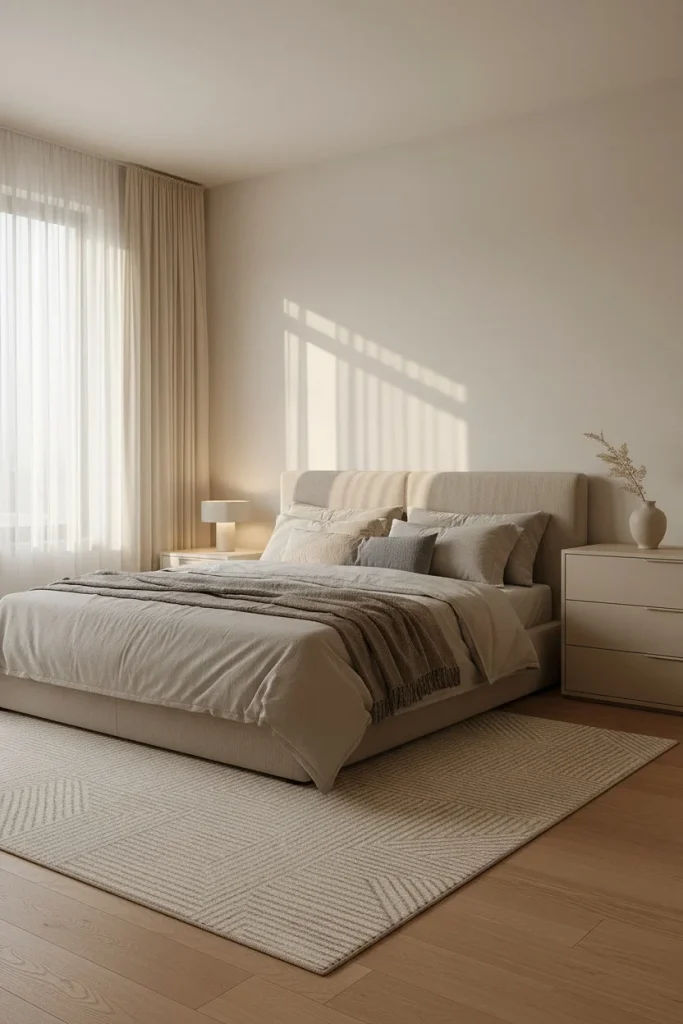
Finish the room with restraint. Skip grouping several small objects on a dresser or shelf. Pick one piece instead, like a ceramic vase or a single stem in a simple vessel, and give it space.
One object draws more attention than a crowded shelf ever could. It shows confidence in your design, not a need to fill every surface.
Choose pieces with texture or an interesting shape over anything purely decorative. A room styled this way feels personal and complete, even with very little in it.
Conclusion
A restful bedroom isn’t built by removing everything. It comes from choosing carefully what stays. Warm materials, layered light, and a few strong pieces beat a crowded room every time.
Start small. Swap in warmer lighting, layer your bedding textures, or hang one large art piece. Even one change can shift the whole feel of your room. Minimalism, done well, isn’t about having less. It’s about making sure everything left has a reason to be there.