
Green kitchens are everywhere right now, and it’s easy to see why. Green kitchen designs feel calm and full of personality. They don’t feel loud or trendy either. This color works so well because it comes from nature. It sits nicely next to wood, stone, and brass. Many designers now treat green like a neutral, not a bold choice.
Here you’ll find twelve green kitchen designs made for real homes. Not showroom fantasies.
Each idea walks through the colors, the materials, and the small details that make a kitchen feel warm and current. By the end, you’ll know which shade and layout fits your own space best.
1. Sage Green Cabinets With Warm Oak Accents

Sage green cabinets set a soft, grounded tone right away. The color feels calm, not cold. This is especially true next to natural oak shelves or a wood island top.
Oak has a warm tone. Sage has a slightly muted, gray-green tone. Together, they balance each other out. Neither one fights for attention, so the kitchen feels put-together instead of busy.
Add brushed brass hardware and pendant lights to bring warmth up high. A warm white marble or quartz counter keeps things feeling light and airy.
Want a low-cost version? Just paint your existing cabinets sage. Swap the hardware. Add a shelf or two. The color does most of the work.
2. Deep Forest Green Island With White Perimeter Cabinets
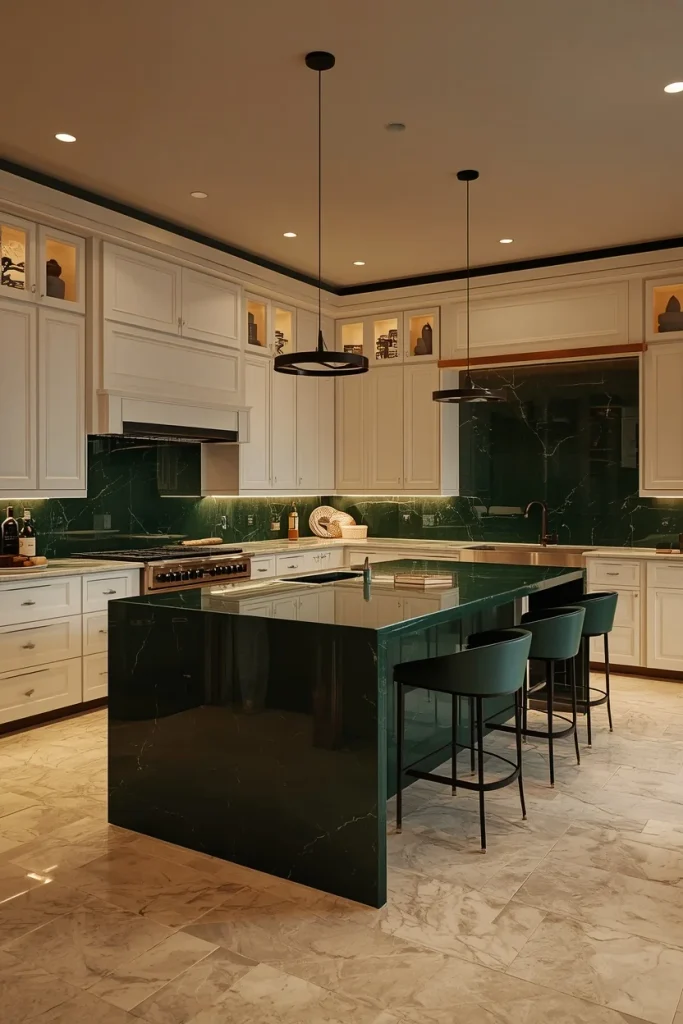
A deep forest green island makes an instant statement. Keep the rest of your cabinets in warm white, and the island becomes the star without taking over the whole room.
This two-tone look also solves a real problem. Dark lower cabinets hide scuffs and fingerprints far better than pale ones do.
Pair the island with a waterfall edge in warm quartz or travertine. This softens the jump between the two colors. Add brass or matte black fixtures to tie it all together.
This design works best in open kitchens. The deep green naturally marks off the cooking space from the living area, without needing a wall.
3. Olive Green Kitchen With Fluted Wood Cabinetry

Olive green is one of the most requested kitchen shades right now. Pair it with fluted wood cabinets, and it instantly feels current. The grooves catch light in a new way throughout the day, adding texture without any clutter.
Both elements here are quiet and understated. Olive isn’t as bold as forest green. Fluted wood feels refined, not rustic.
Keep your counters in a soft stone tone, like limestone or travertine. Let the cabinet texture take the lead. Add a sculptural pendant light above the island for a touch of quiet luxury.
One mistake to avoid: pairing olive with cool gray. It flattens the warmth. Stick with warm whites and natural wood instead.
4. Green and Brass Kitchen With Marble Countertops
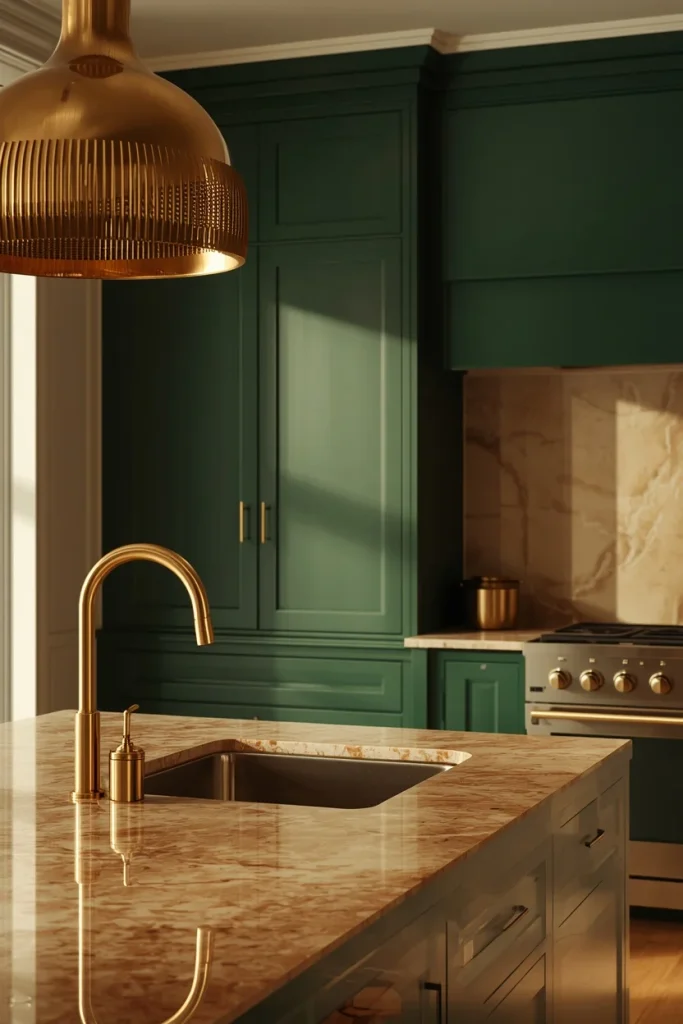
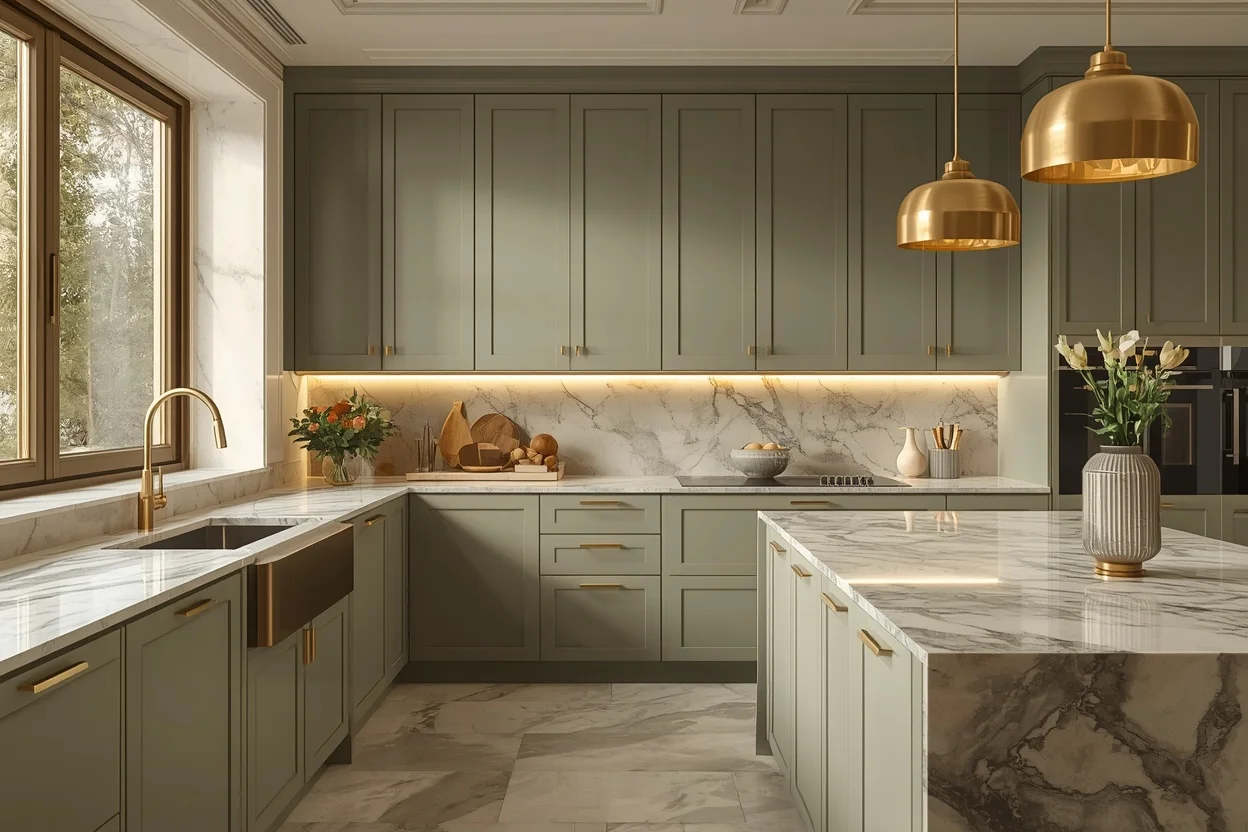
Green cabinets, brass hardware, and marble counters. This trio never really goes out of style. Each material brings out the best in the others.
Marble’s soft veining softens a bold green. Brass hardware adds warmth without competing with either surface. Together, the kitchen feels rich but still easy to live in.
Pick a marble with warm gray or beige veining, not stark white and gray. It works better with green. Add brass faucets, pulls, and a statement pendant light to finish the look.
This combo shines in both big kitchens and small galley layouts. The marble helps bounce light around tighter spaces.
5. Two-Tone Green Kitchen With Natural Wood Island
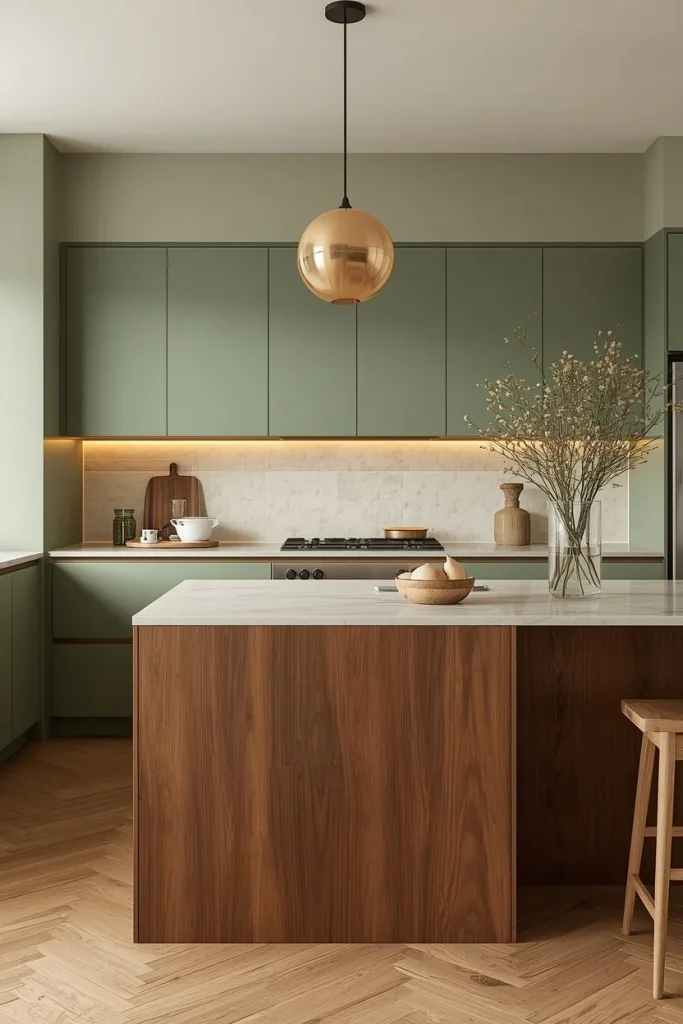
Two-tone kitchens are a smart way to add color without full commitment. Right now, one of the freshest pairings is soft green with a natural wood island.
Paint the upper cabinets a muted sage. Leave the island in warm oak or walnut. Your eye moves easily between the two tones, instead of getting stuck on just one color.
This layout is also more practical. A wood island feels warmer at eye level and underfoot. It becomes a natural spot for morning coffee or homework.
Keep the backsplash simple. A handmade zellige tile in soft cream works well, so the two main tones stay the focus.
6. Dark Green Kitchen With Brushed Brass and Black Accents

Want real drama? Try a dark green kitchen with brass hardware and matte black accents. It feels moody and editorial, but still warm, not cold.
Dark green sits between blue and black on the color wheel. It has depth, but it doesn’t feel like a cave. Brass fixtures add the warmth this dark shade needs.
Balance it out with a light stone counter, like warm white quartz. Add plenty of under-cabinet lighting. This keeps the space bright and functional, even with a bold wall color.
This look works best in kitchens with strong natural light, or ones used mostly in the evening, when the deep color really gets to shine.
7. Green Kitchen With Limewash Walls and Terracotta Floors
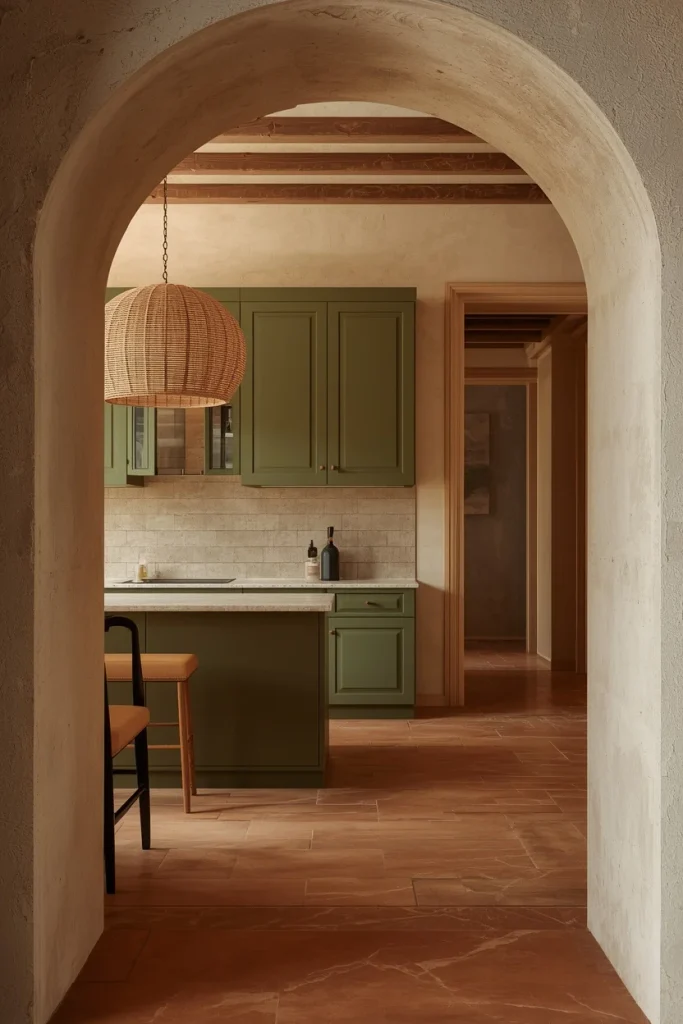
Limewash walls give a soft, textured background. Green cabinets look handmade against them, not flat or painted on. Add terracotta floors, and the whole kitchen leans warm and Mediterranean.
Limewash has natural variation in tone. This keeps a single-color kitchen from feeling flat. Terracotta grounds the space with warmth underfoot.
Pick a mid-tone sage or olive for your cabinets. It sits nicely between the two textures. Add woven pendant lights and a few terracotta pots on open shelves. That’s all the styling you need.
This look is easy to pull off in older homes. Reclaimed terracotta tile is often already there. It just needs the right cabinet color.
8. Minimalist Green Kitchen With Handleless Cabinets
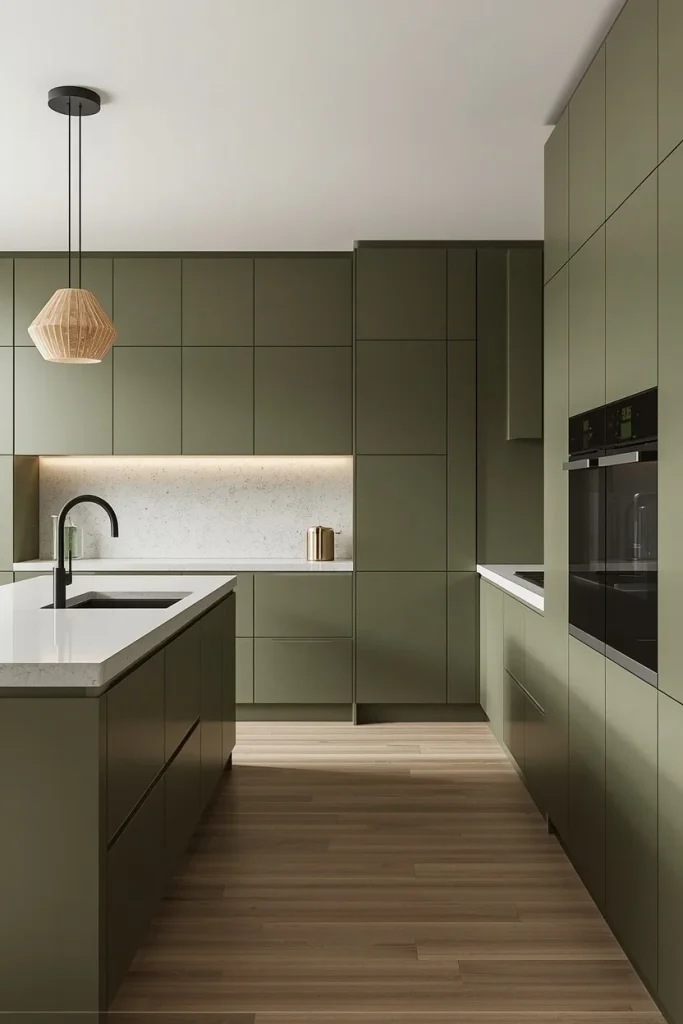
Want green without the clutter? Try handleless cabinets. Push-to-open doors skip the pulls and knobs. The color gets to do all the talking.
This works best with muted, warm greens, like sage or moss. Without hardware, your eye moves smoothly across the surface instead of catching on small details.
Pair it with one continuous quartz counter and built-in appliances. The whole wall reads as one clean plane. Add a single sculptural light fixture for personality.
Small kitchens benefit the most from this look. Removing visual clutter, like handles, makes a tight space feel calmer and bigger than it really is.
9. Green Kitchen With Curved Island and Organic Shapes
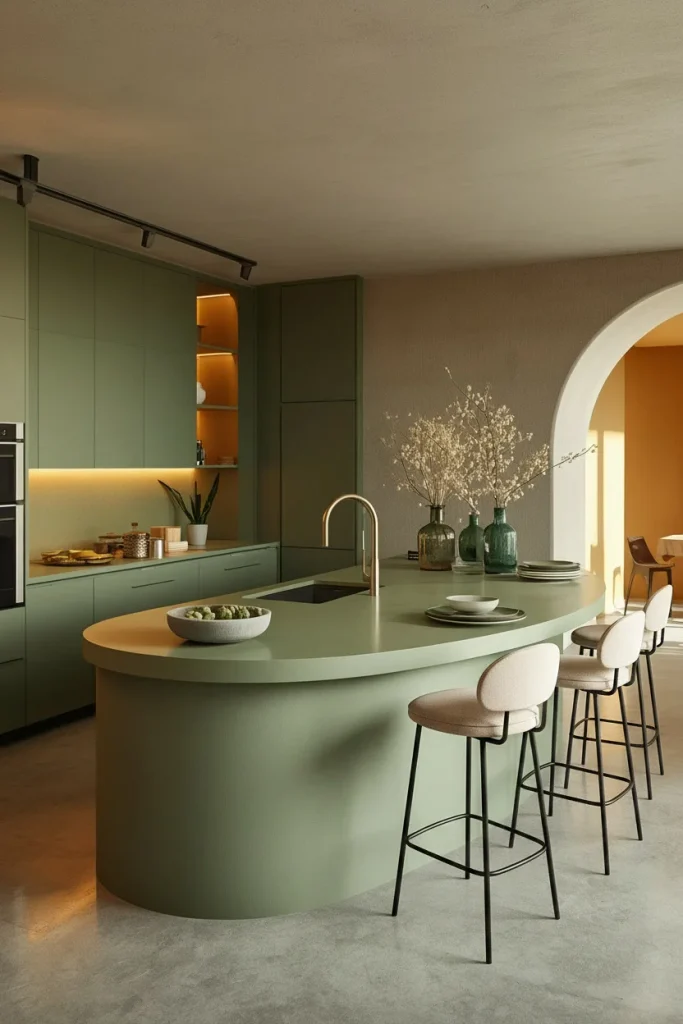
Curved islands are showing up everywhere in new kitchen design. Soft sage or olive suits this rounded shape better than sharper, cooler colors would.
The curve softens the whole room. It’s also more practical. Rounded corners are easier to move around, especially in busy kitchens with more than one cook, or young kids running through.
Pair the curved island with warm stone or microcement. Add simple bar stools with rounded backs. This keeps the soft, organic feeling going throughout the space.
This design works best in open-plan homes. The curve helps the kitchen flow naturally into the dining or living area, without a hard break.
10. Green Kitchen With Ribbed Glass Cabinet Doors

Ribbed glass cabinet doors add texture and quiet luxury to green kitchens. They soften the weight of upper cabinets, while still keeping dishes and glassware out of clear view.
The texture catches light throughout the day. It adds movement to what would otherwise be a flat wall of solid color.
Use ribbed glass on just a few upper cabinets. Pair it with solid green lower cabinets. This keeps the kitchen from feeling too busy, while still giving you that texture.
One common mistake: using ribbed glass on every cabinet. It gets overwhelming fast. A little restraint makes this detail feel intentional, not excessive.
11. Green Kitchen With Statement Range Hood
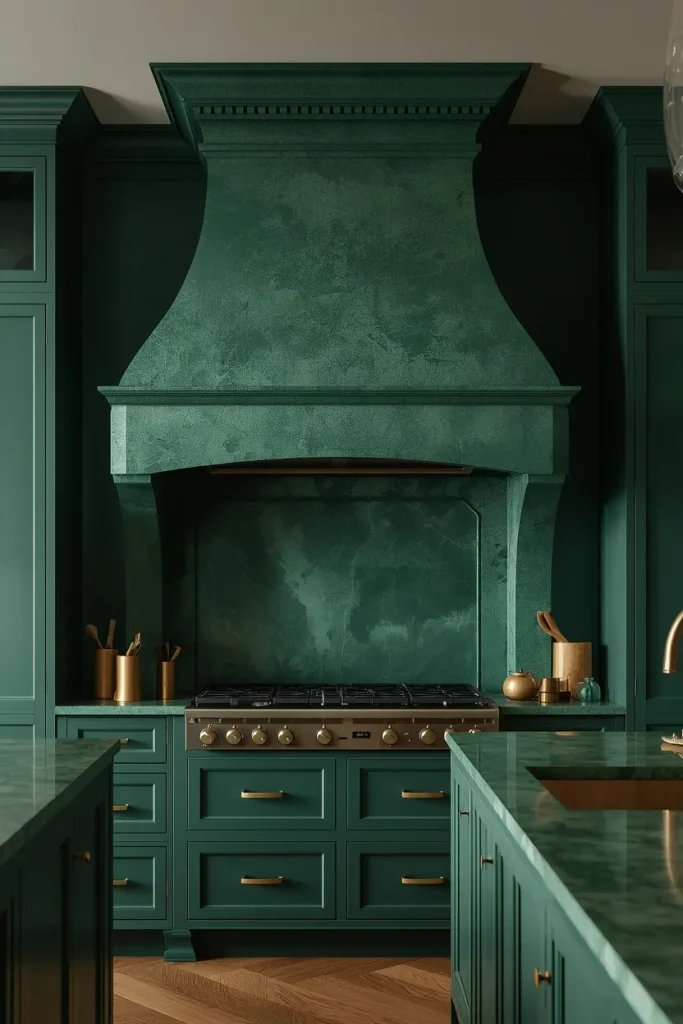
A bold, sculptural range hood turns a plain kitchen feature into the main event. A plastered or paneled hood, in a matching or slightly darker green, creates a custom, built-in look.
The hood draws the eye upward. This makes the kitchen feel more architectural, more considered. Less like it came straight off a shelf.
Keep the lower cabinets simple, in the same color family as the hood. Let the hood be the clear star. Don’t compete with it using busy tile or patterned flooring.
This idea works great if you’re already planning a custom hood. It adds real value without needing extra decoration anywhere else in the room.
12. Soft Mint Green Kitchen With Warm Minimalist Styling
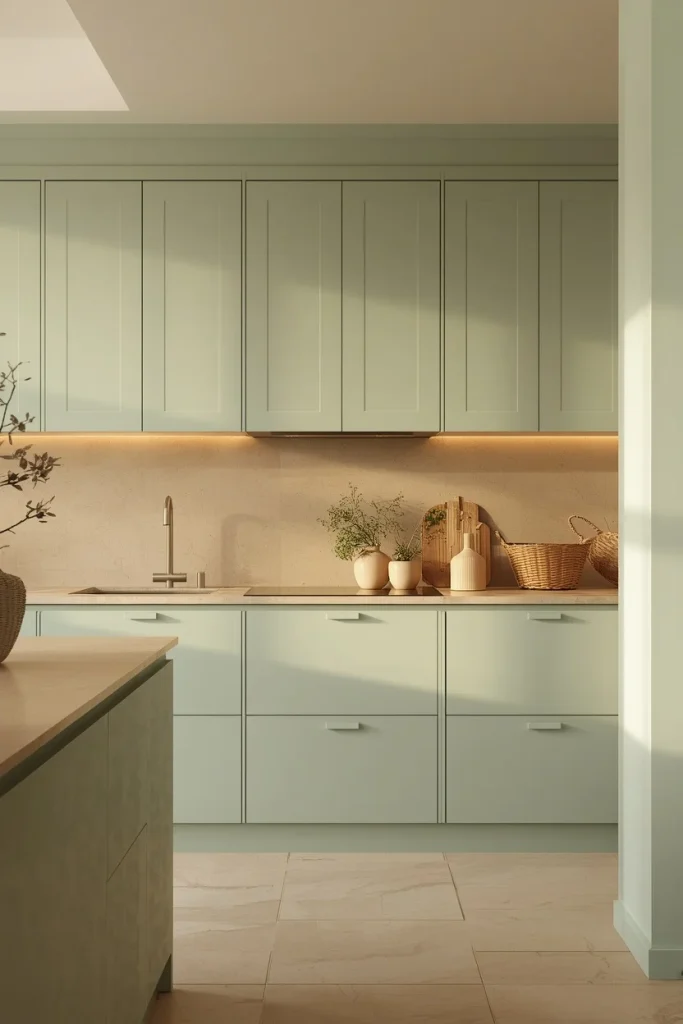
Soft mint green is the gentlest way to bring green into your kitchen. It’s a great pick if you want personality, but not a loud color statement. Paired with warm, minimal styling, it feels fresh, not dated.
Mint has a cool undertone. Balance it with warm wood accents, linen textiles, and soft ambient lighting. This keeps the space from feeling sterile or too pastel.
Keep your counters and backsplash in warm white or soft beige stone. Add texture with woven baskets, linen towels, and a few ceramic pieces in warm neutral tones.
Small kitchens and apartments look great with this style. The pale tone keeps things feeling open, bright, and easy to live in every day.
Conclusion
Green kitchen designs work because the color adapts so easily. It can feel soft and calming, or deep and dramatic. It all depends on the shade and materials you pick. Every idea on this list shares one thing: balance. Warm materials, good lighting, and a color palette that feels intentional, not trendy.
Not sure where to start? Go small first. Try a painted island. Add a few open shelves. Swap the hardware. Test the look before you commit to a full renovation. Green isn’t just a passing trend. Done right, it’s a timeless choice you’ll love for years.