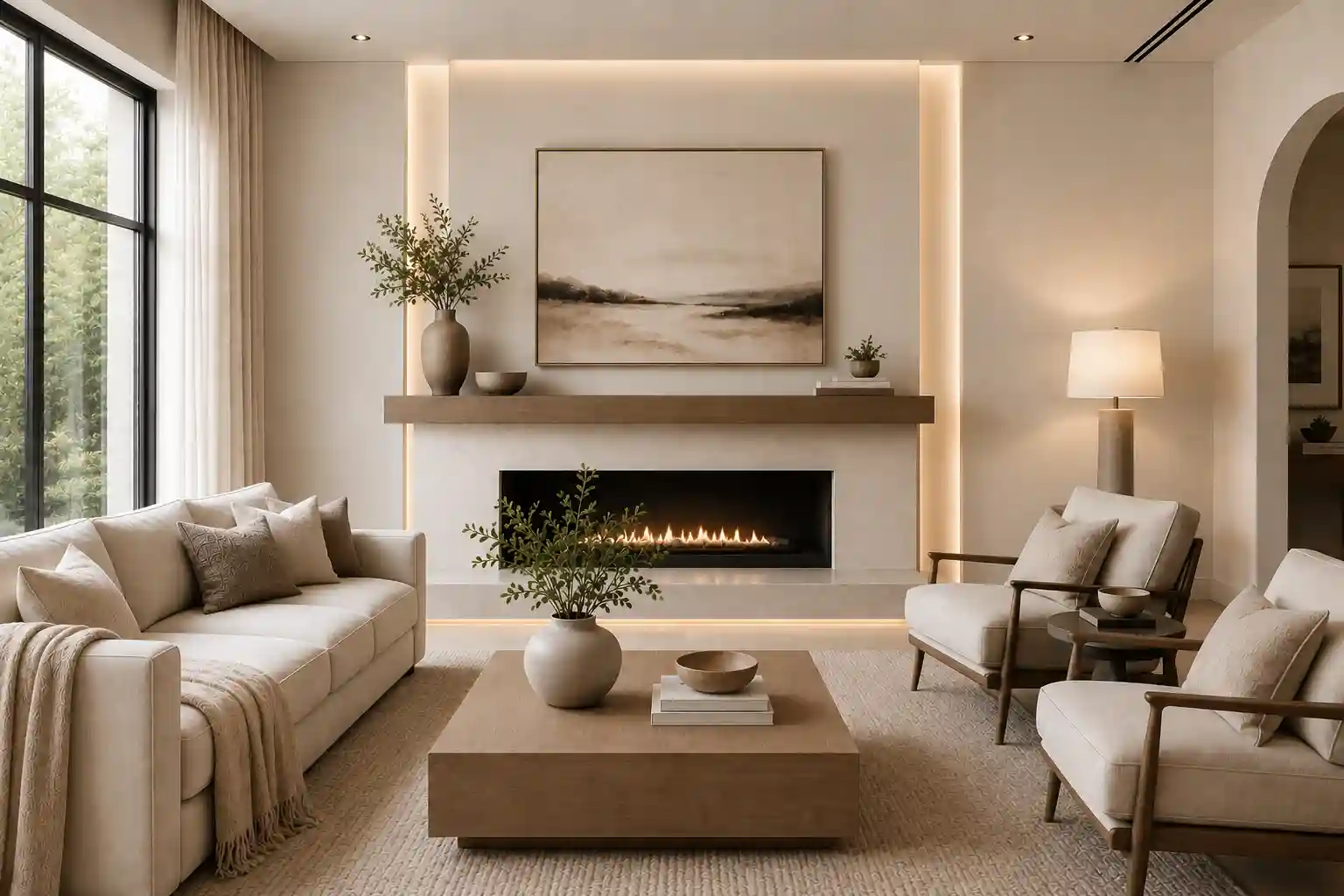
A neutral living room can still feel boring. That happens when it stops at “beige walls, beige couch, done.” The rooms people save on Pinterest today go further. They mix warm tones with texture. They use light in a smart way. That’s what makes a space feel rich, not flat.
These neutral living room ideas skip the plain, safe look. Each one uses a soft color story. Each one adds real texture, good lighting, and modern furniture.
You’ll also learn why each idea works, not just what to buy. That way, you can use these tips with confidence, in a rental or in your own home.
1. Mix Warm Whites and Beiges, Don’t Use Just One Shade
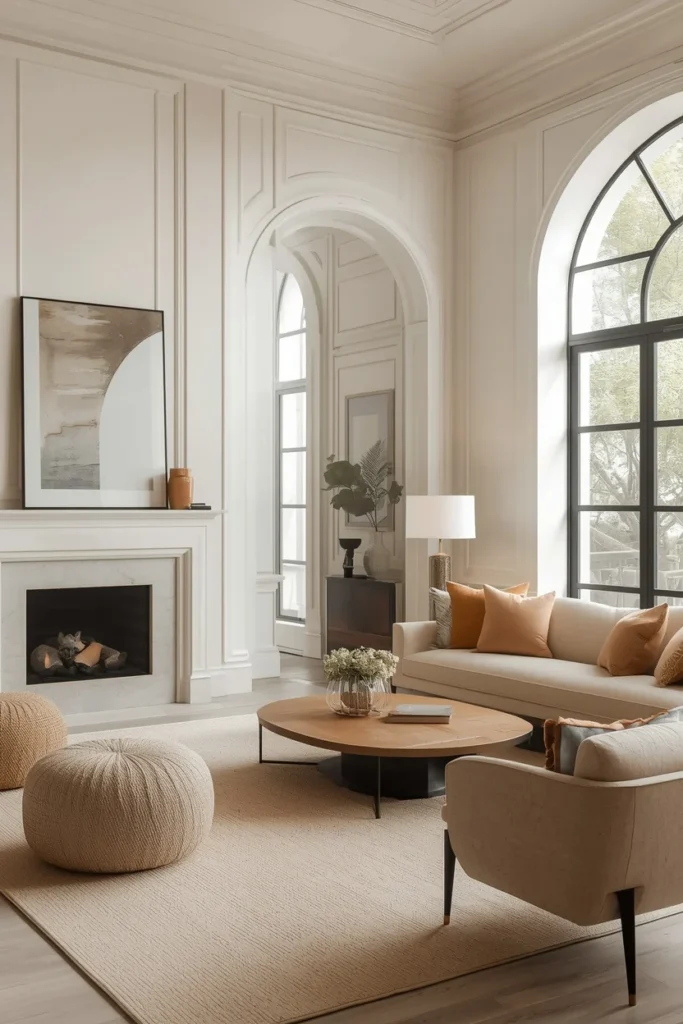
Don’t pick one neutral color and stop there. Use three or four warm shades instead. Try a soft white on your ceiling. Add a warm beige on the walls. Bring in a deeper sand tone on your sofa or chair.
Make sure the tones match in warmth. Cool grays next to warm beige can look off. Test paint samples near your wood floor or furniture first. Then carry that same warm tone into curtains and pillows.
This works because your eye sees depth, not a blank wall. One flat neutral shade can feel cold. Three or four warm tones together feel soft and cozy. That’s the quiet luxury look so many people want now.
2. Pick a Curved Sofa as Your Main Piece
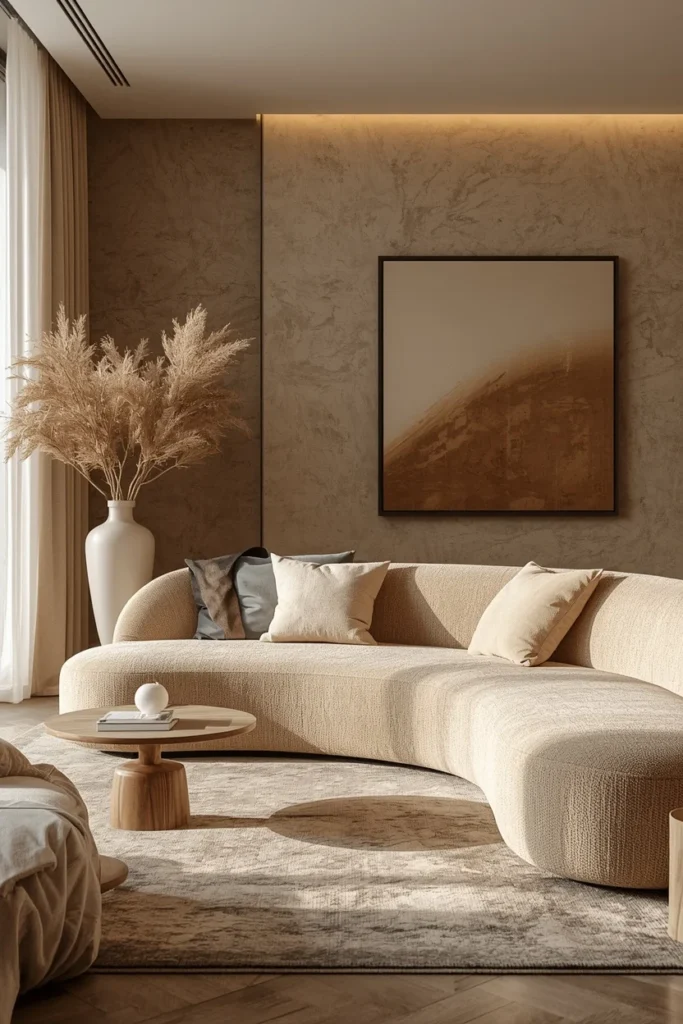
Curved sofas are everywhere in modern homes right now. There’s a good reason for that. The round shape softens a room full of straight lines, like windows and shelves. It also pulls your eye around the space instead of stopping it in one spot.
Go for a bouclé or textured fabric in sand or oatmeal. Skip smooth, flat fabric. Texture makes the piece feel special, even in an all-neutral room.
A curved sofa also helps people talk more easily in open living rooms, since the shape naturally faces seats toward each other. If your room is small, try one curved chair instead. You’ll still get that soft, modern look.
3. Add Texture With a Plaster Fireplace Wall
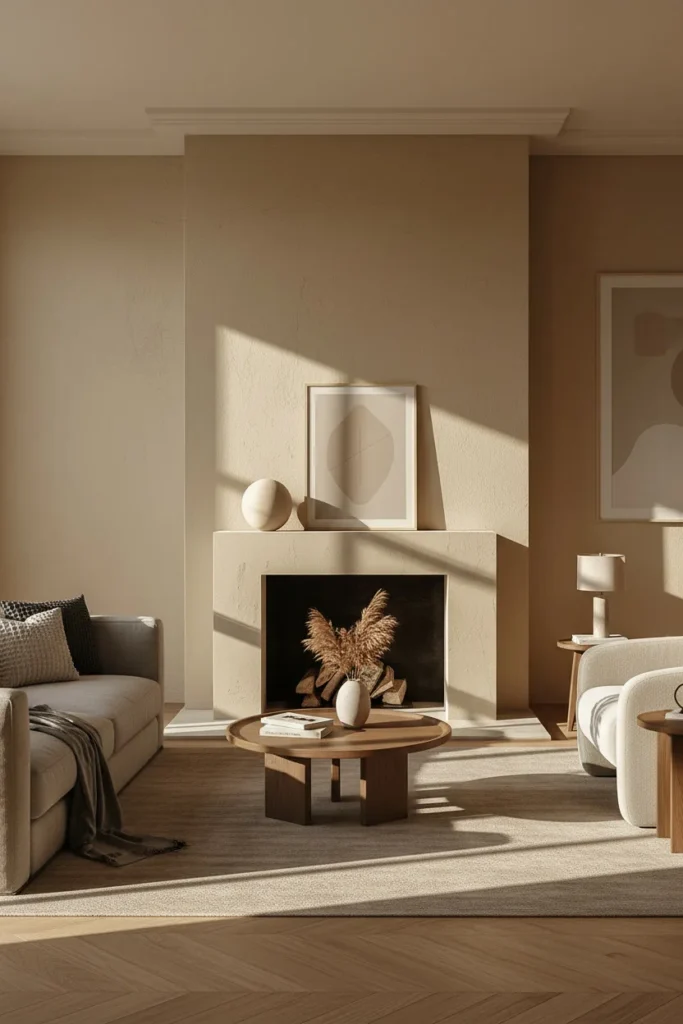
A flat painted fireplace wall can look boring fast. A textured plaster finish changes that completely. Light hits the bumpy surface in a different way all day long. That gives even a plain wall some real character.
Try a limewash or Venetian plaster finish in warm oatmeal. This mixes a raw, natural look with a high-end feel. Keep the mantel simple too. One sculptural object and a big piece of art is enough. Let the texture do the talking.
This fixes a real problem in neutral rooms: flat walls can feel dead. Texture brings the same life that color would bring, without breaking your neutral palette.
4. Build in Warm Wood Shelving, Japandi Style
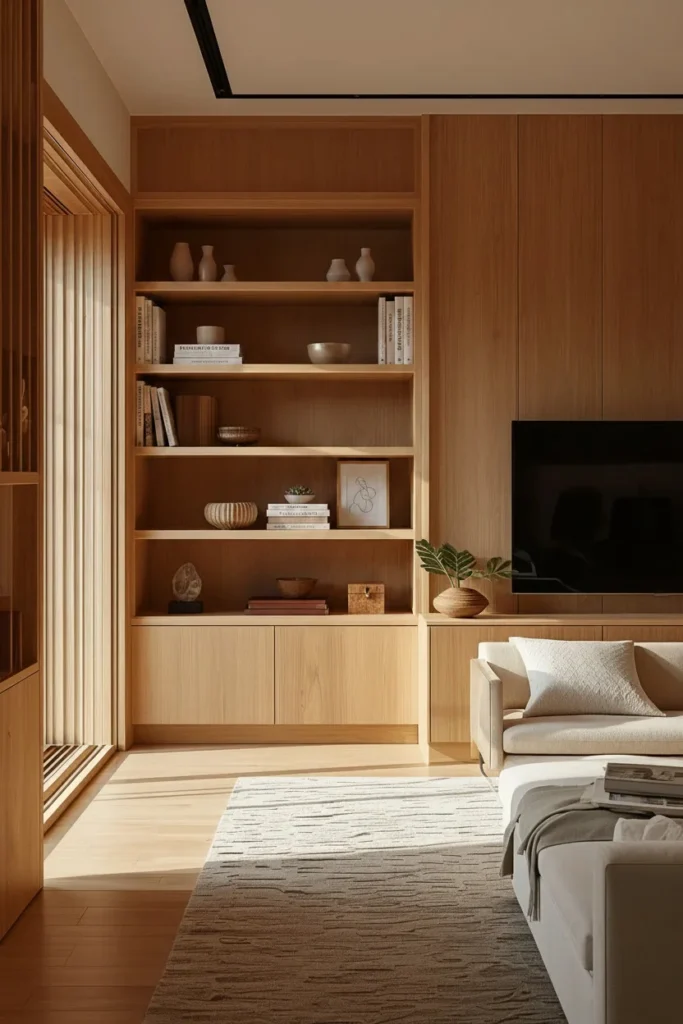
Built-in shelving in light oak or walnut adds warmth fast. It also keeps your room looking neat. Japandi style, a mix of Japanese and Scandinavian design, uses open shelves with lots of empty space. Don’t pack every shelf full.
Style each shelf with just a few things. Try one or two ceramic pieces, a stack of books, and one small plant. Leave about a third of the shelf empty. That keeps it looking clean, not cluttered.
Built-ins also solve a real problem in open homes. They give you storage without adding a bulky cabinet that breaks up the space. The result is a wall that looks planned, not just filled.
5. Try Limewash Paint for a Soft, Cloudy Look
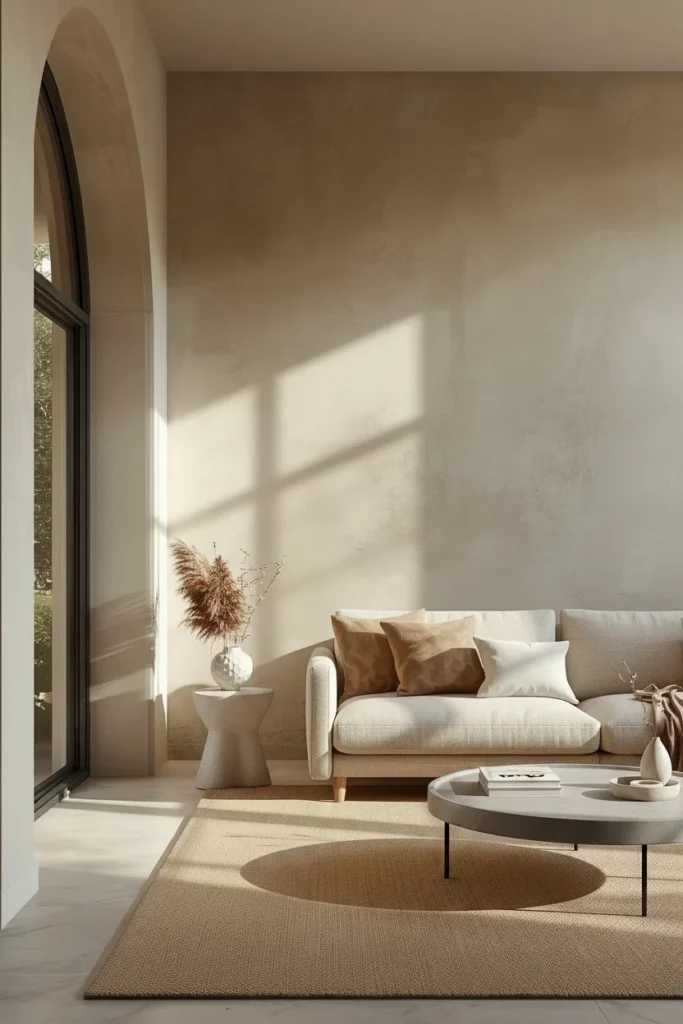
Limewash paint does something flat paint can’t. It creates soft, cloud-like marks across the wall. The look shifts a bit depending on the light in the room. In a neutral space, that small change stops the wall from looking too plain.
Use a warm oat or soft plaster color on one accent wall. Or go all in and use it on every wall for a cozy, wrapped-in feel. Limewash has a chalky, matte finish. That means it soaks up light instead of bouncing it back, which softens the whole room at night.
This paint works great in older homes too. It has a textured finish that hides small wall flaws, unlike flat paint, which shows every bump.
6. Add a Bouclé Chair for Extra Coziness
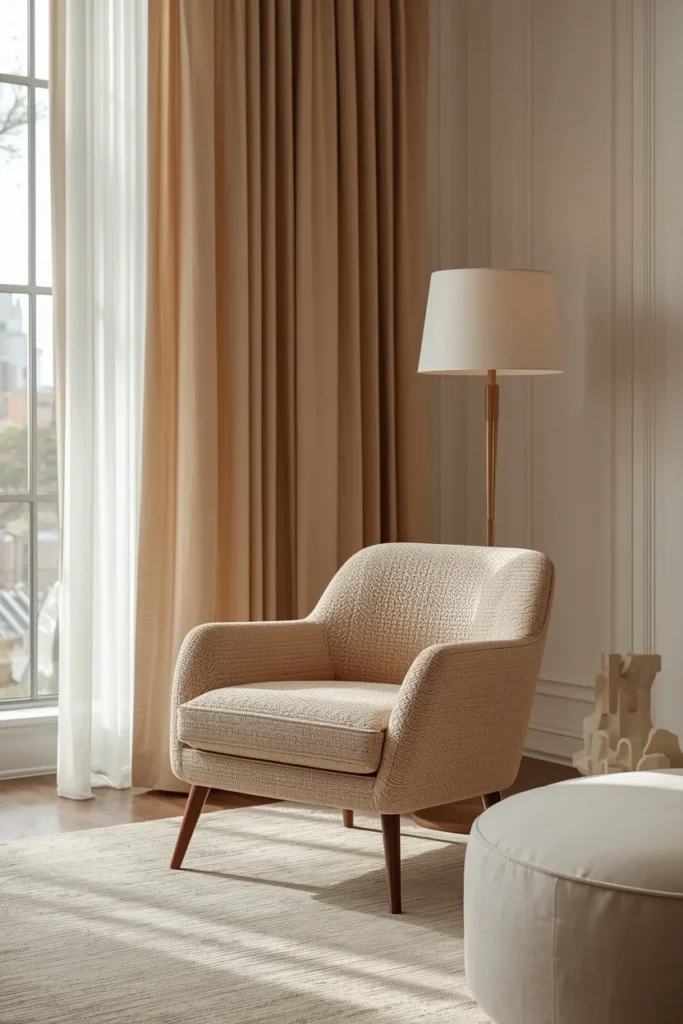
Every neutral room needs one piece people want to touch. A bouclé chair does that job well. The bumpy, looped fabric adds interest without adding color. That keeps it easy to match with a warm, minimal room.
Place the chair at a slight angle to your sofa, not straight across from it. This creates a relaxed setup, not a stiff, formal one. Stick to off-white or oatmeal bouclé so it blends in, not stands out.
This idea fixes the “too matchy” trap that many neutral rooms fall into. The texture adds depth through touch and shadow, not through color. Your room still feels layered and full of interest.
7. Mix Light Oak With Darker Walnut Wood
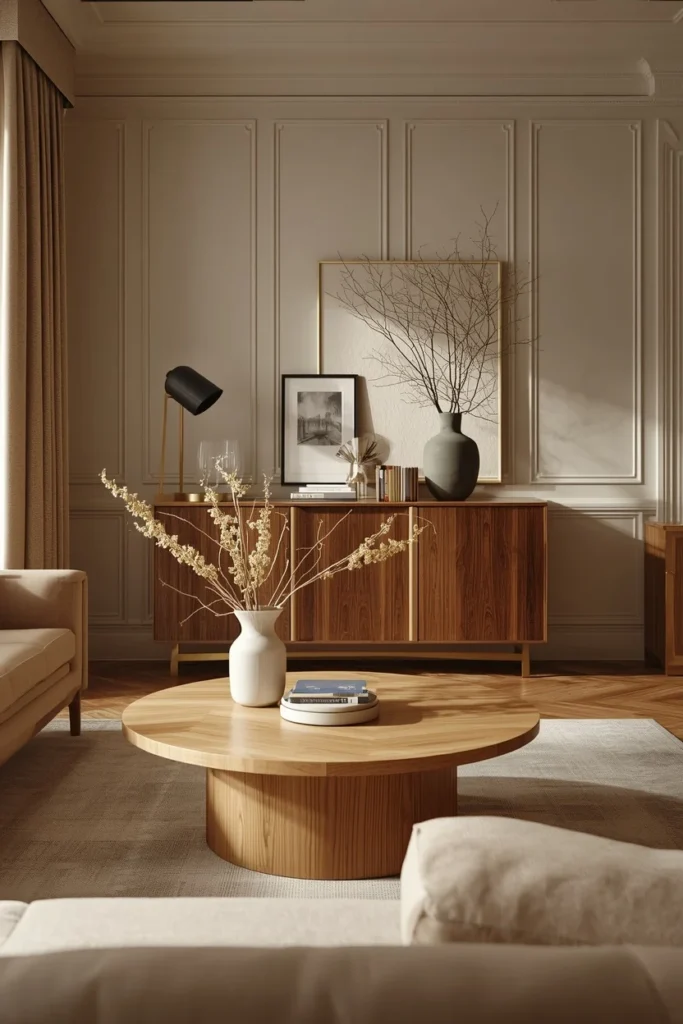
Don’t match all your wood to one shade. Mix two tones instead. Try a light oak coffee table with a darker walnut TV console. Let the contrast between the two do the work.
Repeat each wood tone at least twice in the room. Use a picture frame, a side table, or a small bowl to do this. It makes the pairing feel planned, not random. Keep your metal finishes the same everywhere too, either warm brass or matte black.
This fixes the flat look that comes from an all-fabric, all-beige room. Wood grain adds real pattern and warmth that fabric alone can’t give you.
8. Choose a Fluted Wood Media Console
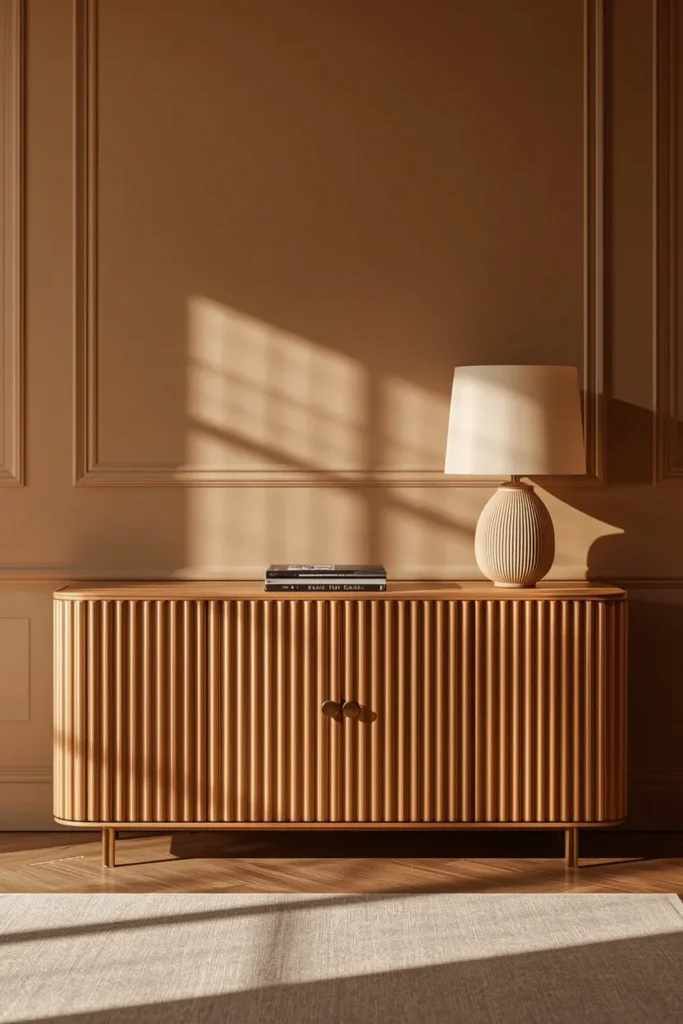
A fluted wood console has small grooves cut into the front. Those grooves catch light and shadow in a way a flat cabinet never could. It’s one of the easiest ways to turn a boring TV stand into a real design piece.
Go for light oak or walnut fluting. Pair it with slim brass or matte black handles for a clean, modern look. Keep the top simple too. A lamp and one small object is plenty. That way, the fluted texture still stands out.
This idea helps rooms built around a TV. It gives that wall real style, instead of treating it like an afterthought.
9. Layer a Jute Rug Under a Soft Wool Rug
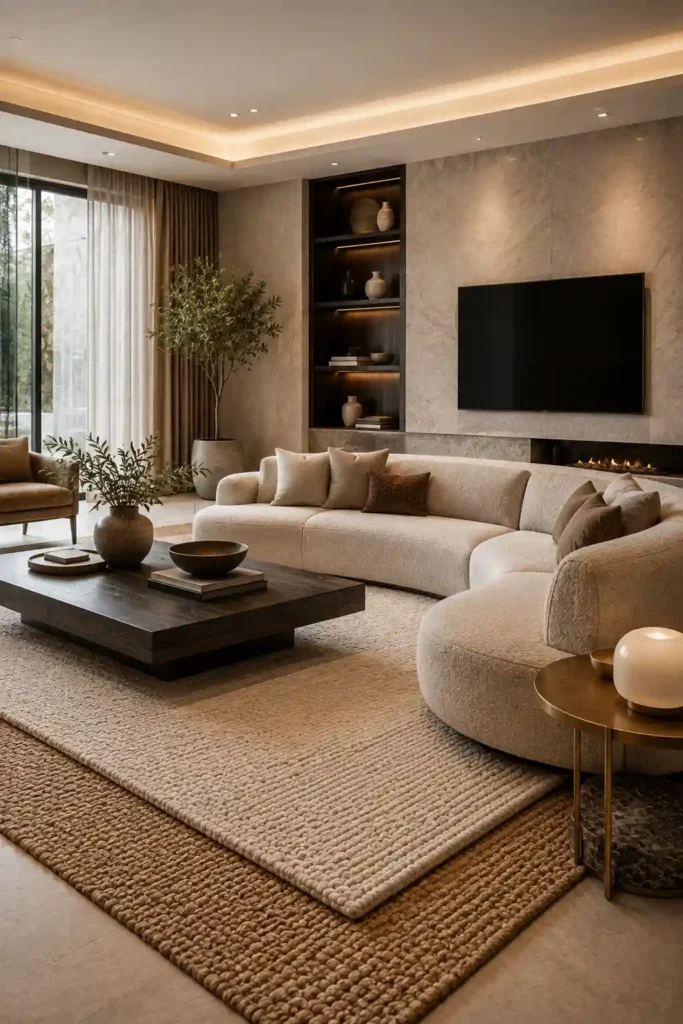
Rug layering is a fast way to add depth to a plain floor. No pattern or color needed. Start with a large jute or sisal rug as your base. Then add a smaller, soft wool rug on top, right under your seating area.
The rough jute and the soft wool create the same kind of texture depth that layered paint gives your walls. This also fixes a real problem. Jute alone can feel scratchy under bare feet. Wool alone can look flat on a big floor. Together, they balance texture and comfort.
Keep both rugs in the same warm family, like ivory, oatmeal, or sand. That way, the layers look planned, not mismatched.
10. Use Sculptural Lighting to Add Personality
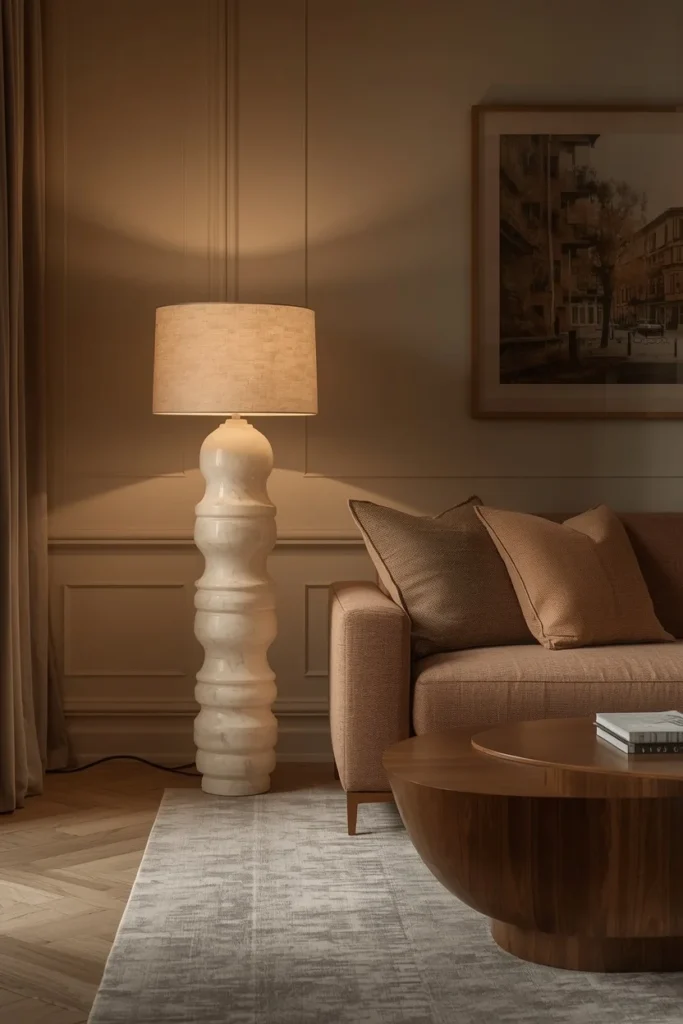
In a soft, neutral room, lighting is one of your best chances to add shape and style. A sculptural floor lamp or a curved table lamp works like a piece of art. It adds interest without fighting the calm palette around it.
Pick lighting made from warm materials, like alabaster, linen, or brass. Skip cold chrome or bright white shades. Warm materials give off a soft, golden glow at night. Try to use at least three light sources at different heights: floor, table, and ceiling.
This layered lighting fixes a common complaint. Neutral rooms can feel flat once the sun goes down. Warm, mixed lighting keeps the room feeling cozy all evening.
11. Hang One Big Piece of Art in Earthy Tones
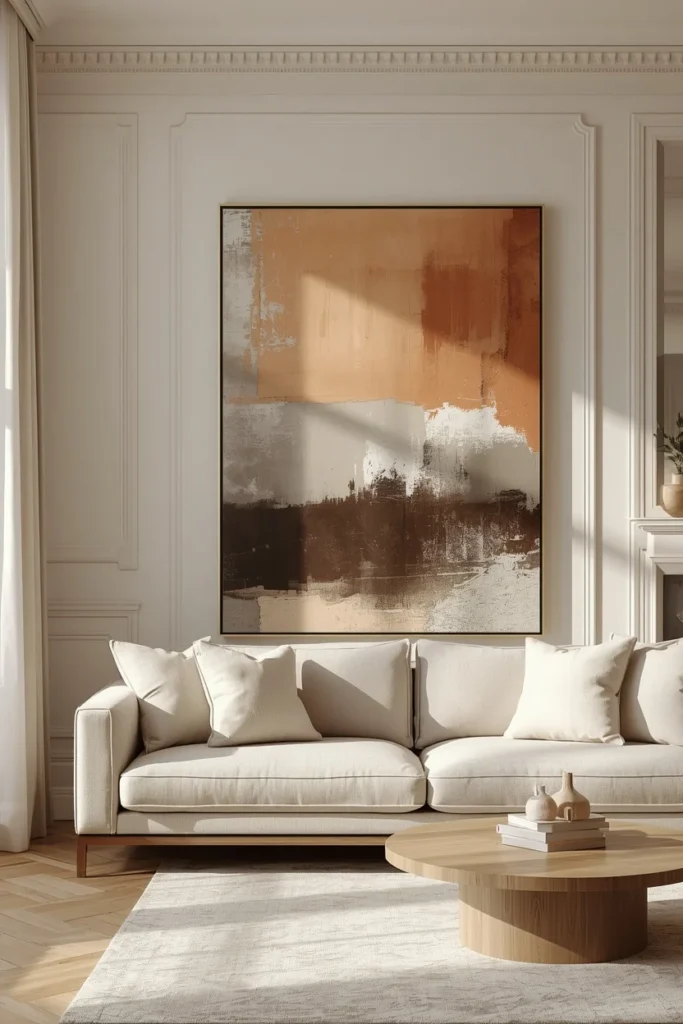
One large piece of art does more for a room than five small frames. Pick an abstract piece in earthy tones, like terracotta, sage, or warm ochre. This brings in color without breaking your calm, neutral base.
Size matters here. As a rule, your art should be about two-thirds the width of your sofa. That keeps the look balanced, not too small. Try leaning the art against the wall instead of hanging it. This gives a relaxed, editorial feel, especially in rooms with lower ceilings.
This fixes the “safe but boring” trap many neutral rooms fall into. One bold art choice gives your eye a place to land, without changing your whole color scheme.
12. Mix Matte Black and Brass Hardware
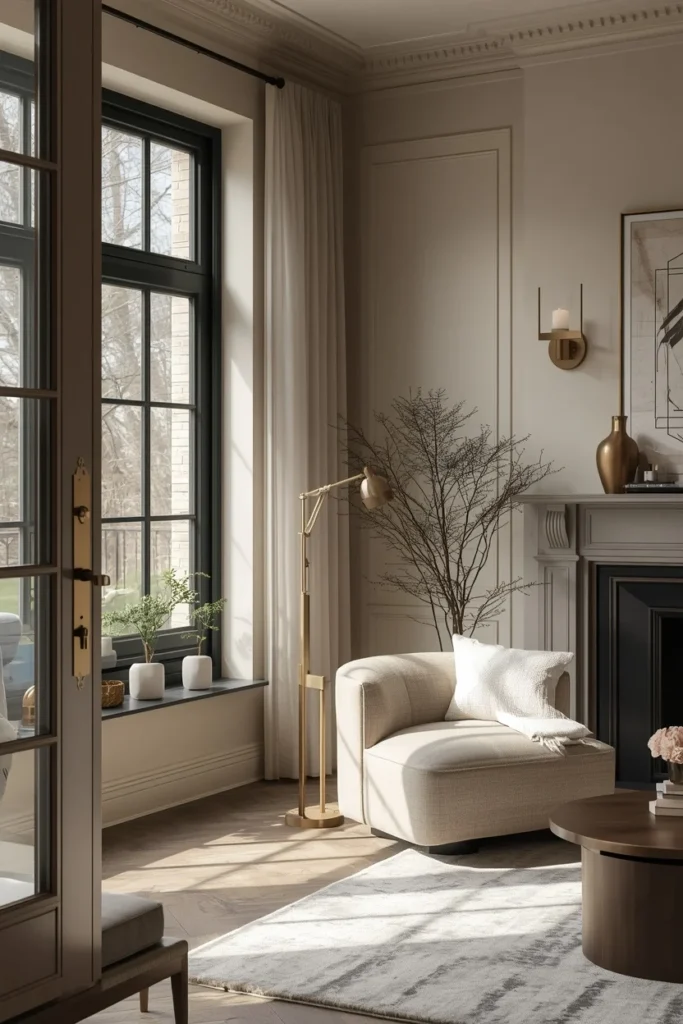
Using two metal finishes, instead of just one, adds detail to a neutral room. Matte black grounds the space through window frames or door handles. Brushed brass adds warmth through lamps, drawer pulls, or frame edges.
Pick one finish to lead, around 70 percent of the room. Let the other finish show up only in small spots. If you mix them equally, it can look messy instead of planned.
This small detail matters more than people think. Hardware is often the last thing people notice, but it’s what turns a “nicely painted” room into a “professionally styled” one. The metal tones tie every other choice in the room together.
13. Layer Sheer and Thick Curtains Together
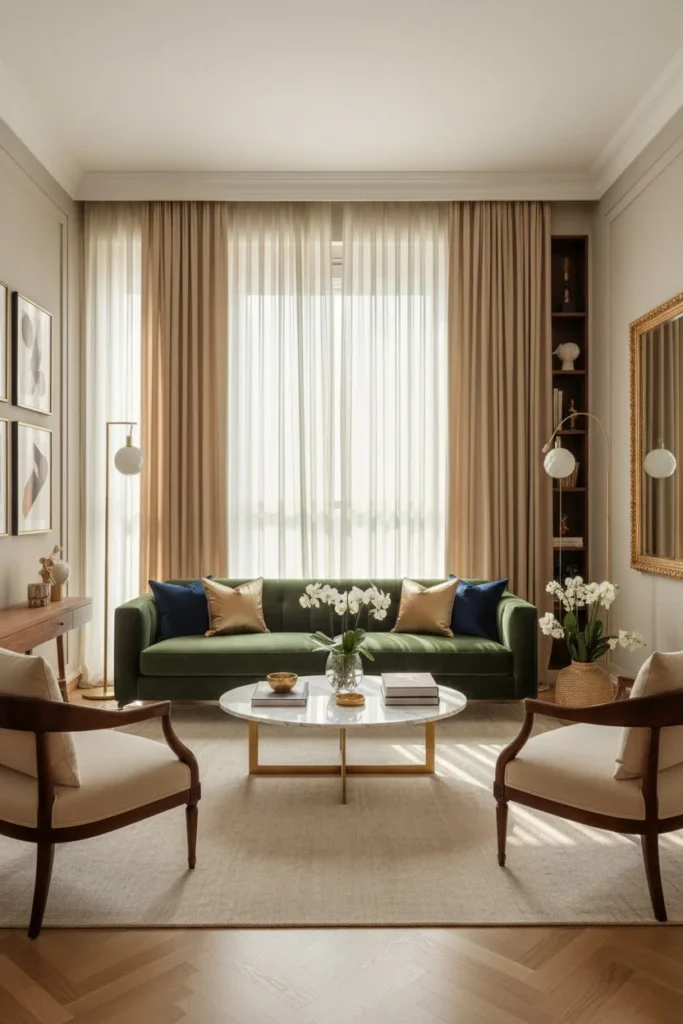
The right curtains do more than block a view. They control how light moves through your room all day. Hang a sheer linen curtain closest to the window. Add a thicker linen or cotton panel on the outer rod. That way, you can adjust the light without losing softness.
Pick a curtain color close to your wall color, not stark white against warm beige. Hang your curtain rod near the ceiling. Let the fabric puddle a little on the floor for a more finished look.
This fixes a real problem. Sheers alone don’t block much afternoon sun. Heavy curtains alone can make a room feel dark and closed off. Together, they give you both light and comfort.
Conclusion
A warm, timeless neutral living room isn’t about picking the safest paint color. It’s about layering tone, texture, and material so your eye always has somewhere new to land. That could be the grain in a walnut console, the loop in a bouclé chair, or the soft, cloudy finish on a limewashed wall.
Start with just one or two ideas from this list. Don’t try to change everything at once. A textured wall paired with a layered rug can already change how a room feels. Add more from there, one piece at a time.
The most timeless rooms are rarely the most decorated ones. They’re the rooms where every single piece earns its spot.
Leave a Reply