
Your dining room walls do a lot of quiet work. They frame every meal, every chat, and every late night around the table. Yet many stay bare.
These dining room wall decor ideas fix the problem with simple, modern choices. You will find soft textures, warm colors, and art with real presence. Each idea draws on current styles like organic modern, Japandi, and warm minimalism.
Every idea comes with clear steps. You get sizes, hanging heights, color picks, and lighting tips. You also get budget swaps and renter-friendly options.
Pick one idea and start small. A single change can make the whole room feel calm, rich, and complete.
1. Dining Room Wall Decor Ideas Start with One Oversized Canvas
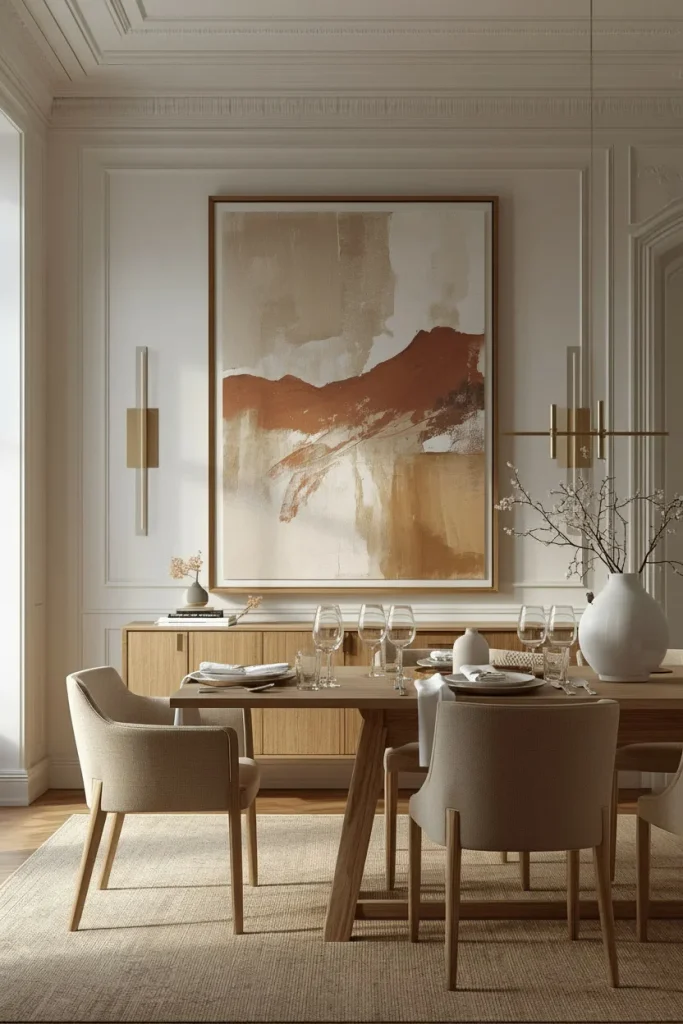
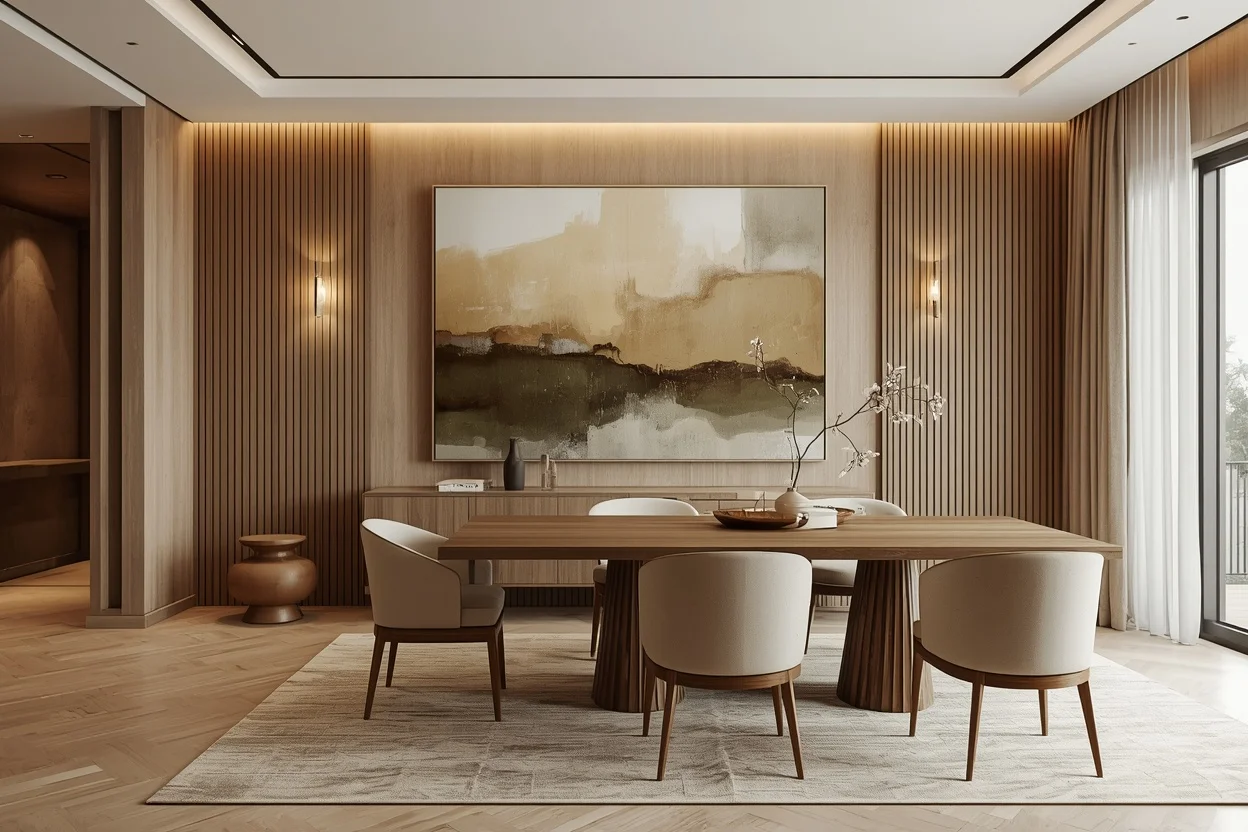
Go big with one large canvas. Small frames look lost on a wide wall. One big piece looks bold and calm.
Choose an abstract work in sand, cream, and soft clay. These shades match oak tables and linen chairs. Pick a size about two-thirds as wide as your sideboard.
Hang it lower than you think. The center should sit near 57 inches from the floor. People view a dining room while seated, so a lower spot feels right.
On a budget, print a large abstract on textured paper. Frame it in thin oak with a wide white mat. Add a slim brass picture light above it. The glow at dinner feels rich and warm.
2. Limewash Walls with a Soft, Cloudy Finish
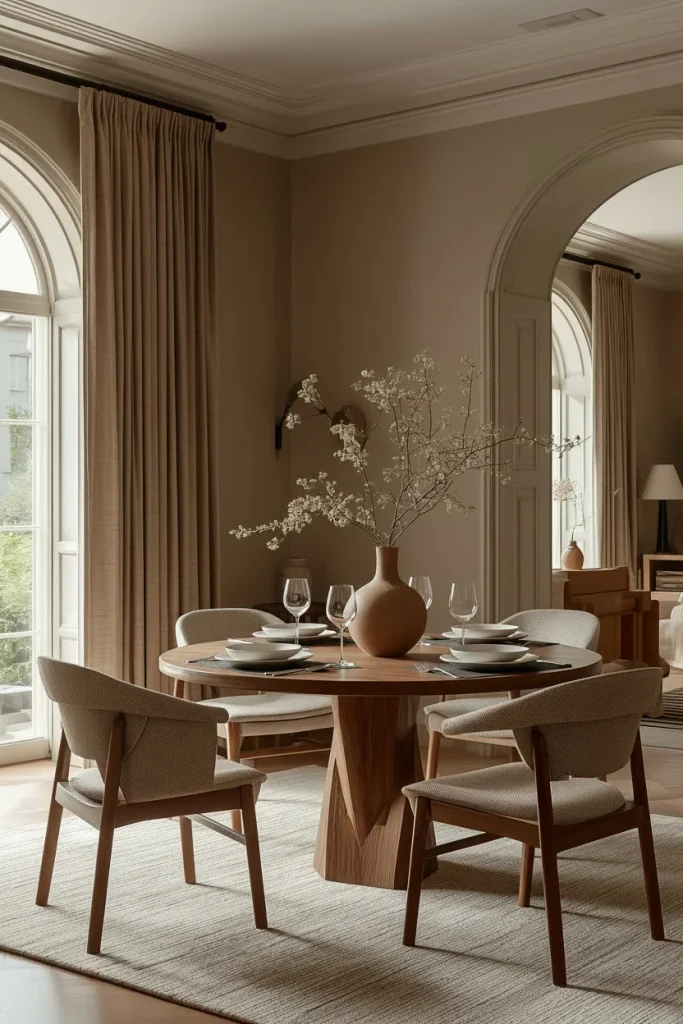
Limewash gives a flat wall a soft, cloudy look. It feels like old plaster, yet fresh and modern. The brush marks add depth without any art.
Pick warm shades like mushroom, oat, or pale taupe. Pair them with a walnut table and linen curtains. Daylight shifts the color through the day. Candlelight makes it glow.
You can paint it yourself. Prime the wall first. Use a wide brush and cross strokes. Two coats give a rich finish.
Renting? Try mineral paint with a textured finish. You get a similar look with no special skill.
3. Fluted Oak Paneling Behind the Sideboard
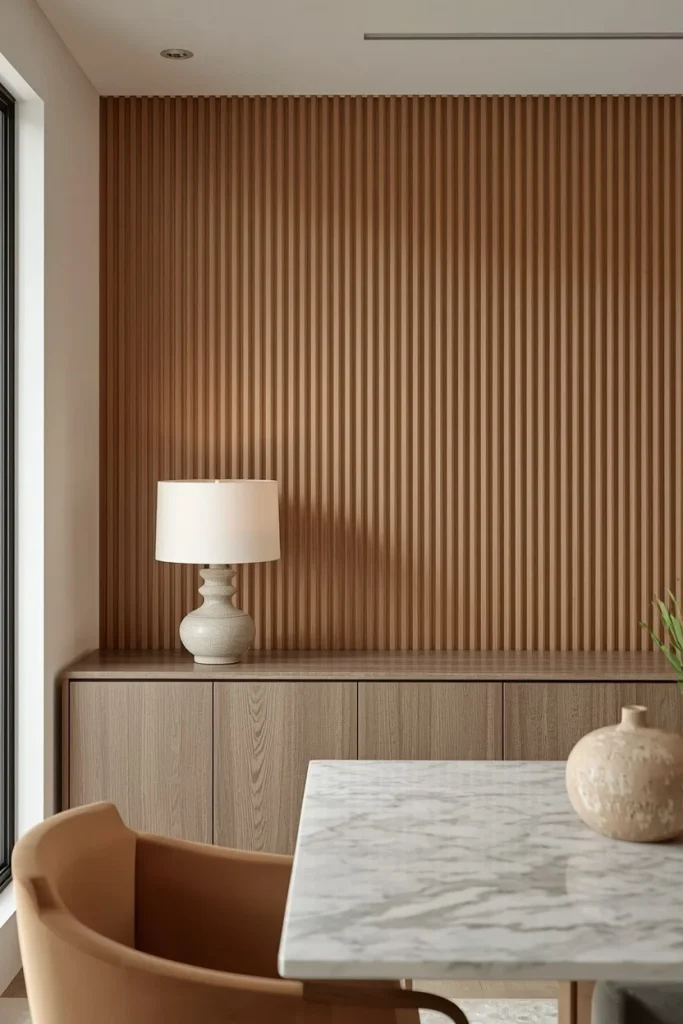
Fluted panels have thin vertical grooves. They add shadow and rhythm to a plain wall. Place them behind a low sideboard and the wall becomes a focal point.
Take the slats up to the ceiling. The room will feel taller. Or stop at waist height for a modern wainscot, which is a paneled lower wall.
Match the wood to your table for calm. Pick darker walnut for drama.
Slatted panels on a felt backing cost far less than custom joinery. Add a ceramic lamp and one stem in a stone vase. Then stop. The texture is enough.
4. An Arched Mirror Above a Slim Sideboard
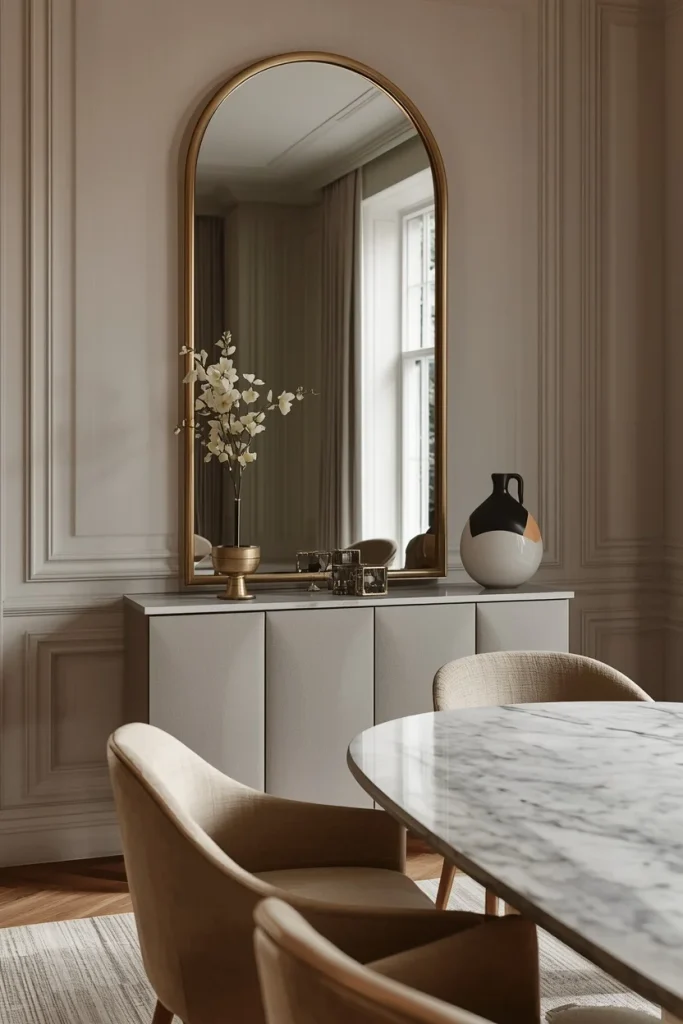
A mirror bounces light across the room. It helps small and dim dining areas most. An arched shape feels soft and matches curved chairs.
Choose a slim frame in brushed brass or matte black. Hang the mirror six to eight inches above the sideboard. Face it toward a window to double the daylight.
Check the reflection before you drill. A mirror facing a messy corner shows the mess twice.
Want a moody feel? Pick antique-style glass with a smoky tone. On a budget, lightweight resin frames hang well on strong adhesive hooks.
5. A Calm Gallery Wall in Thin Oak Frames
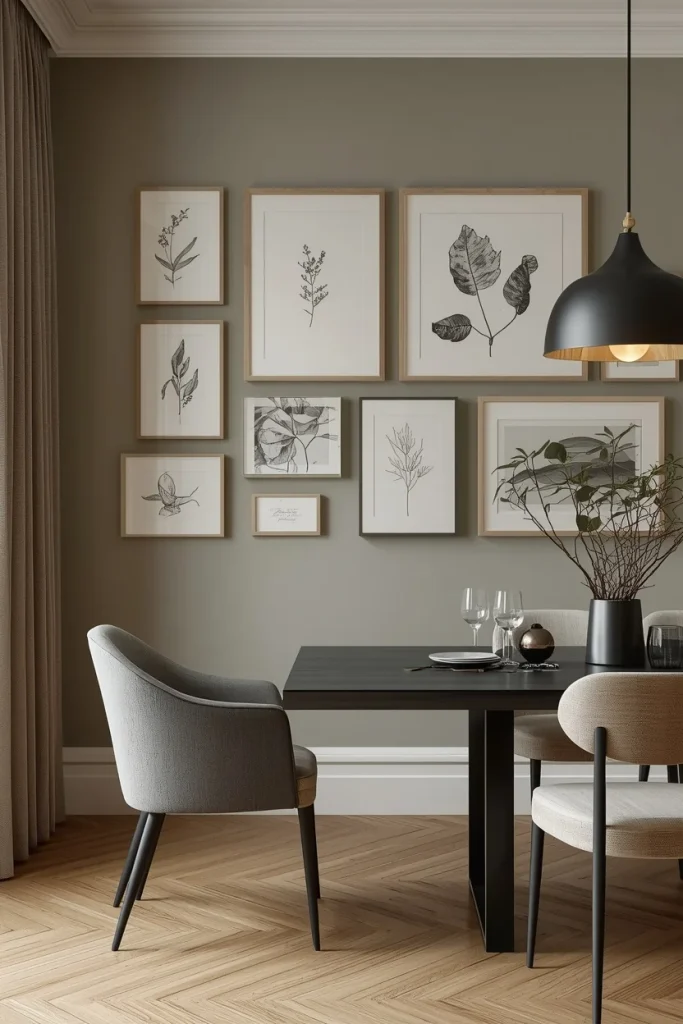
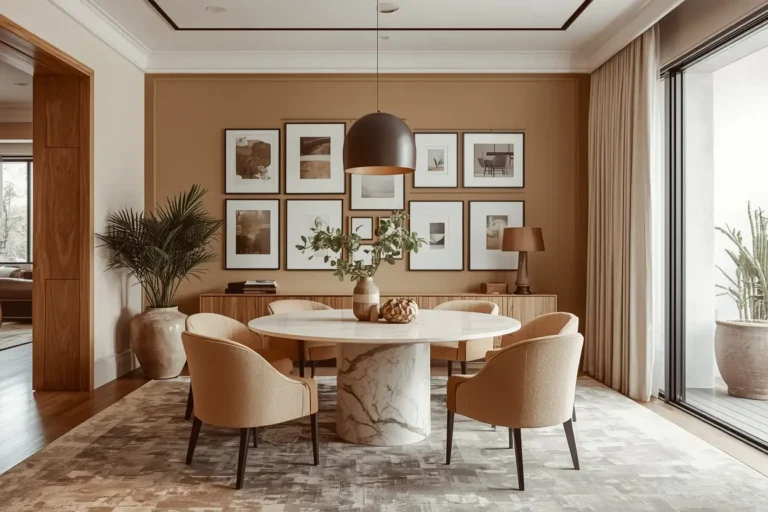
A modern gallery wall feels edited. Use one frame finish, like thin oak or black metal. Keep the mats the same. Vary the art sizes.
Mix line drawings, black-and-white photos, and plant studies. Keep the colors to cream, charcoal, and sage.
Lay every piece on the floor first. Take a photo. Then hang from the center outward. Leave two inches between frames.
Stop well short of the ceiling and corners. Empty space around the edges looks calm. Print family trip photos in black and white for a low-cost, personal touch.
6. Floating Oak Ledges for Easy Styling
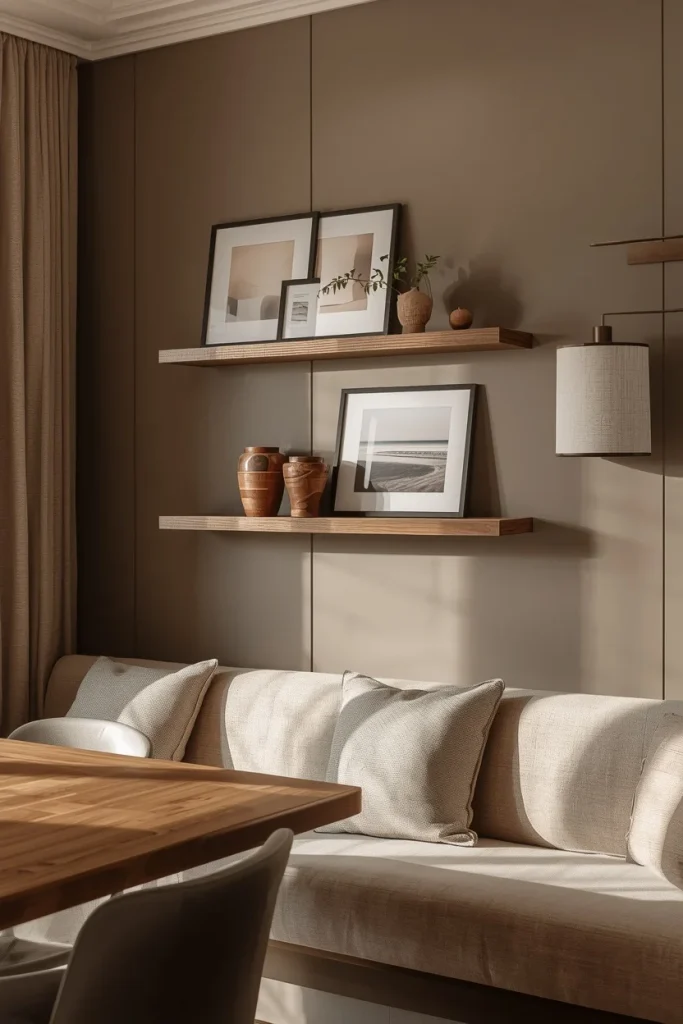
Picture ledges are slim shelves made for art. You can swap the display in minutes. Two or three oak ledges, spaced unevenly, look light and airy.
Lean framed art at the back. Add a small ceramic bowl, a carved wood dish, and a trailing plant. Mix the heights. Leave a third of each shelf empty.
Full ledges look like storage. Open space looks like style.
Screw into studs or use wall anchors, since ceramics are heavy. Renters can use adhesive ledges made for light items. Keep heavy pieces on the sideboard below.
7. Sculptural Sconces and Picture Lights
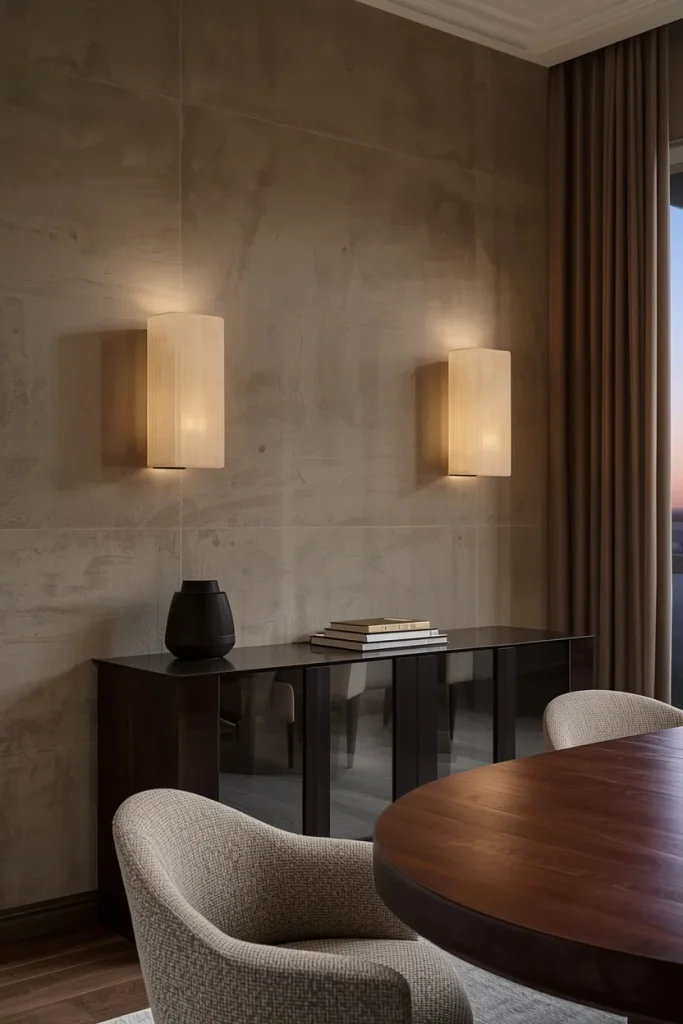
Light is decor too. A pair of plaster or alabaster sconces beside a sideboard adds balance and a soft glow. Food and faces both look better in warm light.
Pick organic shapes like half moons or ribbed glass. Use bulbs between 2200 and 2700 Kelvin for a candlelight tone. Add a dimmer. Bright works for homework. Low works for dinner.
No electrician nearby? Choose plug-in sconces. Run each cord down a cord cover painted in the wall color. Place the center of each fixture near 60 inches from the floor.
8. Board-and-Batten in Soft Sage Green
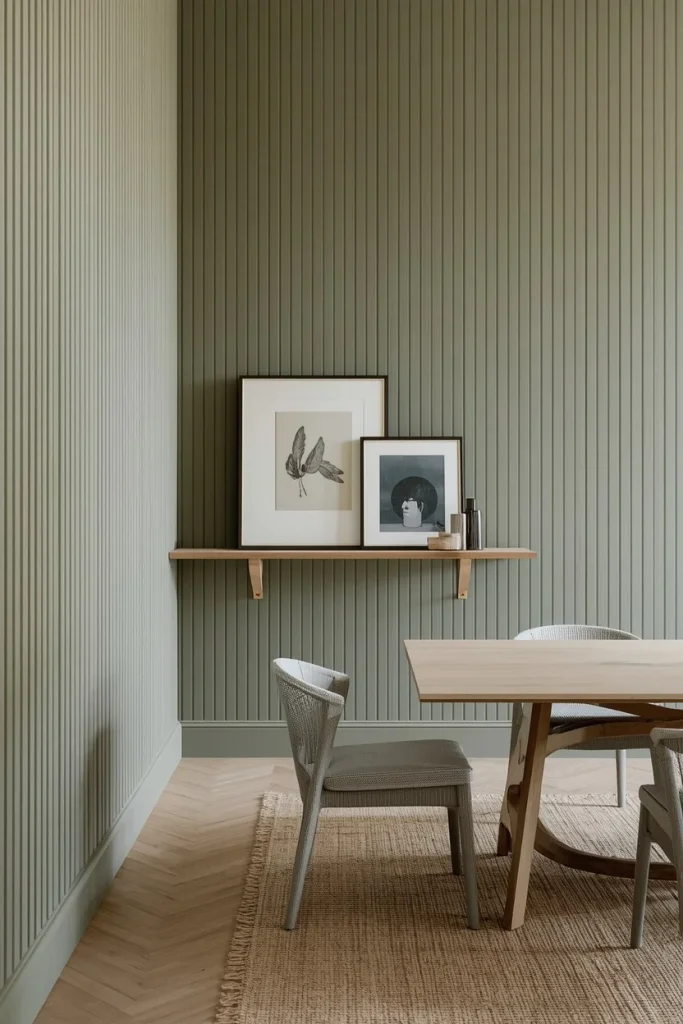
Board-and-batten means wood strips on a wall. It once felt farmhouse. Now it looks sharp in tall, slim strips and a soft sage green.
Take the panels up two-thirds of the wall. Add a thin shelf on top for framed art. Paint the boards and strips in one satin shade. Shadows form the pattern.
Add unlacquered brass hardware and a jute rug. The palette feels warm and calm.
MDF strips from a hardware store keep costs low. Measure the gaps before gluing. Uneven spaces show as soon as the paint goes on. A weekend is enough time.
9. A Woven Textile Hanging in the Japandi Style
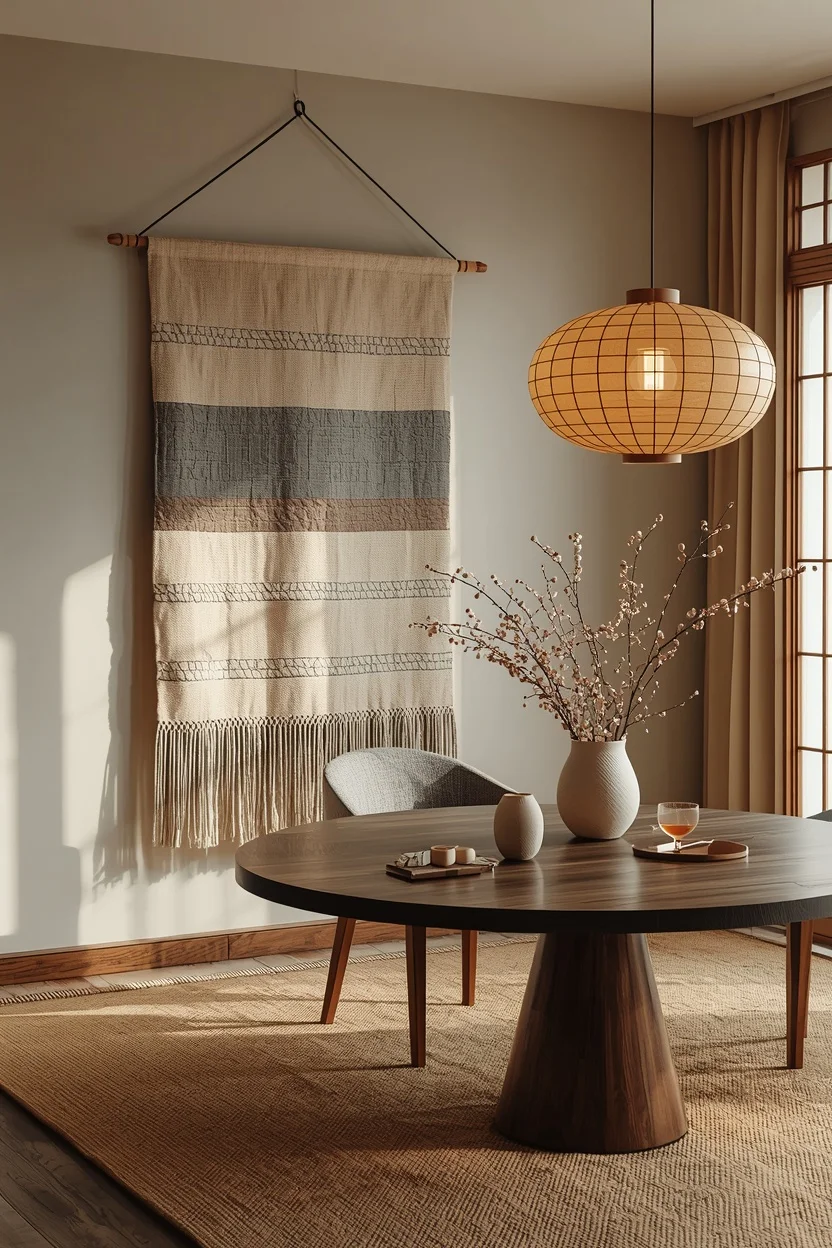
Fabric softens sound. A dining room full of tile, glass, and wood can echo. A large textile calms the space.
Choose a linen or wool hanging in oatmeal and charcoal. Look for a visible weave and knotted edges. Hang it on a slim oak dowel so the top edge stays level.
One large piece beats three small ones. Pair it with a low dark table and a paper lantern. Japandi blends Japanese calm with Scandinavian warmth.
Handwoven work costs more. A plain linen cloth on a dowel is a smart stand-in.
10. A Ceramic Plate Cluster with Mediterranean Ease
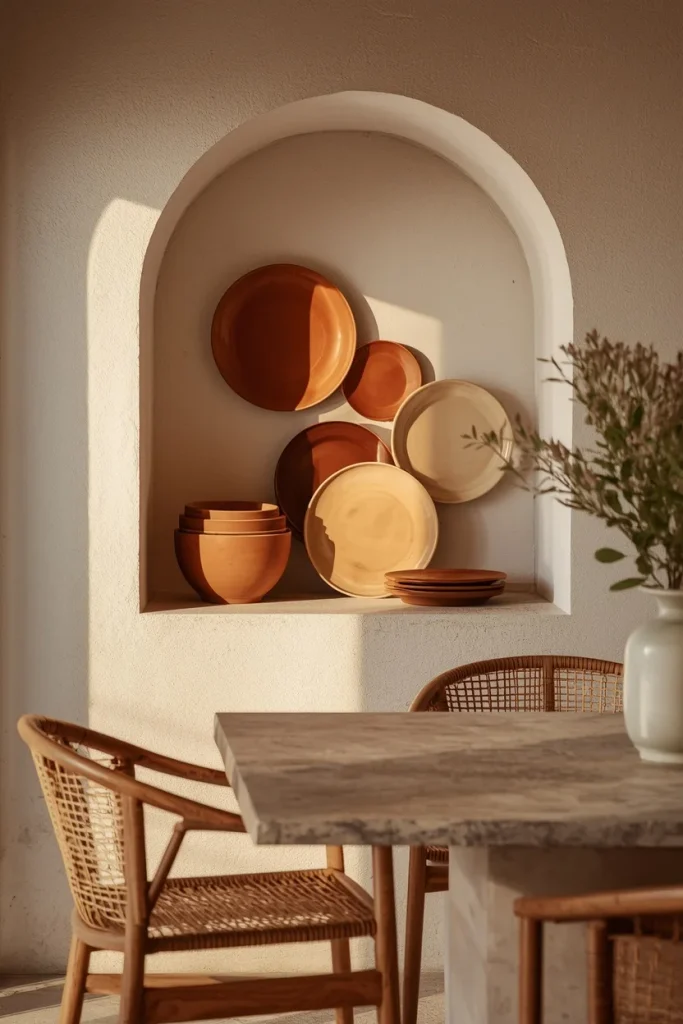
Plates make easy wall art. They add texture, color, and a handmade feel. Modern Mediterranean style favors sand, terracotta, and cream glazes.
Hang five to nine plates in a loose cluster. Skip the grid. Vary the sizes and gaps a little. Use invisible plate hangers. Step back and adjust until the group feels balanced.
Thrift shops and ceramic markets are great sources. Stick to two or three glaze colors so the group looks planned. Warm white plaster walls make the glazes glow.
11. A Color-Drenched Olive Wall with Brass Lighting
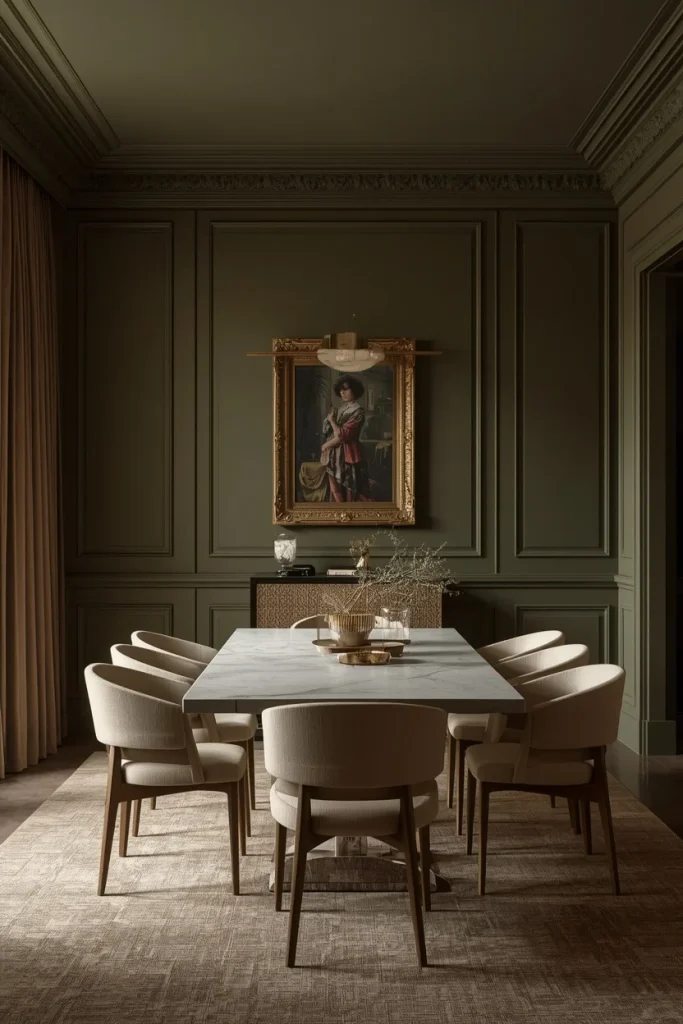
Color drenching means one shade on the walls, trim, and ceiling. No white lines break the eye. The room feels wrapped and rich, like a fine restaurant.
Pick a muted olive with a gray undertone. Bright green feels loud. Hang one artwork in an aged brass or walnut frame. Add a slim brass picture light above it.
Balance the depth with cream linen chairs and a pale stone table.
Test large paint samples first. Check them in morning light and under evening lamps. Dark colors change a lot.
Conclusion
The best dining room wall decor ideas are simple. Pick one strong idea and let it lead. It could be a big canvas, a limewash finish, or a cluster of glazed plates.
Look at the wall you see most from your seat. Measure it. Note where the daylight falls. Then choose texture, color, or art as the star.
Add only what earns its place. Fewer pieces, chosen well, always look more luxurious.
A dining room should feel warm enough to linger in. Save your favorite ideas and start with the easiest one. Small changes add up fast.